
The Art of the Barbeque: Mastering Fire, Flavour, and Hardware in 2026
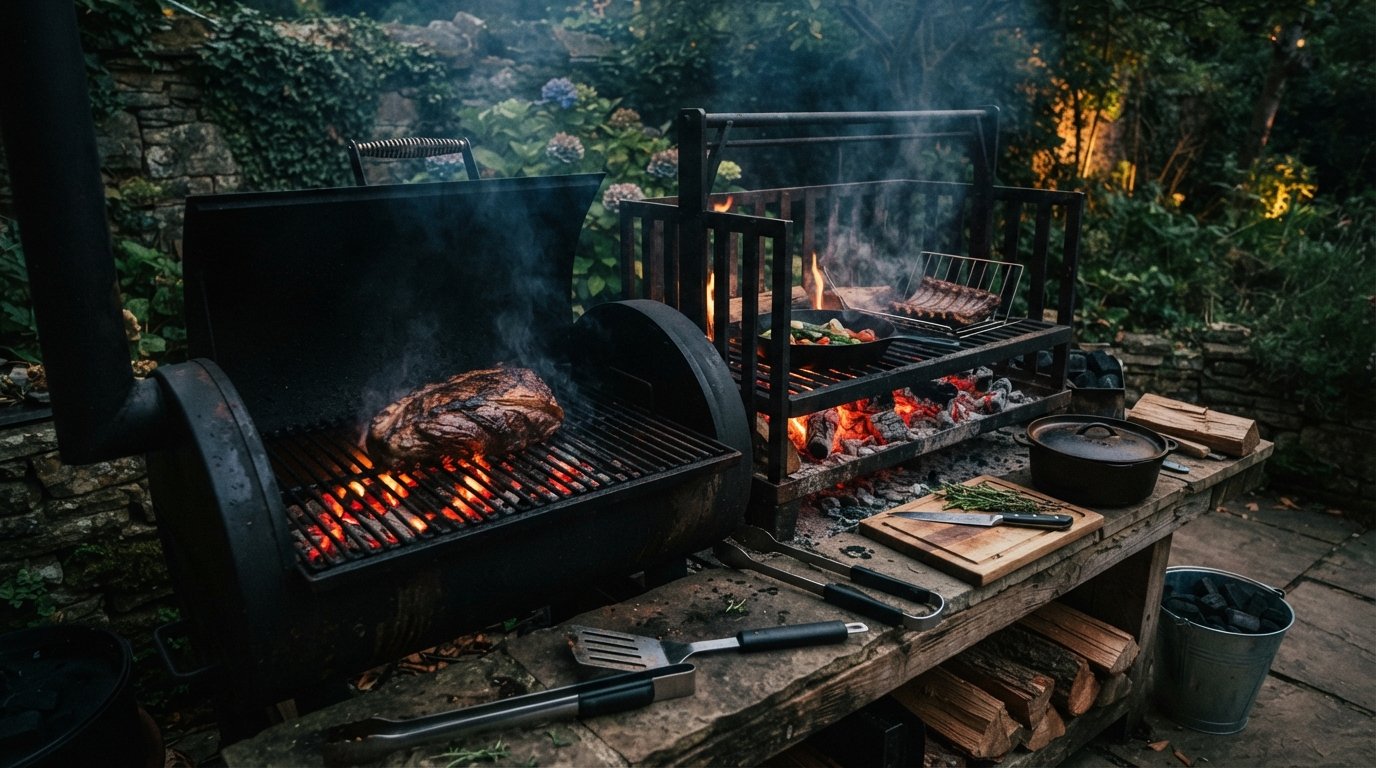
True barbeque is not a frantic battle against sudden charcoal flare-ups; it is deliberate, culinary heat architecture. If you have ever stood over a flimsy supermarket grill fighting scorching infernos, only to serve charred crusts with undercooked centres, you already know how quickly outdoor entertaining can turn into frustration. For too long, thin metal and poor airflow have blurred the line between hurried direct grilling and authentic, wood-smoked craft, leaving ambitious cooks stranded between high hopes and burnt dinners.
It doesn’t have to stay that way. You can elevate your outdoor cooking from everyday grilling to master-level gastronomy with refined technique and uncompromising hardware. By mastering thermal control, you will achieve succulent textures, delicate bark, and pure wood-smoke aromatics without the stress. This guide explores the essential principles of fire management, durable professional-grade hardware engineered for lifetime performance, and everything you need to host effortless, restaurant-standard feasts in your own garden.
Key Takeaways
- Understand the vital distinction between high-heat surface searing and authentic, low-and-slow barbeque to unlock tender, succulent results every time.
- Discover how precision culinary hardware, from artisanal Hibachi Grills to architectural Fire Cages, transforms thermal control and cooking versatility.
- Learn why single-origin, chemical-free fuels such as Oak Briquettes and King Khaya Charcoal are fundamental to achieving pure, unadulterated flavours.
- Master deliberate two-zone fire management to eliminate flare-ups and maintain effortless command over internal meat temperatures.
- Gain practical insights into arranging an ergonomic, luxury outdoor kitchen space designed for seamless entertaining and sensory open-fire cooking.
What Is Barbeque? Understanding the True Essence of Live-Fire Gastronomy
True live-fire gastronomy extends far beyond tossing meat over glowing embers. At its core, genuine barbeque is the deliberate discipline of thermal management, balancing direct radiant heat and gentle indirect convective air currents over natural fuel. While casual observers often reduce the craft to a generic garden social gathering, as documented in historical perspectives on what is barbeque across world cultures, modern live-fire cooking represents a sophisticated culinary art. It transforms your outdoor terrace into the sensory heartbeat of the home, drawing guests together around the hypnotic aroma of clean timber embers.
Grilling vs Barbeque: Demystifying the Fundamental Differences
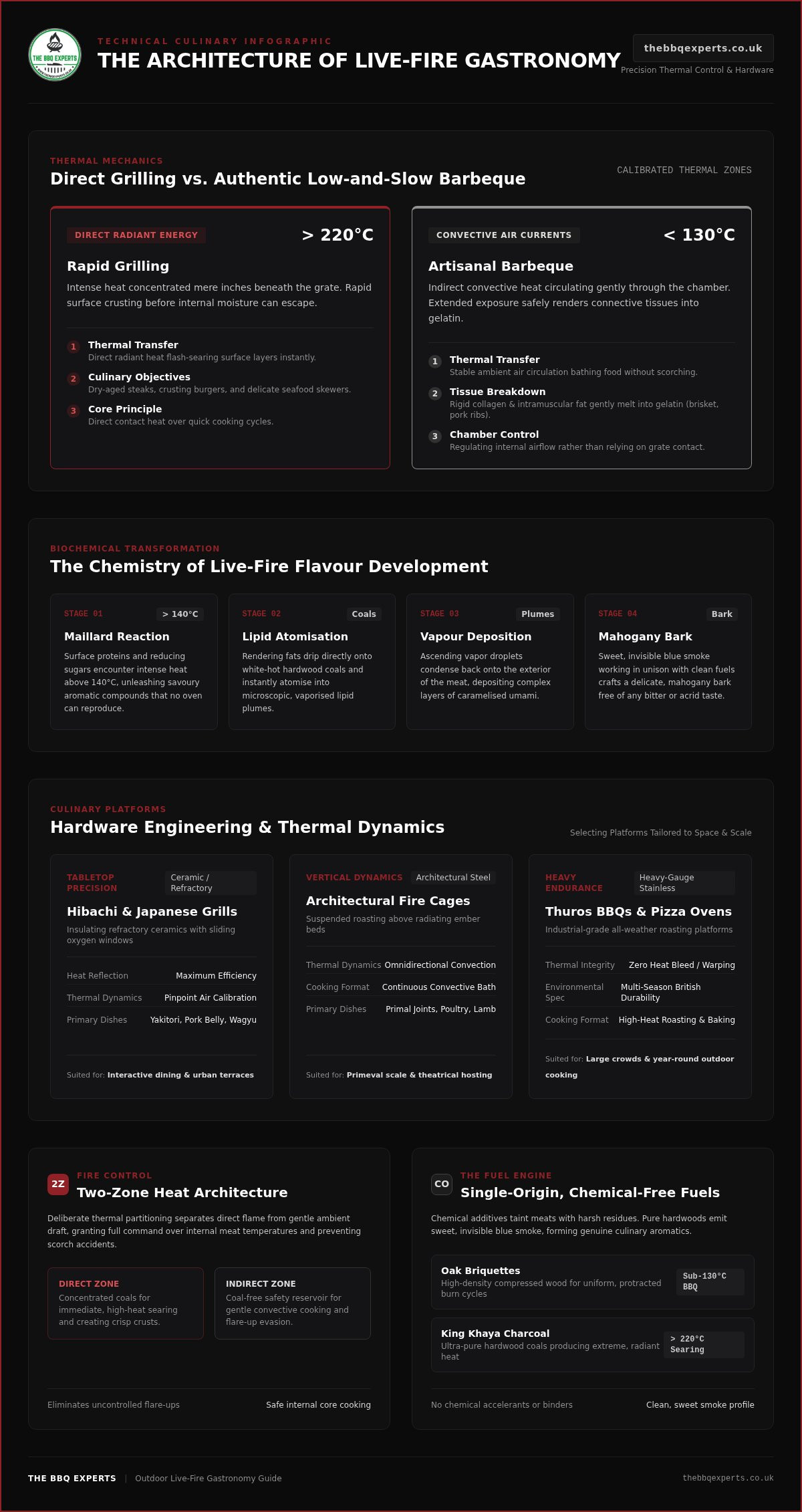
Conflating rapid grilling with artisanal barbeque remains the most common culinary mistake. Grilling relies on high-heat radiant energy, often exceeding 220°C, placed mere inches beneath the food. It’s the ideal method for flash-searing dry-aged steaks, crusting burgers, or charring delicate seafood skewers before their interior moisture escapes.
Artisanal barbeque operates on an entirely different thermal philosophy:
- Thermal Transfer: Indirect convective heat circulates gently at steady, sub-130°C temperatures around the food rather than scorching it from below.
- Tissue Breakdown: Extended cooking times gently melt rigid collagen and intramuscular fat into succulent gelatin, rendering brisket and pork ribs exceptionally tender.
- Chamber Control: Success demands managing stable ambient air currents inside your cooker rather than relying on direct surface contact.
The Chemistry of Live-Fire Flavour Development
The inimitable depth of fire-cooked food is rooted in organic chemistry. When surface proteins and reducing sugars encounter intense heat above 140°C, the Maillard reaction triggers an explosion of rich, savoury aromatic compounds that no kitchen oven can emulate.
Simultaneously, rendering fats drip onto white-hot hardwood coals and instantly atomise. These vaporised lipid droplets ascend in fragrant plumes, condensing back onto the meat’s surface to create complex layers of caramelised umami. Working in tandem with the sweet, invisible blue smoke produced by clean-burning coals, this process develops a delicate mahogany bark without any bitter or acrid aftertaste.
Selecting Your Culinary Platform: Choosing the Right Barbeque Hardware
Your hardware dictates your thermal ceiling, fuel consumption, and culinary range. Flimsy, pressed-steel units bleed warmth and distort under high heat, forcing you to fight your setup rather than perfect your food. Investing in heavy-gauge construction transforms your garden into a high-performance open-air kitchen. Whether you prefer surgical, high-intensity table grilling or the theatre of suspended open-fire roasting, selecting the right hardware establishes complete authority over your cooking environment.
Precision Japanese Charcoal Grills and Hibachi Cooking
Compact Japanese charcoal grills and authentic Hibachi Grill platforms harness extraordinary radiant efficiency. Crafted from insulating ceramic compounds or dense refractory materials, they reflect heat back toward the cooking grate with minimal fuel loss. Sliding ventilation windows allow pinpoint oxygen calibration, making them the ultimate tool for Japanese-style yakitori skewers, glazed pork belly strips, and dry-aged wagyu cuts.
Theatrical Open-Fire Cooking with Fire Cages
Matching Hardware to Your Lifestyle and Entertaining Demands
Every outdoor space demands a platform tailored to how you love to host. To determine which apparatus aligns with your lifestyle, consider three foundational factors:
- Entertaining Scale: An intimate Hibachi Grill creates an interactive, communal dining experience on an urban terrace, whereas larger stainless units effortlessly feed substantial crowds.
- Spatial Permanence: Freestanding artisan units offer flexible mobility around patio seating, while fixed modular setups anchor a permanent culinary sanctuary.
- Thermal Adaptability: As culinary institutions emphasise when discussing Choosing Your Barbecue Fuel, your cooker must provide reliable airflow control to leverage pure coals effectively.
If you’re unsure which setup matches your terrace dimensions or cooking ambitions, you can find the perfect cooking platform with tailored advice from our specialist team.
The Engine of Flavour: Choosing Pure, High-Performance Fuels
Fuel is never merely a heat source; it is the foundational ingredient of your dish. Standard supermarket charcoal bags often conceal low-grade scrap timbers held together by petroleum binders, chemical accelerants, and mineral fillers. When lit, these additives vaporise directly into your cuts, blanketing prime produce in acrid fumes. Elevating your craft requires pure carbon fuels that produce spotless, radiant embers without toxic interference, allowing authentic timber aromatics to define your barbeque.
Lumpwood vs Briquettes: Combustion Dynamics and Heat Profiles
Every cooking style demands a tailored thermodynamic profile, determined largely by fuel structure and physical density:
- Natural Lumpwood: Porous, natural hardwoods ignite quickly and generate blistering radiant temperatures. Premium choices like Big Eds Charcoal deliver intense, unhindered heat with minimal ash, making them ideal for searing steaks, charring flatbreads, or high-heat skewering.
- Dense Compressed Briquettes: Pure, binder-free Oak Briquettes compress hardwood sawdust into dense geometric logs. Because density governs combustion rates, they release steady, predictable warmth over extended durations. They eliminate erratic temperature spikes during low-and-slow braising or overnight smoking.
Exotic Single-Species Charcoals for Discriminating Palates
Single-origin hardwoods impart unique thermal behaviours and subtle aromatic nuances. Rather than settling for mystery timber blends, connoisseurs match wood species to specific ingredients.
King Khaya Charcoal, forged from dense African hardwood, offers exceptional longevity alongside an intensely clean, neutral burn. It provides intense radiant energy that lets dry-aged beef flavours lead without overt smokiness.
For more nuanced proteins, Eucalyptus Charcoal yields a crisp, subtle sweetness that complements roasted shellfish, game birds, and heritage pork. Meanwhile, dense Coffee Charcoal harnesses pruned coffee wood to achieve extraordinary burning endurance. It leaves almost no residual ash, preventing clogged air channels during marathon culinary sessions and keeping your hardware running at peak thermal efficiency.
Mastering Fire Management: Techniques for Culinary Precision
Precision live-fire gastronomy separates culinary intent from random circumstance. Too many cooks rely on chemical lighter fluids, dousing coals in petroleum accelerants that contaminate ceramic walls and taint fresh cuts. Professional fire craft begins cleanly. Using wood-wool firelighters or chimney starters protects delicate ingredients from harsh off-gassing. Once lit, true barbeque mastery depends on orchestrating oxygen flow through bottom intakes and top exhaust vents, regulating combustion speed rather than constantly moving grates.
Building and Regulating Dual-Zone Cooking Environments
The two-zone configuration is the foundation of versatile heat management. Bank glowing coals firmly against one side of your cook chamber, leaving the opposing flank bare. This simple architectural step splits your platform into two distinct thermal environments:
- Direct Radiant Zone: Position cuts directly over white-hot embers to lock in deep caramelisation, render exterior skin, or achieve bold grate markings in minutes.
- Indirect Convection Zone: Move food to the unlit side to bake through ambient airflow, shielding intramuscular fats from rendering too quickly over raw flame.
- Thermal Safety Buffer: When melting fats drip and threaten severe flare-ups, shifting cuts immediately to the cool side halts scorching before meat dries out.
This layout facilitates the reverse-sear method. By gently raising internal core temperatures in the convection zone first, you retain vital moisture. A rapid finish over radiant coals then produces an even, edge-to-edge finish without the grey overcooked band common in basic pan frying.
Flavour Architecture: Seasonings, Rubs, and Aromatics
Surface chemistry dictates crust formation. Salting cuts hours ahead draws out natural juices via osmosis; these liquids dissolve crystalline surface granules before the muscle fibres reabsorb the concentrated brine. This deep seasoning primes the exterior for complex seasonings.
Specialist seasonings, like artisan Angus & Oink Rubs, layer herbaceous depth, savoury umami, and balanced heat across your meat. Managing thermal limits remains vital. High-sugar rubs caramelise gorgeously around 160°C, but they quickly burn above 175°C. Reserve sweet coatings for indirect roasting, relying on salt-and-pepper bark profiles for direct fire exposure.
If you want to sharpen your fire management and upgrade your outdoor cooking setup, get in touch with our specialist team today for tailored hardware advice.
Designing Your Ultimate Outdoor Culinary Sanctuary
A true outdoor kitchen is far more than a spot to park a cooker; it is the social and gastronomic nucleus of your garden. Transitioning from hurried patio cooking to refined open-air hospitality requires an environment designed around flow, comfort, and sensory theatre. When your layout treats live-fire cooking as a craft, hosting feels fluid and unhurried. Thoughtful spatial planning lets you remain immersed in conversation with your guests while orchestrating exceptional feasts over live embers.
Ergonomics, Safety, and Cookware Maintenance
Culinary precision demands an intuitive workflow where every tool rests within arm’s reach. Positioning food preparation counters directly adjacent to your primary cooking platform prevents frantic trips back indoors. Consider these core design principles when structuring your footprint:
Elevate Your Outdoor Entertaining with The BBQ Experts
Crafting an enduring outdoor retreat requires hardware and fuel that match your culinary ambitions. Commercial-grade components engineered from thick-walled stainless steel or dense heat-retaining ceramic shrug off the British climate while delivering predictable thermal feedback meal after meal. Pairing these exceptional platforms with chemical-free fuels ensures your garden smells only of aromatic woods and searing proteins, never synthetic binders.
Transforming your terrace into an architectural haven elevates the standard of your everyday entertaining. Whether you are envisioning a modular stainless installation, a communal Hibachi station, or an open-fire rotisserie layout, tailored guidance guarantees every element serves your cooking style. Connect directly with our team to plan your bespoke outdoor setup and master authentic live-fire cooking at home.
Claim Your Place at the Fire: Elevate Your Outdoor Gastronomy
Mastering authentic barbeque is an intentional craft that blends thermodynamic control, pristine fuels, and uncompromising hardware. Moving away from flimsy supermarket grills and synthetic lighter fluids unlocks clean, succulent results that turn every meal into a sensory celebration. By pairing two-zone heat management with single-origin fuels like Big Eds Charcoal and dense Oak Briquettes, you gain total authority over internal temperatures, delicate bark formation, and rich wood-smoke aromatics.
Your garden deserves to be an inspiring culinary focal point. Whether you are searing dry-aged beef across the radiant coals of a Japanese Hibachi Grill, suspending primal cuts from an open Fire Cage, or layering competition-level Angus & Oink flavour profiles, the right foundation makes all the difference. Transform your outdoor gastronomy; speak with our barbecue specialists today for expert hardware and fuel guidance. Step up to the coals with complete culinary confidence, and bring restaurant-calibre live-fire dining into your own home.
Frequently Asked Questions
What is the primary difference between a barbeque and grilling?
Grilling relies on direct radiant heat placed close beneath ingredients, operating at high temperatures above 200°C for rapid surface searing. In contrast, authentic barbeque uses lower, indirect ambient heat alongside natural wood smoke. This patient thermal circulation gently breaks down tough connective tissues in larger joints, rendering brisket, ribs, and pork shoulders tender while infusing authentic timber aromatics throughout the meat.
Why should I avoid using chemical lighter fluid to start my charcoal?
Chemical lighter fluids saturate porous fuel with volatile petroleum distillates that release noxious fumes during combustion. These toxic compounds coat your cooking chamber, permeate the exterior bark of your food, and impart an unpleasant artificial chemical taste. Starting fires with natural wood-wool lighters, paraffin cubes, or chimney starters guarantees pristine ignition without contaminating your cooking platform or masking delicate culinary flavours.
How do I maintain a consistent temperature when cooking on a charcoal barbeque?
Stable temperatures depend entirely on calibrating your airflow dampers rather than moving the fuel bed. The bottom intake vent feeds oxygen to the embers, controlling how intensely they burn, while the top exhaust vent regulates heat evacuation and smoke draw. Adjusting these vents in subtle quarter-inch increments prevents abrupt thermal swings, keeping your cooking environment steady over hours of uninterrupted roasting.
What makes artisanal single-species charcoal superior to standard fuel?
Standard forecourt charcoal bags typically consist of low-density scrap timber bound by chemical additives, burning erratically with heavy ash deposits. Single-origin charcoals derived from oak, eucalyptus, or coffee wood offer exceptional density and pure carbonisation. They deliver extended burn durations, sustained radiant energy, minimal ash production, and clean, delicate smoke that enhances rather than overpowers the natural character of premium butcher cuts.
Can I cook on a Japanese Hibachi grill indoors or in sheltered areas?
Natural charcoal combustion generates carbon monoxide, meaning any live-fire platform must strictly operate in open outdoor environments. While a Japanese Charcoal Grill offers compact tabletop convenience on patios or garden terraces, never use it inside domestic kitchens, tents, or unventilated conservatories. Always ensure free-flowing ambient ventilation overhead to maintain safe cooking conditions during social dining sessions.
What is the two-zone fire method and why is it essential?
The two-zone method involves arranging glowing fuel on one half of your fire grate, leaving the opposing side empty. This creates a searing radiant area alongside a gentle indirect roasting zone. It prevents fat-dripping proteins from creating uncontrolled infernos, allows larger cuts to rise to internal target temperatures gently, and gives you complete spatial control to sear or rest food effortlessly.
How do I protect high-end outdoor cooking hardware from British weather?
Shielding outdoor cooking equipment from persistent moisture requires breathable, waterproof covers and disciplined grate care. After cooking, brush away food residue and coat raw cast-iron or carbon-steel surfaces with a fine film of neutral cooking oil to stave off surface rust. Storing fuel containers and precision accessories indoors or inside sealed dry-boxes keeps everything in pristine working condition across wet autumn and winter seasons.
Disclaimer
This article was produced with AI assistance. We use AI and Third Parties to help deliver more content to our BBQ website and community, but we always aim to ensure accuracy and quality as much as we can. If you spot anything that doesn't seem right, we'd love to hear from you

Recent News & Updates

Our Story, Values and Beliefs
Here at the BBQ experts we have a passion for BBQ food, outdoor living and spending time with family and friends. We offer you; A...
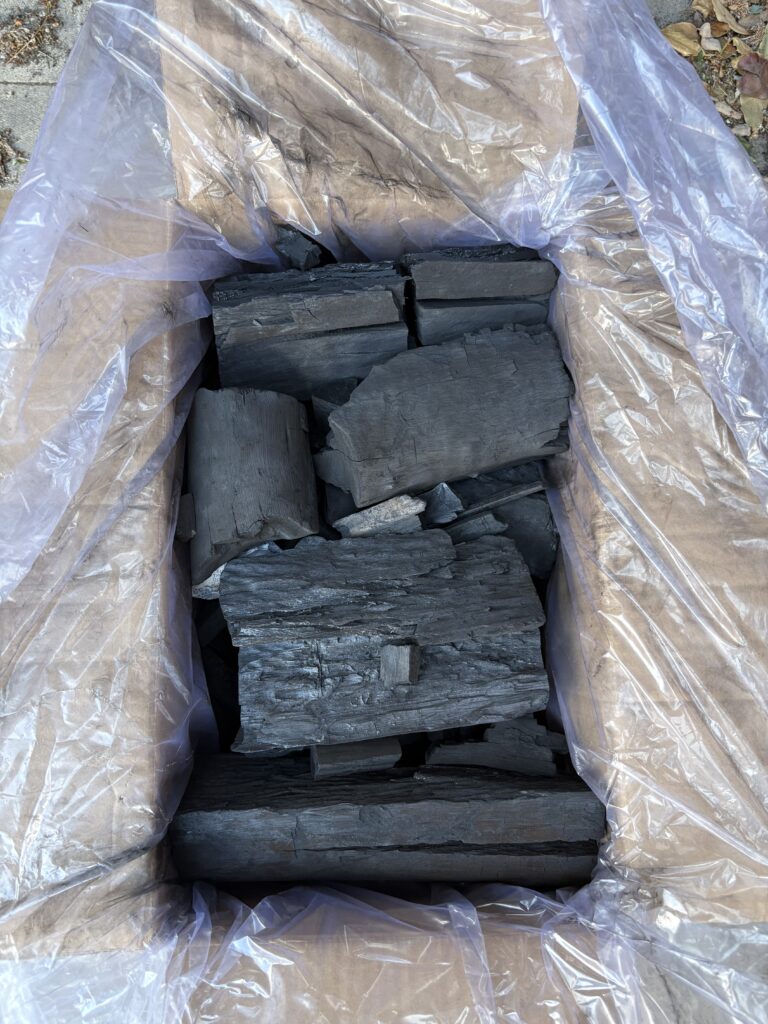
FAQ: Why does Big Ed’s Charcoal have a mix of big and small lumps?
Big Ed’s is all about top-quality, long-burning charcoal, made from a mix of Eucalyptus and Mangrove wood. Each 10kg box is packed with...