
Sustainable BBQ charcoal UK: which fuel makes a difference
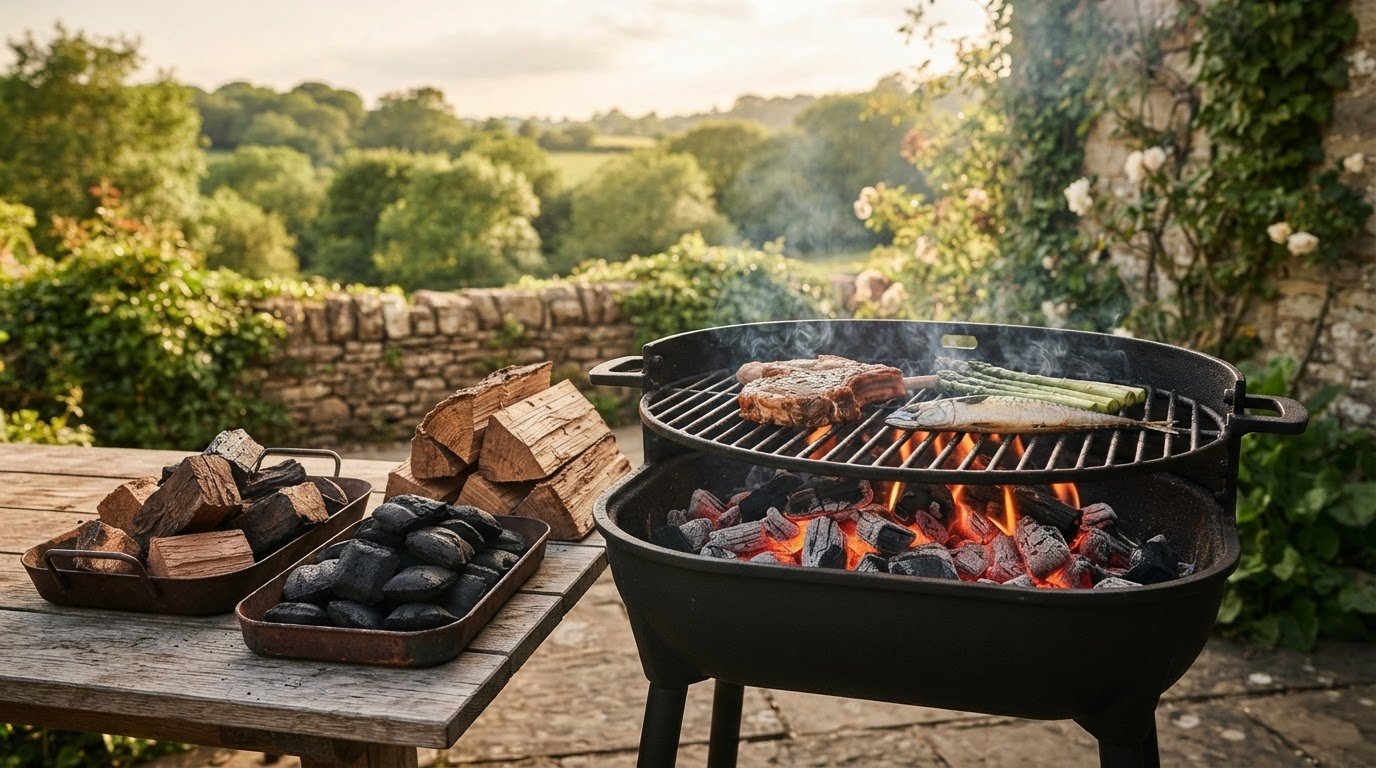
British-made charcoal can make a difference: where the wood comes from and how far it travels matter, while lumpwood versus briquettes is only part of the picture. Around 90% of barbecue charcoal used in the UK is imported. Choosing sustainable BBQ charcoal in the UK means looking beyond the bag to responsible sourcing as well as fuel type.
It’s easy to focus on how quickly charcoal lights or how steadily it holds heat. Those qualities matter at the grill, but they don’t tell the whole story about its environmental impact.
This guide explains how sourcing affects your choice, why British-made lumpwood may reduce transport impact, and how lumpwood compares with briquettes. You’ll learn how to weigh provenance, fuel performance and your cooking plans, so your next BBQ can be considered as well as delicious.
Key Takeaways
- Look beyond the bag’s fuel type: where the wood comes from and how responsibly it’s sourced are central to a lower-impact choice.
- British-made lumpwood can help reduce transport emissions; consider provenance alongside how you plan to cook.
- Lumpwood and briquettes differ in their materials and behaviour at the grill, so choose according to the cooking style and heat you need.
- Make your BBQ more considered by choosing responsibly sourced fuel and using only what your cooking requires.
1. Environmental considerations and responsible charcoal sourcing
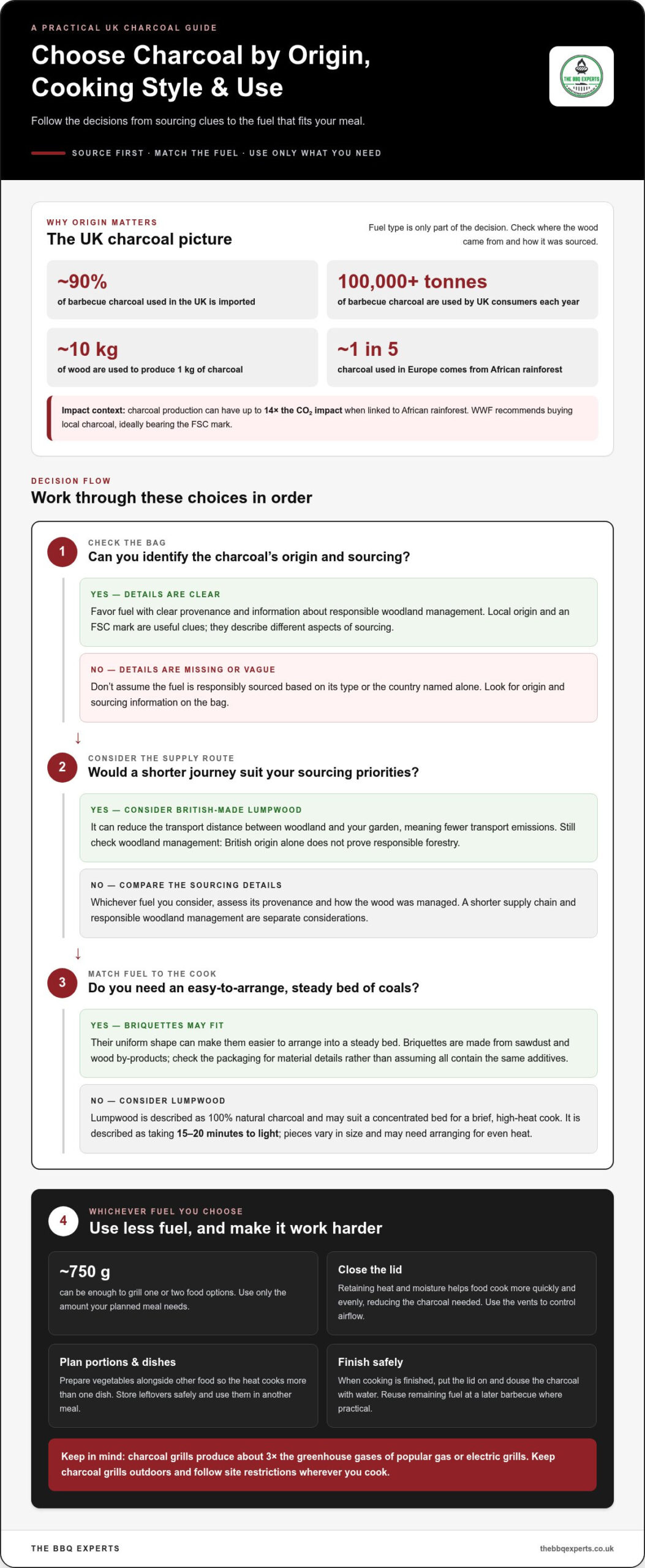
UK consumers use more than 100,000 tonnes of barbecue charcoal each year, and around 90% is imported. That makes the fuel’s origin an important part of its environmental impact, alongside how the wood was sourced and managed. For a summer barbecue, a low-impact decision starts before lighting: read the bag’s origin details and look for credible sourcing information.
Producing 1 kg of charcoal takes around 10 kg of wood. About one fifth of charcoal used in Europe comes from African rainforest, where charcoal production can have up to 14 times the CO2 impact. These figures show why sourcing matters: wood from responsibly managed woodland is a more considered choice than fuel connected to forest loss. WWF recommends buying local charcoal, ideally bearing the FSC mark. Local origin and certification are useful clues, but they describe different aspects of sourcing.
Charcoal grills produce about three times the greenhouse gases of popular gas or electric grills. Their emissions include carbon monoxide, carbon dioxide, nitrogen oxides and trace metals, so air pollution is a factor when choosing and using charcoal. Keep the grill outdoors, use only the fuel needed, and avoid adding more charcoal when the food is nearly ready.
Disposable BBQs create a separate waste problem. They use non-recyclable materials, including treated charcoal and plastic-film packaging, and can remain hot for hours after cooking. Choose a reusable grill, and dispose of cooled charcoal and packaging responsibly. An unattended or poorly discarded disposable barbecue can also pose a fire risk.
When assessing UK sourcing, labelling and sales, check the bag’s origin details and any sourcing mark. WWF’s preference for local charcoal with an FSC mark is a practical guide, not a substitute for reading the label. Rules for using a charcoal BBQ in parks, on beaches or at campsites depend on the site. Follow posted restrictions and staff directions, as charcoal grills aren’t permitted everywhere.
A sustainable BBQ charcoal choice in the UK combines responsible sourcing with careful use. Check provenance, favour managed woodland and avoid single-use grills. This helps you weigh environmental impact without overlooking transport, emissions or waste.
2. British-made lumpwood and reducing transport emissions
British-made lumpwood can reduce the transport distance between woodland and your garden. Shorter journeys mean fewer transport emissions, but British origin alone doesn’t prove responsible forestry. Look for clear provenance and information about woodland management, then consider how the wood was harvested. Sustainable sourcing matters because poorly managed forests can contribute to deforestation and release stored carbon. The strongest choice combines responsible woodland management with a shorter supply chain.
Fuel efficiency matters after the bag is opened. Close the barbecue lid while cooking: retaining heat and moisture helps food cook more quickly and evenly, reducing the charcoal needed. Use the vents to control airflow rather than leaving the grill open throughout. Add only enough fuel for the food planned. Around 750 g of charcoal can be enough to grill one or two food options, so avoid filling the barbecue as though every meal needs a full bed of coals.
Plan the meal before lighting the grill. Portion ingredients for the people eating, and prepare vegetables alongside other food so the barbecue heat cooks more than one dish. Grilling can caramelise vegetables’ natural sugars, bringing depth of flavour without extra ingredients. If food remains, store it safely and use it in another meal rather than letting it become waste. An average UK household with children is estimated to waste £700 worth of food a year, making thoughtful meal planning valuable beyond the garden.
When cooking is finished, put the lid on and douse the charcoal with water so it doesn’t all burn up. Where practical, reuse remaining fuel at a later barbecue. A reusable grill also avoids the packaging and waste associated with disposable options. Shorter transport, managed woodland, a closed lid and careful portions each address a different part of a barbecue’s environmental impact. No single step does everything, but each can help you use less fuel and waste less food.
3. Lumpwood charcoal compared with briquettes
Lumpwood and briquettes differ in composition, shape and how they behave over the fire. Lumpwood is described as 100% natural charcoal, while briquettes are made from sawdust and wood by-products. Those distinctions can influence lighting, heat management and the flavour you want from a barbecue. The label alone, however, doesn’t reveal where the original wood grew or how it was sourced, so assess provenance separately.
British single-species lumpwood tells you more specifically which wood is used: one species, grown and turned into charcoal in Britain. That can help if you want to understand the fuel’s origin rather than buy an unspecified blend. A single species doesn’t automatically mean the woodland is responsibly managed. Check the bag for origin and sourcing information, then match the fuel to your cooking, whether it’s a quick sear or slower grilling.
Lumpwood charcoal is described as taking 15-20 minutes to light. Briquettes’ uniform shape can make them easier to arrange into a steady bed, while lumpwood pieces vary in size and may need arranging for even heat. Neither option has a universal burn duration: airflow, grill design, fuel quantity and piece size all affect how quickly charcoal burns. Choose according to the heat pattern and cooking time your meal needs, not a blanket claim that one always lasts longer.
For chicken pieces that need controlled cooking, arrange the coals to create hotter and cooler zones. This lets you sear the food, then move it away from direct heat. Another meal may call for a concentrated bed of lumpwood and a brief, high-heat cook. Use only the amount needed, and read ingredient or material details on the packaging rather than assuming all briquettes contain the same additives. Responsible sourcing, efficient burning and less wasted fuel matter more to the planet than charcoal’s shape alone. Treat these options as cooking tools, and include provenance in your final choice.
There’s no fixed comparison for burn time: it depends on airflow, grill design, fuel quantity and piece size for both types.
4. Sustainable charcoal choices
Choose by weighing three things: wood origin, sourcing evidence and how efficiently you’ll use the fuel. For British charcoal, look for clear UK provenance and information about woodland management. Local origin can shorten transport, while a sourcing mark gives you another detail to assess. No single label tells the whole story, so read the bag rather than relying on words such as “natural” alone.
For a practical starting point, look for the FSC mark and locally sourced wood. WWF recommends local charcoal, ideally bearing FSC certification. Then consider the charcoal’s origin and packaging too. A bag with plastic or unnecessary wrapping adds waste, while a reusable grill avoids the discarded materials associated with disposable BBQs.
UK prices depend on factors such as bag size, wood origin, certification and delivery. Compare the cost per stated weight and the amount of usable fuel, alongside provenance, rather than choosing solely by the lowest shelf price. This helps you judge value without treating a premium price as proof of a smaller environmental footprint.
You can browse supermarket charcoal aisles or specialist online retailers. In either case, compare the same details: stated origin, FSC mark, packaging and fuel type. When shopping online, read the product description and packaging information before choosing. If a listing gives little sourcing detail, favour one that clearly explains where its wood comes from.
For a lower-impact BBQ, choose locally sourced fuel with clear sourcing information, use only what your meal requires, and avoid disposable grills. Electric grills powered by renewable energy produce no direct emissions, so they’re another option if charcoal isn’t essential to your cooking. If you’re comparing fuel choices for your setup, get guidance on choosing BBQ fuel.
The BBQ Experts: Angus & Oink Rubs
The BBQ Experts brings fuel and cooking style together, with Angus & Oink Rubs to add a distinctive finish to grilled food. If you’re comparing charcoal options, Big Eds Charcoal is another fuel to consider alongside your priorities for provenance and performance.
For focused outdoor cooking, the Hibachi Grill and Fire Cage offer different ways to shape your barbecue experience. Match your equipment to the food, heat and setting you have in mind, then use the sourcing checks in this guide when choosing charcoal. That keeps flavour and cooking style part of a considered decision.
Explore the range or contact The BBQ Experts to discuss your BBQ setup.
Make your next BBQ choice count
Let the way you use your grill guide your next cook. A quick weeknight meal, a long, slow gathering and a high-heat sear call for different fuel choices. Choosing sustainable BBQ charcoal in the UK isn’t about chasing a perfect label; it’s about making provenance and efficient use part of your regular outdoor cooking routine.
Take that considered approach into the rest of your setup, too. The right combination of fuel, equipment and seasoning can make the garden feel like a more inviting place to cook and gather. If you’d like help thinking through what suits your style, contact The BBQ Experts for advice. Then bring your next meal outdoors with confidence and make every cook a little more thoughtful.
Frequently Asked Questions
Does the Type of Charcoal Make a Difference?
Yes, but fuel type alone can’t tell you whether the wood was responsibly sourced. Choose fuel that suits your meal and grill, then consider its origin separately. For a small cook, avoid lighting more charcoal than you need. If reducing direct emissions matters more than charcoal cooking, an electric grill powered by renewable energy produces no direct emissions.
How else can I make my summer BBQs more sustainable?
Use reusable plates and cutlery, and choose natural wood-based firelighters instead of petrol-based ones. Plan portions to reduce leftovers, and include vegetables that can cook alongside the main dish. Your menu matters too: choosing chicken or pork instead of beef can cut barbecue-related food emissions in half. These choices address waste and food impact, not just the fuel in your grill.
What is the difference between lumpwood charcoal and briquettes for sustainability and performance?
Lumpwood is made as individual pieces of charcoal, while briquettes are made from compressed sawdust and wood by-products. Piece shape can affect how you arrange heat: create separate hot and cooler areas for food that needs different treatment, such as searing and finishing. For sustainability, compare the wood’s origin and sourcing information for either type; the format alone doesn’t establish its environmental credentials.
How can I check whether BBQ charcoal is responsibly sourced in the UK?
Read the packaging for the wood’s country of origin, any named species and specific sourcing claims. Look for the FSC mark, which WWF recommends as a useful indicator when buying local charcoal. Distinguish where the wood was grown from where it was processed or packed. Clear, specific details make bags easier to compare than broad claims such as “eco-friendly”.
What UK rules apply to charcoal sourcing, labelling, and sales?
Check the bag’s origin details and sourcing marks, such as FSC, to assess the wood’s provenance. This article does not specify UK legal rules for charcoal sourcing, labelling or sales.
What are the prices of sustainable BBQ charcoal in the UK?
Prices vary with bag size, wood origin, certification and delivery. Compare the cost per stated weight and the amount of usable fuel alongside the provenance. This article does not specify prices.
Disclaimer
This article was produced with AI assistance. We use AI and Third Parties to help deliver more content to our BBQ website and community, but we always aim to ensure accuracy and quality as much as we can. If you spot anything that doesn't seem right, we'd love to hear from you

Recent News & Updates
Sustainable BBQ charcoal UK: which fuel makes a difference
British-made charcoal can make a difference: where the wood comes from and how far it travels matter, while lumpwood versus briquettes is...

Our Story, Values and Beliefs
Here at the BBQ experts we have a passion for BBQ food, outdoor living and spending time with family and friends. We offer you; A...