
Outdoor Pizza Ovens UK: Find the Right Fit for Your Garden
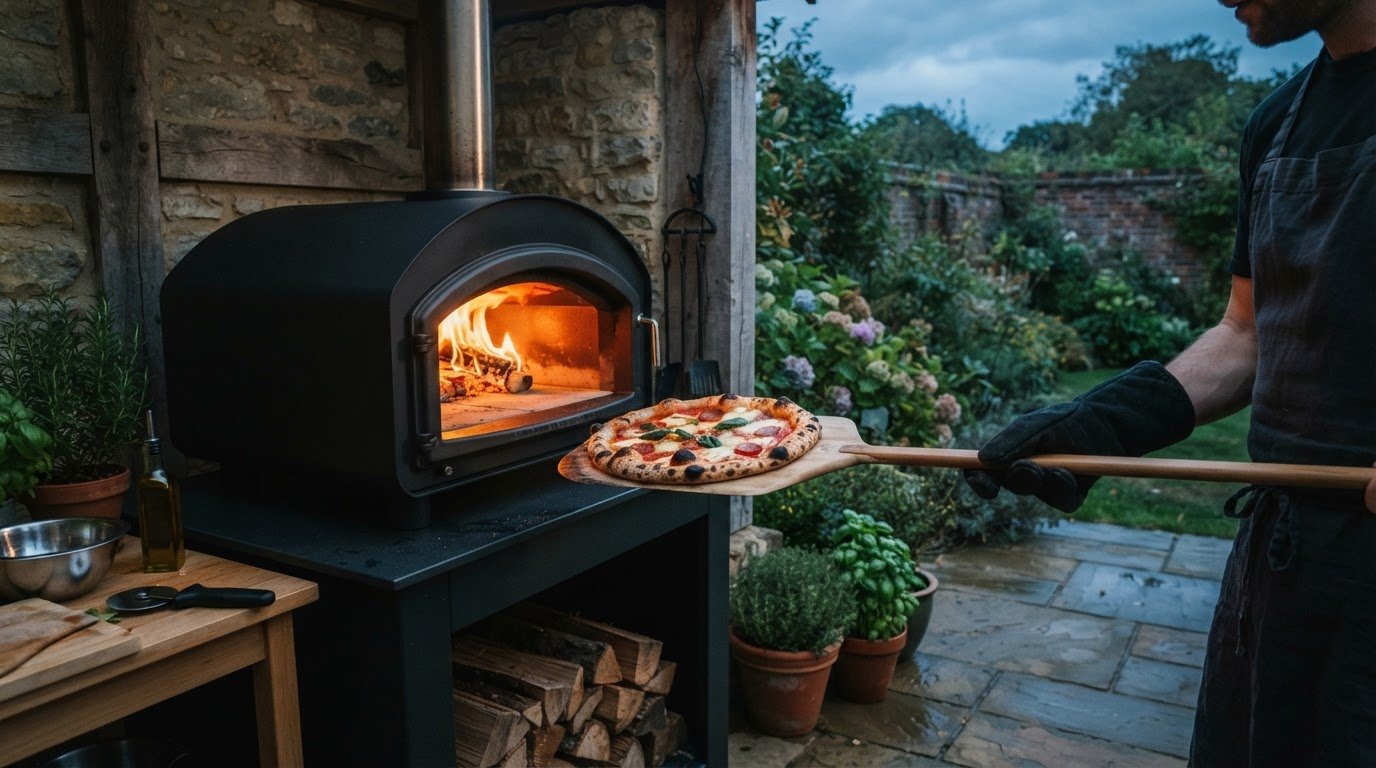
The most powerful outdoor pizza oven isn’t necessarily the right one for your garden. When comparing outdoor pizza ovens UK cooks can choose from wood-fired, gas and electric styles. The best fit depends on how often you’ll cook, what you want to make and how much space you can dedicate to it.
It’s easy to get caught up in fuel types, temperatures and technical details, especially if you’re unsure whether your patio or garden is suitable. Start with your cooking routine and outdoor setup instead. These will help you narrow your options before you compare specifications.
This guide covers oven styles, practical features, positioning and care. It also looks at UK weather, including shelter from wind and rain and allowing the oven time to heat in colder conditions. By the end, you’ll have a clearer idea of which style suits your plans and the space where friends and family will gather.
Key Takeaways
- Choose an oven for the way you’ll actually cook and entertain, not for features you may rarely use.
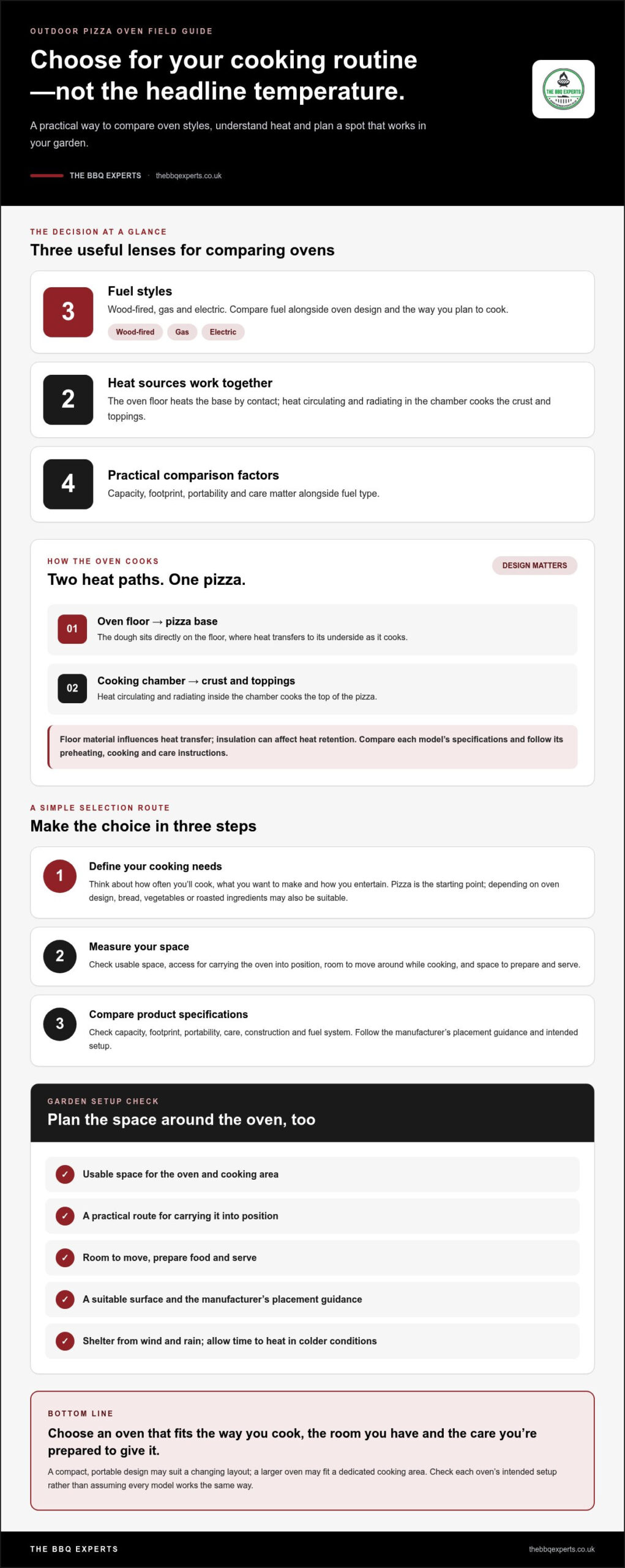
- Understand how the oven floor, cooking chamber and heat retention work together to cook a pizza.
- Compare capacity, footprint, portability and care alongside fuel type when exploring outdoor pizza ovens uk.
- Plan your cooking area by checking usable space, access, the manufacturer’s placement guidance and the surface beneath the oven.
- Make your choice in three steps: define your cooking needs, measure your space and compare product specifications.
Why choose an outdoor pizza oven for your garden?
An outdoor pizza oven is designed for cooking pizzas outside. Its appeal goes beyond moving dinner outdoors: the heat, the aroma of baking dough and the moment a freshly cooked pizza comes to the table make cooking part of the occasion. A well-cooked pizza can have a crisp base and bubbling toppings, while the oven gives guests a natural place to gather.
Traditional masonry ovens show how a substantial cooking chamber can store and radiate heat. The masonry oven offers an introduction to that design and its history. Modern ovens vary, so don’t assume that every model cooks or retains heat in the same way. Your choice depends on the oven’s design, your preferred cooking style, the available space and the care it requires.
Think about how often you’ll use it. For occasional pizza nights, a straightforward setup may suit your plans. If outdoor cooking and entertaining are regular parts of your week, an oven that fits naturally into a wider cooking area may be a better match. Neither routine is better. Choose something you’ll enjoy using, rather than paying attention to features that don’t suit your day-to-day needs.
What can you cook in an outdoor pizza oven?
Start with pizza. An outdoor pizza oven is made for cooking it, and preparing dough and toppings before guests arrive can make an evening of cooking to order more relaxed. Depending on the oven’s design, you may also be able to cook bread, vegetables or roasted ingredients. Follow the manufacturer’s guidance on suitable foods and cooking methods rather than assuming every oven is intended for the same tasks.
For example, you could cook pizzas in the oven while preparing salads and toppings nearby. This gives the meal a simple rhythm and makes the oven part of the evening, not just a piece of equipment brought out for one dish.
Is an outdoor pizza oven right for your garden?
Check the usable space, the route for carrying the oven into position and how people will move around it while you cook. Leave room for preparation and serving, too. The area should feel comfortable, not crowded. Suitability depends on the particular oven’s placement requirements and intended use, so read its instructions before choosing a spot.
If you’re considering outdoor pizza ovens uk, match the setup to your habits. Occasional entertaining may call for a compact arrangement, while frequent outdoor meals could make a dedicated cooking space worthwhile. Start with how you use your garden, then look for an oven that fits.
How outdoor pizza ovens work: heat, cooking style and oven design
An outdoor pizza oven cooks by heating an enclosed chamber and the surface beneath the pizza. Heat from the oven floor cooks the base through direct contact, while heat circulating and radiating within the chamber cooks the crust and toppings. The balance between these heat sources, and how consistently the oven maintains them, shapes the cooking experience.
Oven designs range from portable units intended to be moved or stored to larger ovens designed for a more permanent place in an outdoor cooking area. Construction, fuel systems and operating instructions vary, so a feature that matters in one style may be less important in another. When comparing outdoor pizza ovens uk, understanding how heat moves through an oven is more useful than relying on a headline temperature alone.
How does heat create a crisp pizza base?
The dough rests directly on the oven floor, where heat transfers to its underside as it cooks. At the same time, heat within the chamber reaches the top of the pizza, cooking the crust and warming the toppings. Both matter: the floor affects the base, while the chamber helps cook the pizza as a whole.
The pizza’s position and the oven’s heat pattern can influence how it cooks. Follow the manufacturer’s directions for preheating, placing and turning pizzas. Cooking temperatures and times aren’t universal, so use the guidance for your oven instead of assuming every model behaves alike.
What does oven construction change?
The floor material influences how heat transfers to the dough, while insulation can affect how well warmth is retained in the chamber. A stable, level cooking surface also helps you place and handle pizzas consistently. These are useful design considerations, not guarantees of a particular result: materials, insulation and performance differ between ovens. Compare the published specifications for each model and follow its care instructions.
Chamber shape and size affect how much room you have to manoeuvre a pizza and how the oven fits your cooking routine. A compact design may suit a limited setup, while a larger oven may offer more working room but need more space. Consider the area around the oven as well as its cooking floor, including space to prepare food and work safely.
Fuel is another part of the decision, but compare it alongside the oven’s design and your cooking habits rather than in isolation. If you’re considering a fuel-burning oven, GOV.UK explains considerations for Smoke control areas. You can also explore The BBQ Experts’ outdoor cooking plans alongside its range of pizza ovens and outdoor cooking equipment.
How to compare outdoor pizza ovens for your cooking style
Start with how you’ll cook, not with a long list of features. For outdoor pizza ovens uk buyers, a useful shortlist balances capacity and footprint with how easily the oven fits into everyday use. Fuel matters, too, but compare it alongside these practical considerations. A separate fuel guide can help you weigh the differences between fuel types.
| What to compare | What to consider | Use-case example |
|---|---|---|
| Oven style | Portable designs may suit changing layouts; larger, heavier designs may be better suited to a dedicated position. Check each oven’s intended setup. | Choose flexibility if you need to move or store the oven between occasional pizza nights. |
| Cooking capacity | Consider how many pizzas you’d usually prepare at once and how much room you need to turn or handle them. | For family meals, think about your usual serving rhythm rather than the maximum number of guests at an occasional gathering. |
| Footprint | Measure the oven and allow for the space needed to use it as directed. | On a compact patio, a smaller footprint may leave more room for preparation and movement. |
| Portability | Check the oven’s weight and whether its design supports moving or storing it. | If you’ll bring it out only for entertaining, consider where it will be kept between uses. |
| Care | Read the cleaning, storage and maintenance instructions for the specific oven. | Frequent cooks may prefer a care routine that feels manageable after a busy meal. |
Which oven size and capacity fit your plans?
Think about a typical meal. Will you cook a few pizzas in sequence, or aim to keep several guests served at a lively gathering? Your answer affects the cooking area you need and how you organise preparation. A larger oven isn’t automatically a better fit if it takes up space you rarely use.
Measure the oven against its intended position, storage spot and the route between them. Check the stated capacity and dimensions in the product specifications before deciding. A product description alone may not show how much room you’ll have to work.
Which features matter most when comparing ovens?
Prioritise features that solve a real need. If you’re new to outdoor cooking, clear operating guidance and manageable heat controls may matter more than optional conveniences. If you cook often, take a closer look at materials, heat management and cleaning instructions. Check construction details against each product’s specifications instead of assuming similar-looking ovens are built alike.
- Essential: suitable capacity, a footprint that fits, clear instructions and a care routine you can follow.
- Worth comparing: portability, heat-management features, materials and any convenience features you’ll genuinely use.
- Before choosing: check dimensions, capacity, operating guidance and cleaning requirements. For another perspective, consult BBC Good Food’s expert reviews.
Will an outdoor pizza oven work in a typical UK garden?
You don’t need a purpose-built outdoor kitchen. The key is whether the specific oven can be positioned and used according to its instructions, with enough room to cook and for people to move comfortably nearby. For outdoor pizza ovens uk gardeners, a little planning can help turn a patio or garden corner into a practical cooking spot without redesigning the whole space.
Before choosing a location or lighting the oven, work through these steps:
- 1. Measure the usable area. Account for the oven itself, the space needed to operate it and room to prepare or serve food.
- 2. Check access. Consider how the oven will reach its position, where it will be stored if needed, and whether people can move around the cooking area without crowding the cook.
- 3. Read the placement instructions. Follow the manufacturer’s guidance for clearances, positioning and nearby surfaces. Requirements differ, so don’t rely on a universal distance or placement rule.
- 4. Check the cooking surface. Use a stable, level surface suitable for the particular oven, as described in its instructions.
- 5. Consider the conditions. Wind and rain can affect outdoor cooking. A sheltered position may help, but use the oven only as its manufacturer directs, including in colder weather.
How should you plan a safe, practical oven position?
Start with the model’s placement guidance, then picture your cooking routine: carrying ingredients over, tending the oven and serving food. Make sure the position is stable and leaves a clear route around the cooking area. A compact patio may work if its layout meets the oven’s requirements. A larger garden isn’t automatically more suitable if the chosen position doesn’t.
You don’t need a permanent outdoor kitchen to enjoy pizza outdoors. Depending on the oven’s intended placement and your cooking habits, a suitable spot in an existing garden or patio may be enough.
How do you protect and care for an outdoor oven?
Follow the manufacturer’s care instructions. Use the recommended methods and tools to clean the cooking surface and chamber. Don’t assume every material can be cleaned or treated in the same way. After cooking, follow the specified steps before moving, covering or storing the oven.
Weather protection also varies by design. Use a cover or store the oven only as advised for that model. Routine cleaning is different from repairs or maintenance beyond the owner guidance. The BBQ Experts’ outdoor oven plans can be considered alongside its range of outdoor cooking equipment.
Choose your outdoor pizza oven and plan the next step
The right oven fits your cooking habits and garden, not necessarily the one with the longest feature list. Narrow your options with three practical steps: define what you’ll cook, measure the space you can use, then compare product specifications. This keeps the decision grounded in how you’ll enjoy outdoor cooking, whether that means occasional pizza nights or regular meals with family and friends.
What should you decide before choosing an oven?
Start with your routine. Note how often you expect to cook, what you’d like to make and who will usually be eating. Then record the usable space, where the oven could be stored and any placement requirements in the manufacturer’s instructions.
Use the comparison checklist from earlier in the guide to create a focused shortlist. Check capacity against your typical meals, measure the footprint, and compare portability, care instructions, materials and ease of use. Verify each detail against the product information rather than relying on appearances or broad descriptions.
- Define your needs: cooking frequency, menu and usual number of diners.
- Measure your space: intended position, access, movement around the oven and storage.
- Compare specifications: capacity, dimensions, operating guidance and care requirements.
Keep your priorities clear as you compare outdoor pizza ovens uk options. A feature is valuable when it supports the way you’ll cook. It’s less useful if it adds complexity or takes up space without serving your plans.
Where can you get help with your outdoor cooking plans?
The BBQ Experts is a specialist retailer of outdoor cooking equipment, including pizza ovens. Its range also includes products such as Hibachi Grills and Fire Cages for outdoor cooking, along with fuels and Angus & Oink Rubs.
Bring your questions, plans and measurements into the conversation. Explore outdoor pizza oven options and plan a garden cooking space that feels practical and ready to bring people together.
Make your garden ready for great outdoor cooking
A pizza oven can bring more than crisp bases to your garden. Preparing and sharing a meal can become part of the occasion. The best choice suits your actual cooking routine, available space and preferred style, rather than simply offering the most features.
Keep the decision practical: think about what you’ll cook and how often, measure the area you can use, then compare each oven’s capacity, dimensions, operating instructions and care requirements. These details help you choose an oven and plan a setup that works for your garden.
As you explore outdoor pizza ovens uk, The BBQ Experts’ range includes pizza ovens alongside outdoor cooking equipment, fuels and Angus & Oink Rubs. Discuss your outdoor pizza oven plans and take the next step towards meals cooked and shared outdoors.
Frequently Asked Questions
Is an outdoor pizza oven worth having?
It can be a rewarding addition if you enjoy making pizza outdoors and expect to use an oven regularly. Before choosing, think about how often you cook, who you usually cook for, and whether you have suitable space to position and store an oven. If you’re comparing outdoor pizza ovens uk, weigh these practical considerations against the cooking experience you want. A striking design or headline feature matters less if it doesn’t suit your routine.
Can you use an outdoor pizza oven in a small garden?
Potentially, but suitability depends on the oven’s dimensions, placement requirements and the room available around it. Check the manufacturer’s instructions, plan access to the cooking area and consider where the oven will be stored or protected between uses. A compact garden doesn’t automatically rule out an oven, but measure the intended footprint first. Allow room to work and move around comfortably, not just enough space for the oven itself.
How long does an outdoor pizza oven take to heat up?
Heating time varies with the oven’s design, fuel, starting conditions and operating guidance, so there’s no single estimate that applies to every model. Check the instructions for the oven you’re considering and allow time for it to reach the conditions needed for your cooking style. A suitable thermometer can help you monitor heat if the manufacturer recommends one. Avoid choosing based on a general heating-time claim alone.
What fuel should you use in an outdoor pizza oven?
Use only the fuel specified by the manufacturer for your particular oven. Different designs operate in different ways, so check the product instructions before buying fuel or lighting the oven. Consider how you prefer to manage cooking, the flavour you’re aiming for and the practicalities of preparation and storage. For a closer look at the differences between wood-fired and gas ovens, read the separate wood-fired versus gas pizza oven guide.
Can an outdoor pizza oven stay outside all year?
Whether an oven can remain outdoors depends on its materials, construction and care instructions. Don’t assume every model is designed for year-round exposure to the elements. Check the manufacturer’s guidance on weather protection, suitable covers, cleaning and storage before deciding where it will live. Planning for changing outdoor conditions can help you protect the oven and keep it ready for use. Follow the care instructions for your specific model.
How much space do you need for an outdoor pizza oven?
There’s no single space requirement that suits every oven. Start with the product’s exact dimensions and placement guidance, then allow for a stable position, access and room to work safely. Think about how people will move around the cooking area, too, and where accessories or fuel will be stored. Measure the space you intend to use before choosing. The oven’s instructions, not a general rule, should guide its placement.
Is a pizza oven difficult to use?
Using an outdoor pizza oven takes practice, but you’ll become more familiar with its heat and cooking rhythm over time. Follow the manufacturer’s instructions, prepare ingredients in advance and make small adjustments between cooks. The right oven for your experience level is one whose operation and care feel manageable alongside the cooking style you want. Starting with a straightforward meal can help you learn how your oven behaves before hosting a larger gathering.
Disclaimer
This article was produced with AI assistance. We use AI and Third Parties to help deliver more content to our BBQ website and community, but we always aim to ensure accuracy and quality as much as we can. If you spot anything that doesn't seem right, we'd love to hear from you

Recent News & Updates
Outdoor Pizza Ovens UK: Find the Right Fit for Your Garden
The most powerful outdoor pizza oven isn’t necessarily the right one for your garden. When comparing outdoor pizza ovens UK cooks can...

Our Story, Values and Beliefs
Here at the BBQ experts we have a passion for BBQ food, outdoor living and spending time with family and friends. We offer you; A...