
Japanese Style BBQ for UK Restaurant Kitchens
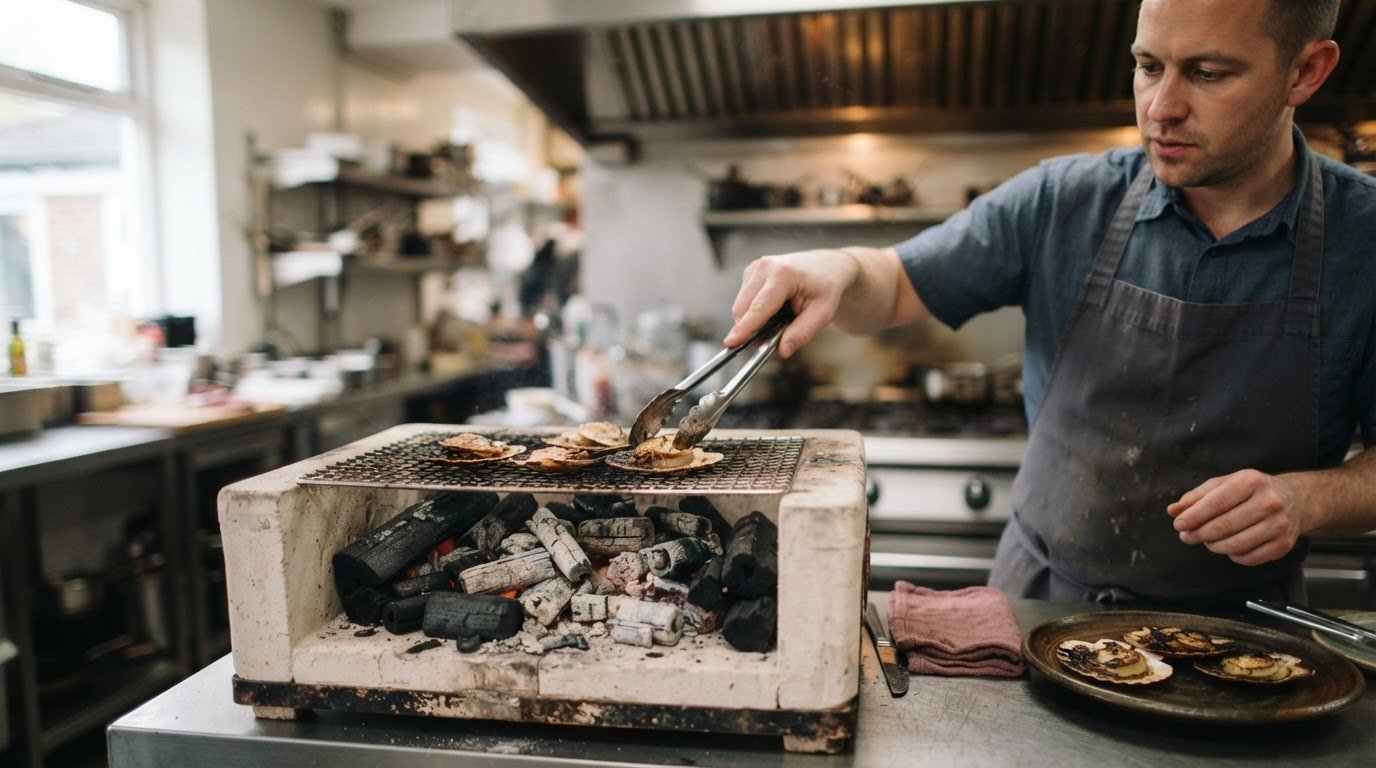
Japanese-style BBQ brings the fire as much into focus as the food. At its heart is the Konro, a Japanese charcoal grill often made from diatomaceous earth, which retains and distributes heat evenly. For Japanese-style BBQ in the UK, its compact form and controllable airflow offer a distinctive way to cook over charcoal.
If you’re drawn to savoury char, gentle smoke and the theatre of live-fire cooking, the appeal is easy to understand. The key is knowing how this style of grill works and what it can bring to a restaurant kitchen, from quick searing to carefully paced cooking.
Discover what sets a Konro apart, how Japanese grills are used in UK kitchens, and what to consider when choosing a cooking setup. You’ll also find ideas for ingredients, techniques and recipes that make the most of direct charcoal heat, helping you shape a menu around the flavour and rhythm of Japanese BBQ.
Key Takeaways
- Learn why binchotan is a traditional fuel choice for Konro cooking and how it shapes the grilling experience.
- Match a Japanese grill style to your kitchen’s menu, service rhythm and cooking approach.
- Explore recipe ideas that make the most of direct charcoal heat, from seared ingredients to smoky flavours.
- Understand the care and outdoor-use considerations that help you cook thoughtfully and look after your grill.
What is a Konro grill?
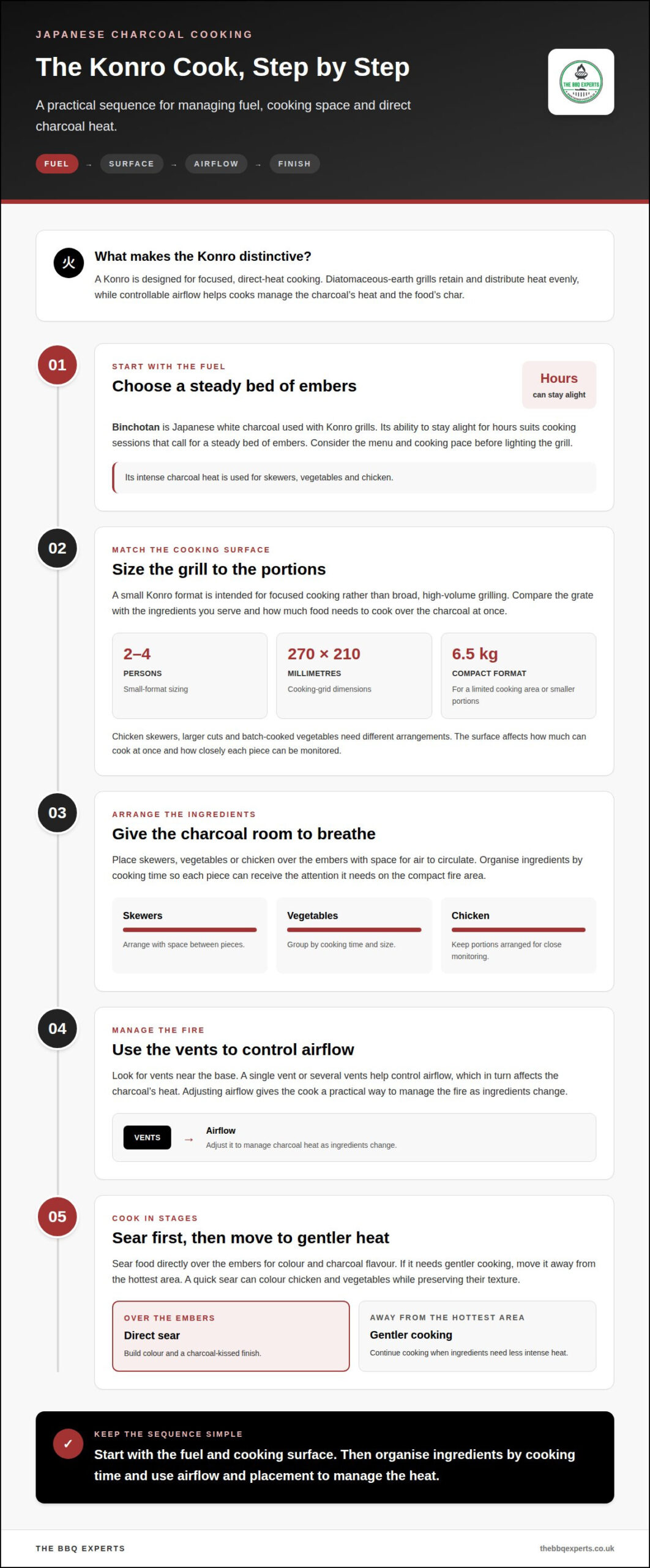
A Konro is a Japanese charcoal grill designed for focused, direct-heat cooking. Its material, airflow and fuel combine to give chefs precise control over char and flavour.
Binchotan Charcoal Fuel
Binchotan is Japanese white charcoal used with Konro grills. It can stay alight for hours, making it suited to cooking sessions that call for a steady bed of embers. Fuel affects how heat behaves, so consider your menu and cooking pace before lighting the grill.
For Japanese-inspired grilling, binchotan brings intense charcoal heat to skewers, vegetables and chicken. Arrange the pieces over the embers with space for air to circulate. The dense, glowing fuel supports sustained cooking, while the Konro’s compact fire area keeps attention on each ingredient.
Small Konro Grill Formats
A small Japanese Konro charcoal grill suits focused cooking rather than broad, high-volume grilling. One small format is sized for 2-4 persons, with a cooking grid measuring 270 x 210 mm. At 6.5 kg, it’s a compact option for a limited cooking area or a menu built around smaller portions.
Before choosing a grill size, compare its cooking surface with the ingredients you serve. Chicken skewers need a different arrangement from larger cuts or vegetables cooked in batches. The surface determines how much food can cook over the charcoal at once and how closely the cook can monitor each piece.
Charcoal Heat and Flavour
Konro grills made from diatomaceous earth retain heat and distribute it evenly. Look for vents near the base: a single vent or several vents help control airflow and, in turn, the charcoal’s heat. Adjusting airflow gives the cook a practical way to manage the fire as ingredients change.
For flavour, sear food directly over the embers, then move it away from the hottest area if it needs gentler cooking. A quick sear can colour chicken and vegetables while preserving their texture. This close connection between fire and food is central to Japanese-style BBQ in the UK.
Start with the fuel and cooking surface, then organise ingredients by cooking time. That simple sequence helps a Konro cook serve distinct textures and charcoal-kissed flavour from one compact grill.
Japanese grill types used in UK restaurant kitchens
UK restaurant kitchens can use tabletop Konro grills for close, direct cooking or robata grills for layered fire control. The right format depends on the menu, service pace and how the cooks plan to manage heat.
Tabletop Grilling and Group Sizes
A table-top charcoal Japanese BBQ grill has a grate measuring 24 × 12.5 cm, suited to cooking a few portions at a time. Mid-sized Konro table grills typically measure 31-37 cm and suit two to five people; larger grills from 47 cm upwards suit group cooking and longer sessions.
For restaurant service, match the cooking surface to the number of dishes cooked at once, not simply the number of diners. A larger surface lets cooks move skewers, fish and vegetables between hotter and gentler areas without crowding the grate.
Accessories can add versatility: a grate supports fish fillets and sliced fruit, while skewers make chicken, mushrooms and peppers easy to turn. Cut produce to similar sizes for more even cooking, and leave room for delicate fish that could stick or break.
Konro Cooking and Meat Finishing
Konro grills suit chefs who want to add a sharp finish to meat cooked by another method. Finish sous-vide-cooked meat over charcoal to add flavour and caramelise its exterior just before service. This final step brings live-fire character to a carefully portioned dish.
Robata grills offer another approach, letting cooks adjust the distance between food and heat. Adjustable shelves position ingredients closer to the fire for charring and crisping, or higher for light smoking and slower roasting. This makes robata useful for cooking varied produce and proteins.
Wood-fired robata grills, or setups combining wood and charcoal, can shape a restaurant menu around fire-led cooking. For example, sear vegetables lower down, then move fish higher for gentler cooking. Choose accessories and grill layout around the dishes your kitchen prepares most often. To discuss a setup for your menu, get in touch with our team.
Recipes and Japanese BBQ inspiration
A tabletop grill turns a meal into a sequence of small, freshly cooked dishes. Build a menu around skewers, sliced vegetables and fish, giving each ingredient the heat and attention it needs. For Japanese BBQ inspiration, balance smoky, savoury flavours with bright accompaniments such as spring onion or citrus.
Start with chicken thigh skewers. Cut the meat into even pieces, thread them with spring onion, then turn them over charcoal until browned and cooked through. Brush on a Japanese-inspired glaze near the end to help prevent its sugars from scorching. Serve the skewers straight from the grill.
A compact hibachi or shichirin-style setup suits small portions and close-up cooking. Try these combinations:
- Mushroom skewers: Thread shiitake or chestnut mushrooms, then grill until tender and lightly charred.
- Fish and citrus: Grill a firm fish fillet, then finish with lemon or yuzu-style citrus.
- Fruit for dessert: Char peach wedges briefly and serve with yoghurt.
For vegetables, cut slices thick enough to handle on the grate. Aubergine, pepper and courgette offer contrasting textures; turn them as their edges colour. Lightly season them before cooking so the charcoal’s aroma complements rather than overwhelms each ingredient.
Make the meal interactive with tabletop service: bring prepared skewers and small dishes to the table, then cook them in manageable batches. Keep raw chicken separate from ready-to-eat ingredients, and use clean utensils for cooked food. This simple routine supports a smooth flow from preparation to serving.
The key is variety, not complexity. Pair a grilled protein with two vegetables and a bright finishing element, then adapt the combination to seasonal produce. A compact Japanese grill can turn familiar ingredients into a fire-led meal with vivid char, warm smoke and distinct textures.
Care and outdoor-use precautions
A Konro grill needs thoughtful placement, careful handling and a straightforward cleaning routine. Before lighting charcoal, set it on a stable, heat-resistant surface outdoors, away from overhanging branches, loose fabrics and other flammable materials. Keep the cooking area clear so cooks can move hot skewers and serving dishes safely.
During cooking, keep an eye on the charcoal and food, and don’t leave the grill unattended. Use long-handled tools to turn ingredients, and place cooked food on a clean serving plate, not the dish that held raw chicken. If grease or marinade drips onto the embers, move the food to a cooler area to limit flare-ups and scorching.
After service, let the charcoal burn down in the grill and allow the unit to cool completely before cleaning. Remove ash only when cold, using a suitable tool, then clear residue from the cooking grate. A dry brush can lift stuck-on food; avoid harsh cleaning methods that could damage the grill’s material.
Outdoor conditions matter in the UK. Wind can shift heat and carry sparks, while rain can leave the grill and cooking surface damp. Choose a sheltered, open-air cooking spot, keep the grill away from indoor spaces, and store it somewhere dry after use. Don’t cook beneath low branches or near a doorway where smoke can drift inside.
- Before lighting: Set out tools, a clean plate and a clear route around the grill.
- While cooking: Turn skewers with long-handled tongs and watch for sudden flare-ups.
- After cooking: Wait for full cooling before removing ash or putting the grill away.
These habits help protect the grill and keep live-fire cooking organised. For guidance choosing a Japanese charcoal grill for your outdoor cooking setup, contact our team.
The BBQ Experts: Japanese Charcoal Grill
The BBQ Experts offers Japanese charcoal cooking equipment, including a Japanese Charcoal Grill and Hibachi Grill. If you’re choosing equipment for a menu built around skewers, vegetables or charcoal-finished meat, these options can help you shape your cooking style.
Pair your grill with fuel and seasoning suited to the dishes you want to serve. Big Eds Charcoal supports charcoal-led cooking, while Angus & Oink Rubs add a distinctive seasoning layer to meat and vegetables. The right combination depends on your ingredients, preparation and preferred flavour profile.
For Japanese-style BBQ in the UK, turn to The BBQ Experts when you’re ready to explore grills, fuel and seasoning for your cooking setup. Contact The BBQ Experts to discuss your Japanese BBQ requirements.
Shape Your Next Japanese BBQ Menu
Turn inspiration into a clear cooking direction. Choose the experience you want guests to remember: the aroma of charcoal at the table, the precision of a carefully finished dish or the energy of live-fire cooking. Then build a menu around that intention, with ingredients and service flow that suit your kitchen.
Japanese-style BBQ in the UK can become a distinctive part of your restaurant identity when the grill, fuel and seasoning work with your food. The BBQ Experts offers Angus & Oink Rubs, Big Eds Charcoal and a Hibachi Grill to support different approaches. Consider which best fits the dishes you want to develop, then use it as the starting point for your next menu.
Think through preparation as well as flavour. A dish that relies on quick finishing needs a different rhythm from one cooked gradually over charcoal. Plan how ingredients move from preparation to grill to plate, and let seasonal produce guide new combinations. That way, fire-led cooking becomes part of a considered kitchen style, not simply a feature on the menu.
Contact The BBQ Experts to discuss your Japanese BBQ plans and take the next step towards a cooking style that feels distinctly your own.
Frequently Asked Questions
What is Japanese-style BBQ and how does yakiniku work?
Japanese-style BBQ in the UK often involves cooking bite-sized ingredients over charcoal, with yakiniku a popular approach to table cooking. Diners cook thin slices of meat and vegetables on a shared grill, then dip each piece in sauce. For a simple spread, serve beef, mushrooms and peppers on separate plates, with dipping sauce in individual bowls.
What are the best Japanese BBQ grills and tabletop cookers available in the UK?
The right grill depends on whether you want diners to cook at the table or chefs to manage service in the kitchen. A compact tabletop cooker suits smaller portions and interactive meals, while a larger robata-style grill supports varied cooking levels. Compare the cooking-surface layout, fuel type and fit with your menu rather than choosing by appearance alone.
How do you make Japanese-style BBQ at home, including meat cuts and dipping sauces?
Choose thinly sliced sirloin for quick cooking or pork belly for richer, crisp-edged bites. Cut ingredients evenly, arrange them on separate plates and cook small batches so the grill stays accessible. Serve a soy-based dipping sauce with citrus and finely sliced spring onion. Keep raw meat apart from ready-to-eat sides, and use separate utensils for cooked food.
Disclaimer
This article was produced with AI assistance. We use AI and Third Parties to help deliver more content to our BBQ website and community, but we always aim to ensure accuracy and quality as much as we can. If you spot anything that doesn't seem right, we'd love to hear from you

Recent News & Updates

Our Story, Values and Beliefs
Here at the BBQ experts we have a passion for BBQ food, outdoor living and spending time with family and friends. We offer you; A...
Japanese Style BBQ for UK Restaurant Kitchens
Japanese-style BBQ brings the fire as much into focus as the food. At its heart is the Konro, a Japanese charcoal grill often made from...