
Japanese Charcoal Grill UK: 2026 Connoisseur’s Guide
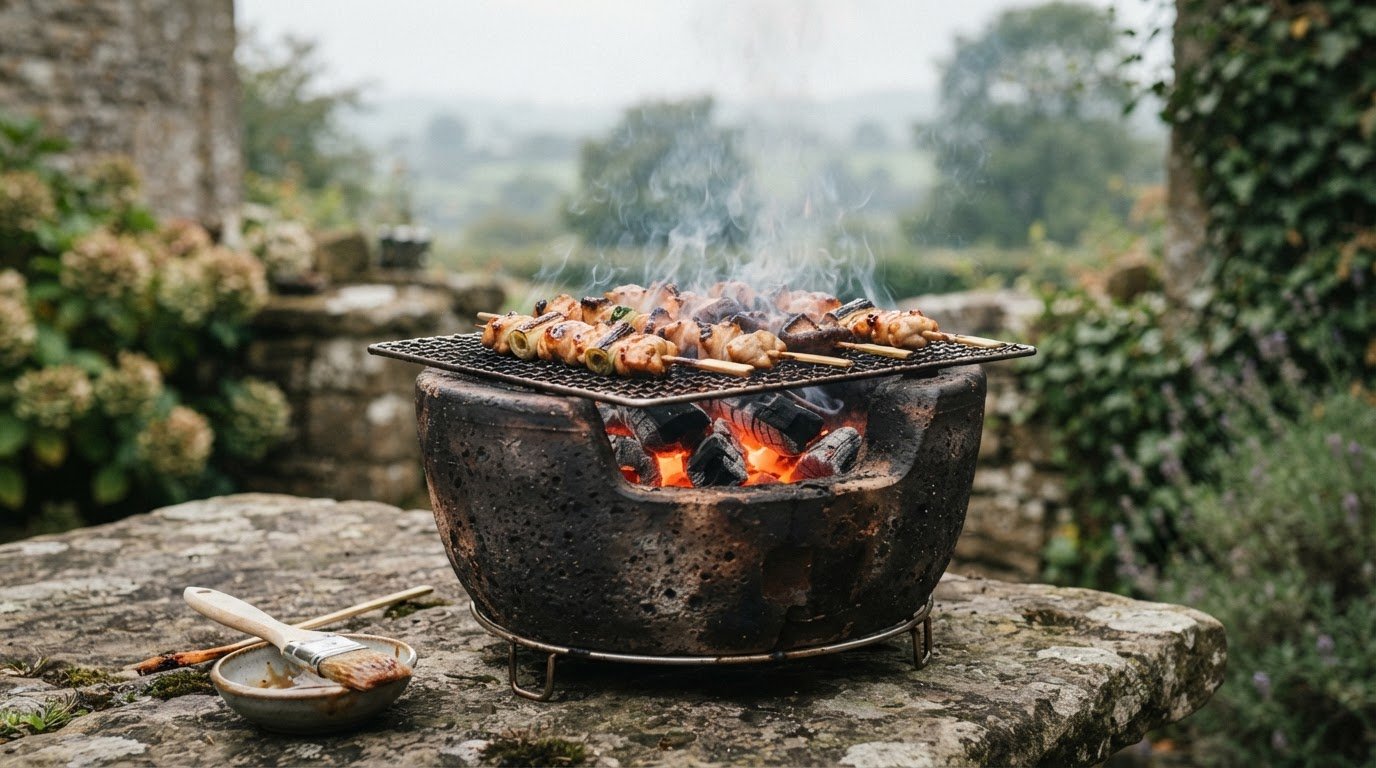
A Japanese charcoal grill earns its place through how it manages heat, not just its handsome, minimalist form. Choosing a japanese charcoal grill UK cooks can rely on means looking beyond the name: the grill’s material and the fuel you use affect heat retention, cooking control and flavour. If Konro, Shichirin, Hibachi and yakitori barbecue all seem to describe the same thing, you’re not alone. The terminology can blur just when you need clarity.
This guide explains how to choose a grill style and capacity for your gatherings, use radiant heat for yakitori, robata and seared meat, and select fuel for a steady burn. You’ll also learn how to protect porous ceramic and mineral bodies from damp weather, and how dense charcoal compares with lumpwood. Pair the grill with suitable fuel and a few sound techniques, and a tabletop fire can become a precise, sociable way to cook outdoors.
Key Takeaways
- Learn how Konro, Hibachi and Robata designs differ, so you can choose a grill suited to your preferred style of cooking.
- Understand how grill materials and radiant heat influence searing, heat retention and cooking control.
- Compare Binchotan, dense briquettes and lumpwood to select fuel for a steady tabletop fire.
- Use entertaining needs and chamber depth to narrow down the right japanese charcoal grill uk for your outdoor space.
- Build confidence with practical guidance on lighting, two-zone skewer cooking, tare and grill care.
Decoding the Japanese Charcoal Grill: Konro, Hibachi, and Robata Explained
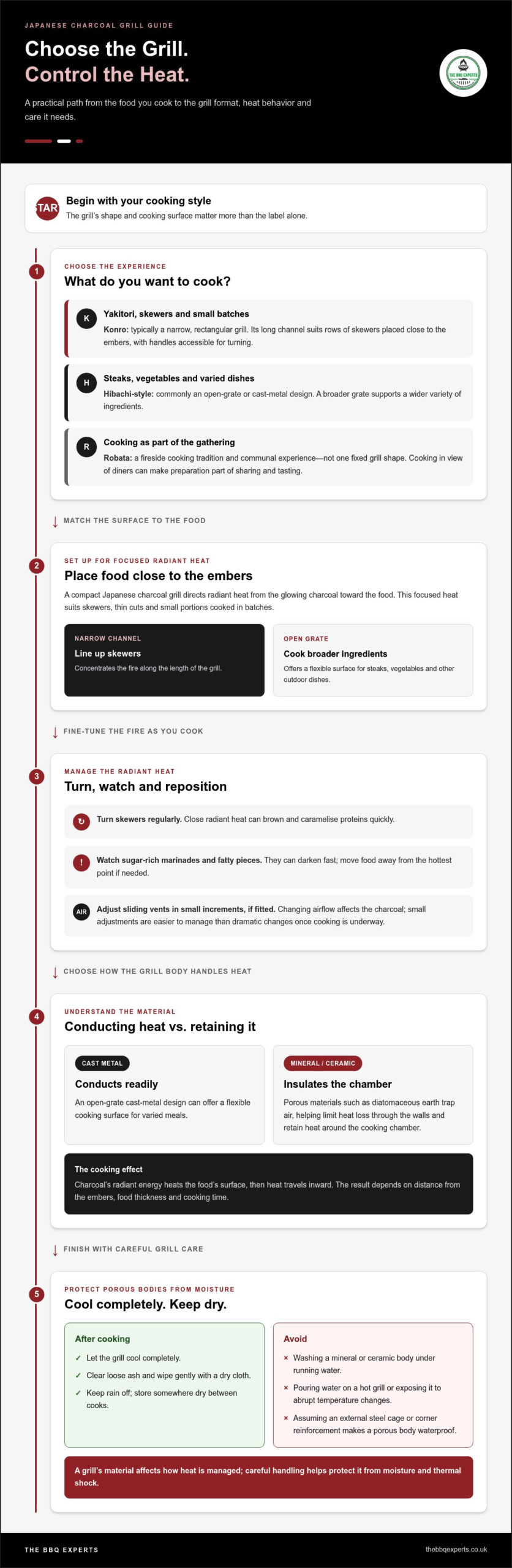
A Japanese charcoal grill is a compact cooker that places food close to glowing charcoal, where radiant heat can sear and cook ingredients with focused intensity. Instead of relying mainly on hot air circulating around a broad cooking area, it directs heat from the embers towards the food. This makes it well suited to skewers, thin cuts and small portions cooked in batches and served as they’re ready.
The names can be confusing, especially in the UK, where “hibachi” is sometimes used broadly for tabletop grills. A Konro is typically a narrow, rectangular grill associated with skewers. “Hibachi-style” commonly describes more versatile open-grate or cast-metal designs. Robata, meanwhile, refers to a fireside cooking tradition and the communal experience of cooking over charcoal, not to one fixed grill shape.
The Anatomy of an Authentic Japanese Grill
A narrow, rectangular cooking bed concentrates the fire along the length of the grill. That layout suits rows of bamboo skewers: food sits close to the embers, while the handles remain accessible for turning and repositioning. A compact chamber also avoids spreading charcoal over a large area that may not be needed, directing heat where you’re cooking.
Close radiant heat helps brown and caramelise proteins quickly. It doesn’t mean you can leave food unattended: sugar-rich marinades and fatty pieces can darken fast. Turn skewers regularly and move them away from the hottest point if needed. If the grill has sliding air vents, adjusting them changes airflow to the charcoal and can help you fine-tune the fire. Small adjustments are easier to manage than dramatic changes once cooking is underway.
Hibachi Versus Konro: Selecting Your Culinary Style
Choose a grill by the food you most enjoy cooking. A cast-metal Hibachi-style grill with an open grate offers a flexible surface for steaks, vegetables and other outdoor dishes. It’s a natural fit if you want one compact charcoal grill for varied meals rather than a cooking bed designed mainly for skewers.
A rectangular Konro’s long, narrow channel is made for yakitori-style cooking, with several skewers arranged in a line above the heat. Consider the cooking surface as well as the grill’s name: a grate supports broader ingredients, while a narrow channel puts skewer placement and turning at the centre. If you want to cook both ways, prioritise the format that best suits your regular meals.
Robatayaki adds another dimension: food cooks over charcoal in view of the diners, making preparation part of the gathering. In an outdoor space, placing the grill where people can gather turns serving into a lively rhythm of cooking, sharing and tasting. A compact cooking chamber suits focused heat and smaller batches, while a broader open grill can accommodate a wider variety of ingredients. When comparing a japanese charcoal grill uk, match the grill’s shape and cooking surface to the experience you want.
The Physics of Flavour: Material Engineering and Thermal Retention
A Japanese grill’s character comes from more than its charcoal. The body affects how heat is held and directed, helping determine whether the cooking feels fierce and fast or steady and controlled. Dense cast metal conducts heat readily, while insulated mineral and ceramic linings help retain heat around the chamber. Knowing the difference makes it easier to choose a grill for the food you cook and care for it in damp weather.
Diatomaceous Earth and Mineral Ceramics
Diatomaceous earth forms from the fossilised shells of microscopic diatoms. Its naturally porous structure traps air, making it an effective insulator. In a grill body, this helps limit heat loss through the walls and keep more energy focused around the cooking chamber. Ceramic and other refractory mineral cores serve a similar purpose, although construction varies between grills.
Charcoal emits radiant energy that heats the food’s surface; heat then travels inward through the ingredients. This can create a seared exterior while cooking the centre. The result depends on the food’s distance from the embers, its thickness and how long it cooks. For further scientific context on the material properties of Binchotan charcoal, the American Chemical Society discusses its composition in an industrial research context.
Porosity also means a grill needs careful handling: never wash a mineral or ceramic body under running water. Water can soak into the material, and rapid heating or drying afterward may cause damage. Let the grill cool completely, clear loose ash, and wipe the surface gently with a dry cloth. Keep rain off the body and store it somewhere dry between cooks.
Thermal Shock Resistance and Build Integrity
Mineral insulation and external protection do different jobs. An external stainless steel cage or corner reinforcement can help shield and support a fragile body during handling. It doesn’t replace the core’s heat-retaining role or make porous material waterproof. Cast metal responds differently to heat: it conducts readily, while an insulated mineral core is designed to retain heat within the chamber. Neither material is immune to careless use.
Thermal shock is strain caused by abrupt temperature changes. A porous body that has absorbed moisture can be vulnerable when exposed to intense heat, and sudden water contact with a hot grill can also cause stress. Keep the grill sheltered, avoid pouring water on it, and don’t move or cover it until it has cooled and dried. Include grill care in your regular outdoor cooking routine.
These details matter when choosing a japanese charcoal grill uk households can enjoy through changing weather. Match the body material to your priorities, then protect it from moisture and abrupt temperature shifts. Careful handling helps preserve the grill’s performance and keeps each cook focused on flavour, not avoidable damage.
Fueling the Fire: The Critical Partnership with Binchotan Charcoal
A compact Japanese grill needs fuel that burns steadily and predictably. Low-density charcoal can ignite unevenly, throw sparks or produce acrid smoke. These problems are more noticeable when skewers sit close to the embers and people gather around the cooking. Dense charcoal can make it easier to manage the fire and let the food’s own flavour take centre stage. For a broader explanation of fuel characteristics, see this comprehensive guide to charcoal.
Comparing Japanese Grill Fuels
White Binchotan: Traditional, high-density charcoal valued for intense, consistent heat and a long burn. It can take time to light, so wait until you have a fully glowing bed before cooking.
Dense extruded briquettes: Compressed fuel designed for a uniform shape and steady burn. Hexagonal forms can sit neatly in a narrow grill, making them a practical option for sustained tabletop cooking.
Standard lumpwood: Natural pieces vary in size and density, so the fire may be less even. Carefully selected lumpwood can suit some grills, but lightweight, irregular pieces may flare or smoke more than dense alternatives.
Charcoal with high carbon content and fewer volatile compounds generally burns cleaner once properly lit. That matters in a small cooking chamber: excess smoke can cling to delicate ingredients, while sudden flare-ups can scorch a skewer before its centre is cooked. Sparks are unwelcome around a table, too. Use a stable outdoor setup, keep diners clear of the fire and never leave a lit grill unattended.
Why Density Makes the Difference
Fuel choice is part of the grill system, not an afterthought. Dense charcoal can sustain useful heat for longer, reducing the need to replenish the fire during an extended meal. The benefit isn’t only burn duration: a stable ember bed makes it easier to cook successive batches at a consistent pace. Don’t assume every bag of lumpwood behaves alike. Size, density and preparation all affect how it lights and burns.
For sustained high heat, consider Eucalyptus charcoal. Its dense format suits cooks seeking sustained radiant heat. Compressed briquettes are another shaped option for longer outdoor cooking sessions. Light either thoroughly before adding food; fuel that hasn’t fully caught can create smoke and off-flavours.
Choose fuel to suit both the grill’s chamber and the length of your gathering. If you’re refining a japanese charcoal grill uk setup, pairing the cooker with dense, well-prepared fuel is a practical way to get steadier heat and more controlled cooking. The BBQ Experts offers charcoal and briquettes for different outdoor cooking styles. For product details, visit the contact page.
How to Choose the Right Japanese Charcoal Grill in the UK
The right grill should suit the way you cook, not just the space it occupies. Think about how many people you usually feed, whether skewers or a grate will do most of the work, and where the grill will live between sessions. A compact chamber can be efficient for focused cooking, while a longer grill gives you more room to manage different foods and heat zones.
Sizing Your Cooking Surface
As a starting point, a grill around 30cm long can suit targeted cooking for one or two people. Rectangular models around 45cm to 60cm offer more working room for family meals and dinner parties, but require more fuel and a stable place to sit. Treat these dimensions as planning guidance, not a guarantee of serving capacity: skewer length, food size and cooking pace all affect how much you can prepare.
A longer chamber may also make it easier to arrange hotter and cooler areas. On models with sliding dampers, airflow control can help you manage heat across the bed, allowing quick searing at one end and gentler cooking at the other. Chamber depth matters too. A shallow bed places food closer to the radiant heat for rapid browning; more distance gives you room to cook skewers more gradually. Match the profile to your usual balance of fast sears and patient yakitori.
Check Construction, Accessories and Storage
Inspect how the grill is supported as well as how it cooks. Mineral and ceramic bodies need careful handling, while metal reinforcement can help protect edges during movement. Heat-resistant feet made from silicone or rubber can help separate the base from a surface, but don’t assume they make every tabletop safe. Follow the grill’s instructions for placement, surface compatibility and clearances.
Accessories can broaden a grill’s use, but compatibility depends on the design. A skewer bar may suit a narrow yakitori channel; a plancha plate or wire mesh is useful only if it fits securely and leaves airflow unobstructed. Before choosing, picture the foods you actually cook and make sure the grill’s format supports them.
For outdoor cooking in the UK, plan for damp weather. Porous ceramic or refractory bodies should be kept dry, protected from rain and stored in a sheltered place once fully cool. Consider the grill’s weight and shape if you’ll carry it between storage and the garden. A heavier model may offer a more substantial cooking setup, but portability depends on the whole unit, not its dimensions alone.
Protect the Table and Cook Outdoors
Place a tabletop grill only on a firm, level, heat-resistant surface. A flame-retardant mat or ceramic tiles can provide an additional protective layer, but they don’t replace the manufacturer’s placement guidance. Timber needs particular care: preserve any specified air gap beneath and around the grill, and keep hot charcoal away from combustible surroundings. Japanese charcoal grills are for outdoor use only, never indoors or in enclosed spaces.
Choosing a japanese charcoal grill uk cooks can use confidently means weighing size, chamber profile, construction and storage together. The BBQ Experts offers Japanese charcoal grills and outdoor cooking equipment. The contact page has details for getting in touch.
Mastering the Technique: Lighting, Grilling, and Care
Good results begin before the food reaches the grate. Dense charcoal needs time to ignite evenly, and a compact grill rewards steady heat rather than shortcuts. Set up outdoors on a stable, heat-resistant surface, keep children and guests clear of the fire, and have long-handled tools ready before lighting.
Lighting Dense Charcoal Without Accelerants
Use a dedicated chimney starter with natural firelighters beneath it, following the starter and grill instructions. Liquid lighter fluid can leave unwanted flavours and should never be applied to a ceramic or diatomite grill body. Transfer charcoal only once it’s glowing throughout, using suitable heatproof tools. Natural firelighters offer a simple alternative to liquid accelerants.
With the embers established, arrange them to create a hotter area and a gentler holding area. Set skewers over the hotter zone to colour the surface, then move them aside to cook through without constant exposure to intense heat. If fat drips onto the embers and flames rise, shift the food to the cooler zone until the flare settles. Don’t try to control flames by pouring water into the grill.
Glazing, Extinguishing and Cleaning
For yakitori-style cooking, turn skewers frequently and apply tare near the end. The sugars in a glaze can darken quickly over direct heat, so use thin layers and move skewers away from the hottest embers if they begin to char. Seasoning adds another layer of flavour: try Angus & Oink Rubs on suitable cuts before grilling, while keeping sugary sauces for the finishing stage.
After cooking, let the grill cool in a safe outdoor position. Follow its instructions to extinguish leftover charcoal in a purpose-built metal extinguishing pot. Don’t assume embers are dead because they look grey, and don’t pour water onto a hot ceramic or diatomite body: sudden temperature changes can damage it. Keep spent fuel secure until it’s fully cold.
Clean the grate separately from the grill body. Brush away residue while the grate is warm enough for debris to release, using a suitable wire brush. Check that no bristles remain before cooking again. Once the grill has cooled completely, remove loose ash and keep the internal bricks dry. Avoid washing porous interiors with running water, and store the grill somewhere sheltered from rain between sessions.
These habits help protect flavour and hardware, especially when using a japanese charcoal grill uk cooks rely on through changeable weather. Light the fuel carefully, stay attentive while cooking, and give the grill time to cool and dry before storage. The BBQ Experts stocks Japanese charcoal grills, fuels and seasonings for outdoor cooking.
Make Your Outdoor Cooking Space Your Own
Start by picturing the meals you want to cook and the atmosphere you want around the fire. A japanese charcoal grill uk setup can become more than a cooking station: it can be the centre of relaxed evenings, shared plates and the pleasure of learning a precise new craft.
Build that experience around hardware and fuel chosen to work together. The BBQ Experts offers Hibachi and Japanese Charcoal Grills, charcoal and briquettes, and flavour enhancers including Angus & Oink Rubs. Choose a grill format that suits your regular meals, then pair it with fuel that fits the chamber and the length of your cook. That gives you a practical foundation for developing your own rhythm at the grill, from lighting the fire to serving the final skewer.
Ready to plan your setup? Contact The BBQ Experts to explore Japanese charcoal grills, fuels and seasonings for your outdoor cooking.
Frequently Asked Questions
Can I use a Japanese charcoal grill indoors in the UK?
No. Use a Japanese charcoal grill outdoors only, never in a home, conservatory, garage or other enclosed space. Burning charcoal produces carbon monoxide, an odourless gas that can become dangerous indoors. An open window or extractor fan doesn’t make indoor grilling safe. Set the grill on a stable, heat-resistant surface outside, away from doorways and combustible materials, and keep it attended until the fire is fully extinguished.
What is the difference between a Konro grill and a Hibachi grill?
A Konro is generally a narrow, rectangular charcoal grill designed with yakitori and skewer cooking in mind. “Hibachi” has a broader meaning in Western grill retail and may refer to compact open-grate grills, often made from cast metal. Historically, hibachi referred to a vessel for holding charcoal to heat a room, rather than a cooking grill. When choosing, focus on the cooking surface and intended use, not the label alone.
Why do authentic Japanese grills require Binchotan or high-density charcoal?
Dense charcoal is a strong match for a compact grill because it can create a sustained ember bed without relying on a large volume of fuel. That helps keep heat more predictable for food cooked close to the fire. Traditional Binchotan is valued for its intense, steady burn; dense hardwood alternatives can also suit tabletop grilling. Choose pieces that fit the chamber, and avoid forcing oversized fuel into the grill.
How do you light dense Japanese charcoal without chemical lighter fluid?
Use a chimney starter outdoors with natural firelighters beneath the fuel, following the equipment instructions. Dense charcoal can take patience, so wait until the pieces are glowing throughout before transferring them with long-handled tongs. Don’t add lighter fluid to the charcoal or grill body, and never pour accelerant onto an existing fire. Keep the starter on a stable, non-combustible surface while it heats.
Can a Japanese charcoal grill get wet in British rain?
Keep porous ceramic and diatomite grills dry. Rain can soak into the body, so store the grill under shelter or use a suitable cover only once it’s completely cool. If it gets wet, don’t light it or try to dry it rapidly with a fire or direct heat. Allow it to dry naturally in a protected place before use, and follow the manufacturer’s care instructions.
How do you clean a ceramic or diatomite Japanese grill after cooking?
Let the grill cool fully, then remove loose ash with a dry brush or suitable tool. Clean the grate separately, and avoid getting water into the porous body. Don’t use detergent or a hose on ceramic or diatomite surfaces. Before putting the grill away, check that ash is contained and the interior is dry. This keeps residue from mixing with moisture during storage.
Can you reuse Binchotan charcoal after a grilling session?
Yes, unconsumed Binchotan can often be reused if it’s fully extinguished, kept dry and remains in sound pieces. Use a purpose-made metal extinguishing container, close it securely and allow the fuel to cool completely before handling or storing it. The next time you cook, inspect the pieces and relight them in a chimney starter. Discard crumbling or contaminated charcoal rather than adding it to the grill.
Disclaimer
This article was produced with AI assistance. We use AI and Third Parties to help deliver more content to our BBQ website and community, but we always aim to ensure accuracy and quality as much as we can. If you spot anything that doesn't seem right, we'd love to hear from you

Recent News & Updates

Our Story, Values and Beliefs
Here at the BBQ experts we have a passion for BBQ food, outdoor living and spending time with family and friends. We offer you; A...
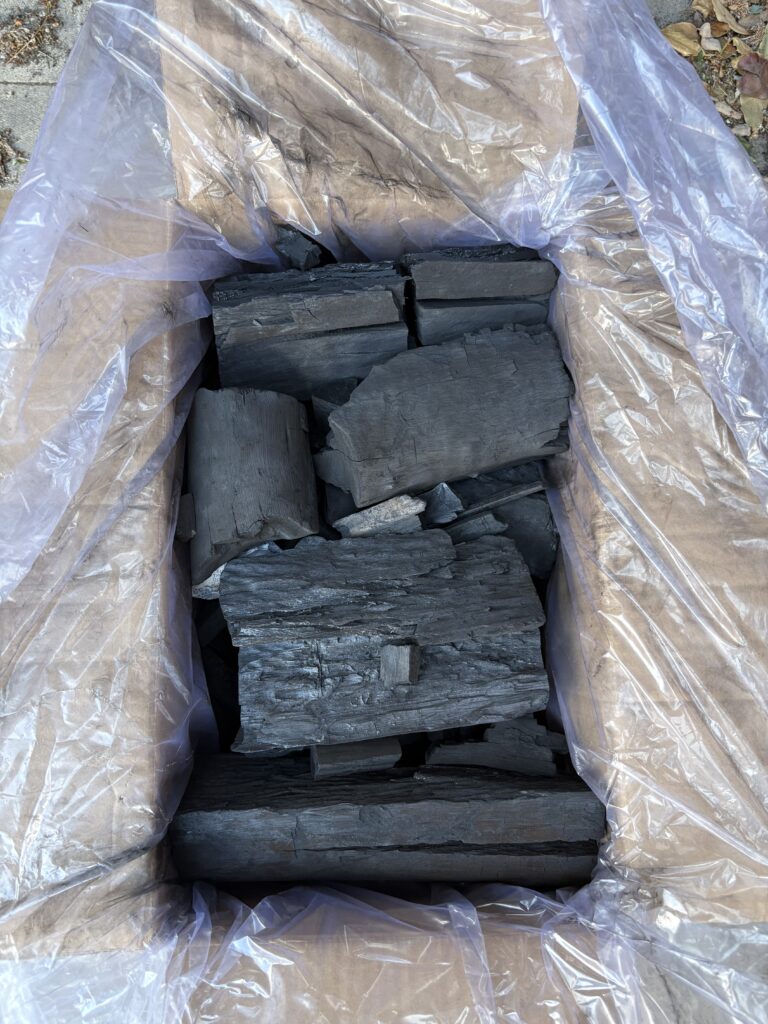
FAQ: Why does Big Ed’s Charcoal have a mix of big and small lumps?
Big Ed’s is all about top-quality, long-burning charcoal, made from a mix of Eucalyptus and Mangrove wood. Each 10kg box is packed with...