
How to Keep Charcoal Hot for Hours: Long-Burn BBQ Guide
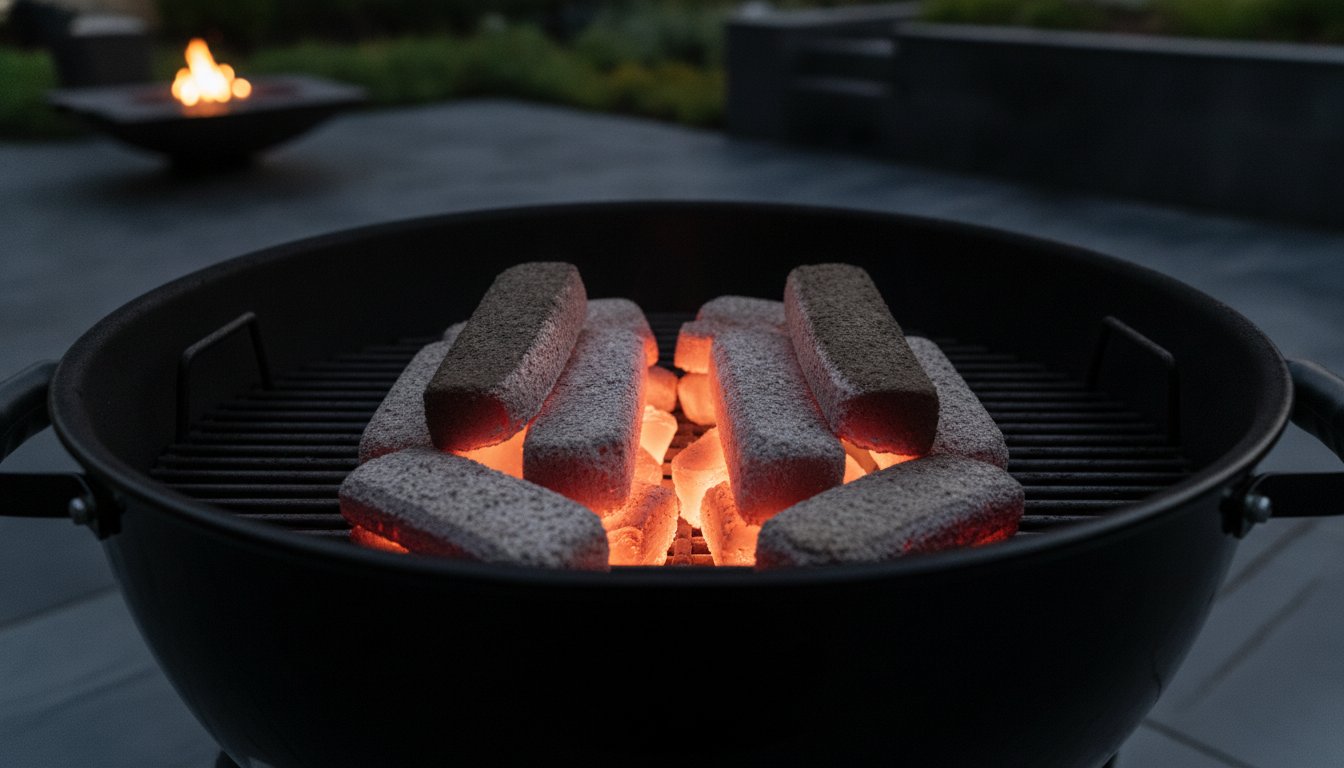
What if the difference between a stalled brisket and a masterpiece of outdoor gastronomy isn’t your talent, but the physics of your fire? You’ve likely spent hours hovering over a grill, fighting the frustration of a dying flame or the suffocating buildup of ash. It’s a common struggle that turns a relaxing afternoon into a stressful battle against the elements. We believe that your outdoor kitchen should be a sanctuary of sensory joy, not a place of technical frustration. You deserve a fire that works as hard as you do, maintaining that perfect, glowing core while you focus on the company of your guests.
This guide reveals the professional secrets of how to keep charcoal hot for hours by mastering the synergy between fuel density and airflow. We will move past the limitations of standard lumpwood to explore high-performance options like Big Eds Gourmet Mix and Coffee Charcoal. You’ll learn the advanced stacking geometries required to sustain a steady 225°F to 250°F for eight hours or more. By understanding the technical specifications of thermal distribution, you can spend less time tending the fire and more time enjoying the refined lifestyle of a true BBQ connoisseur. Let’s elevate your next cook from a simple meal to a documented success.
Key Takeaways
- Discover why high-density fuels like Coffee and Eucalyptus charcoal provide the carbon structure necessary for endurance that supermarket lumpwood simply cannot match.
- Learn the “Fuse Principle” and strategic coal stacking to master how to keep charcoal hot for hours without constant relighting or temperature spikes.
- Master the physics of airflow by using your top vent as a precision exhaust and your bottom vent as a powerful throttle for heat control.
- Understand how professional-grade fuels like Big Eds Gourmet Mix reduce ash buildup, ensuring your fire isn’t smothered during long, delicate cooks.
- Explore how high-end hardware and thermal momentum create a stable environment that protects your meat’s internal temperature for the duration of the session.
The Foundation of Longevity: Choosing the Right Fuel
Your journey to a perfect, long-lasting fire begins long before you strike a match. It starts with the carbon structure of your fuel. If you’ve wondered how to keep charcoal hot for hours, you must first understand thermal density. Cheap, mass-market charcoal often lacks the internal integrity to sustain high heat. These retail bags frequently contain “green” or under-carbonised wood that still holds high moisture levels. This moisture is a hidden enemy. It steals thermal energy from your fire just to evaporate, leaving you with a weak, inconsistent heat source that dies out just as your meat enters the critical cooking phase.
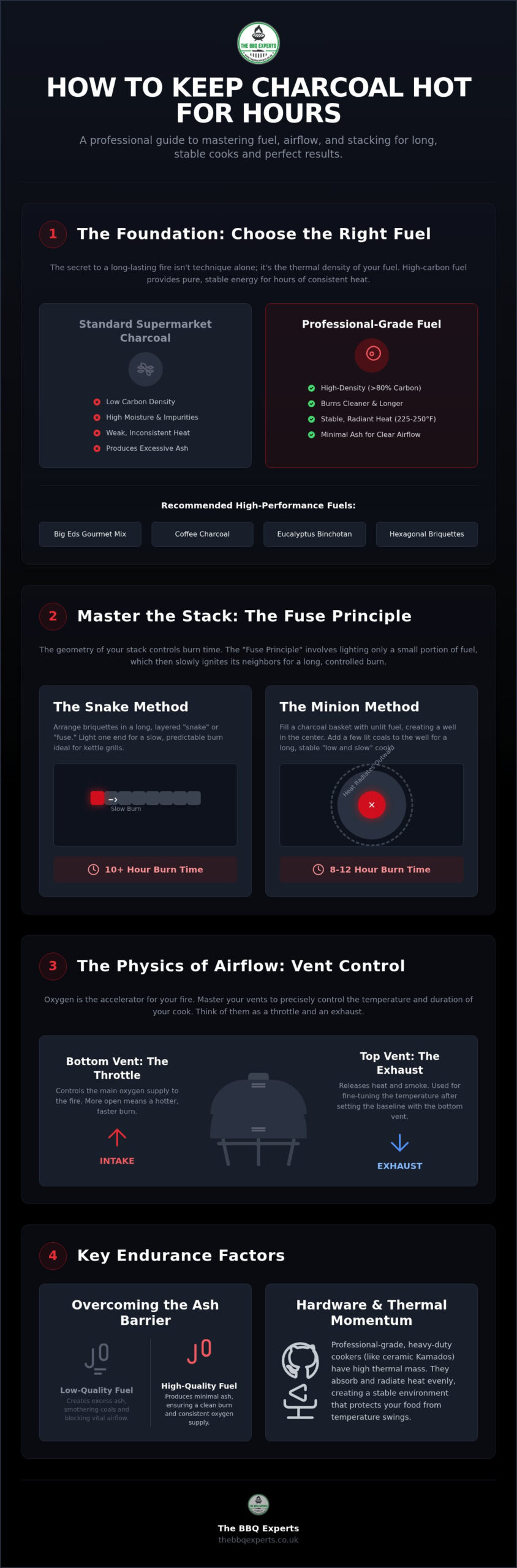
To understand what is charcoal in a professional context, we look at the carbonisation process. Restaurant-grade fuel undergoes a more rigorous, high-temperature firing process that strips away impurities and volatile gases. High-density charcoal is defined as fuel with >80% carbon content. This high carbon concentration provides a pure energy source that burns cleaner and significantly longer than standard alternatives. When your fuel is mostly carbon, it glows with a steady, intense radiation rather than flaming out quickly.
Lumpwood vs. Briquettes for Sustained Heat
While many believe briquettes are the only answer for duration, professional-grade lumpwood tells a different story. Big Eds Grade Finest Lumpwood outperforms standard briquettes because of its massive, dense chunks and superior wood species. Hardwoods like Oak and Eucalyptus are naturally more energy-dense than the softwoods used in budget bags. However, if you require a surgical level of consistency for a marathon smoke, Professional Hexagonal Briquettes provide the longest burn in the industry. Their uniform shape and high-pressure manufacturing process eliminate internal air pockets. This creates a slow-release energy source that remains stable for the duration of a full day’s cook, answering the question of how to keep charcoal hot for hours through sheer material density.
Exotic Fuels: Coffee and Eucalyptus Charcoal
For the connoisseur seeking the absolute pinnacle of performance, exotic fuels offer a transformative experience that elevates the entire cooking environment. Coffee Charcoal is prized for its incredible density and ability to provide consistent, long-lasting heat without the erratic temperature swings of lesser fuels. Similarly, Eucalyptus Binchotan represents the ultimate intersection of high heat and low ash performance. These fuels are crafted for those who view outdoor cooking as a refined art and a private retreat. By matching your fuel to your specific duration goals, you ensure your fire remains a reliable partner in your culinary creation, allowing you to focus on the sensory joy of the process rather than the logistics of the flame.
Mastering the Stack: Professional Coal Arrangements
Precision in placement is the hallmark of a master. While selecting high-carbon fuel is the first step, the geometry of your stack determines the duration of your cook. This is where the ‘Fuse Principle’ becomes your greatest asset. Instead of igniting the entire bed of charcoal at once, you light only a small fraction. This creates a controlled chain reaction where unlit coals are slowly consumed by their neighbors. To truly keep your charcoal grill hot, you must manage this ignition rate with surgical accuracy. By limiting the number of coals burning at any single moment, you prevent the aggressive temperature spikes that ruin a delicate brisket or pork shoulder.
Uniformity is your silent partner in this process. When using Professional Hexagonal Briquettes, the consistent shape ensures a predictable burn rate across the entire stack. Irregularly sized pieces create air gaps that lead to unpredictable ‘hot spots’ or sudden drops in heat. The Snake Method can extend a 2kg fuel load to 10+ hours, transforming your kettle grill into a long-distance endurance machine. If you’re unsure which arrangement fits your specific hardware, reach out to our connoisseurs for expert guidance.
The Minion Method for Low and Slow
For those using a charcoal basket or a ceramic cooker, the Minion Method is the gold standard for eight to twelve hour sessions. First, fill your basket with unlit, high-quality Big Eds Grade Finest Lumpwood. Create a central well by pushing the unlit coals toward the edges of the basket. Finally, drop about a dozen fully lit coals into this central well. As the heat radiates outward, it slowly ignites the surrounding fuel. This provides a steady thermal output that is essential for how to keep charcoal hot for hours without needing to open the lid and lose precious heat.
The Snake Method for Kettle Grills
Kettle enthusiasts favor the Snake Method for its elegant simplicity and unwavering consistency. Arrange your unlit coals in a semi-circle ‘fuse’ around the perimeter of the grill, usually stacking them two or three layers deep. Layer these with small wood chunks to ensure a continuous stream of aromatic smoke throughout the process. You light only one end of this ‘snake’ using natural firelighters. As the fire slowly creeps along the path, it delivers a consistent, low heat. If your cook runs longer than expected, simply ‘re-tail’ the snake by adding more coals to the unlit end for an almost infinite cooking session.
Oxygen Control and the Physics of Airflow
Mastering the selection and stacking of your fuel is only half the battle. To truly understand how to keep charcoal hot for hours, you must become a student of fluid dynamics. Fire is a living thing that breathes oxygen; your job is to regulate that breath with absolute precision. As hot air rises from your glowing embers, it creates a vacuum that pulls fresh, oxygen-rich air through the bottom intakes. This ‘Chimney Effect’ is the engine of your grill. If you don’t manage this flow, you aren’t cooking; you’re just watching fuel disappear.
Think of your top vent as the exhaust and your bottom vent as the throttle. Closing the bottom vent starves the fire of oxygen, while the top vent controls how quickly heat and smoke depart. If you choke the fire too aggressively by closing both, you’ll produce thick, acrid smoke that imparts a bitter flavor to your meat. This oxygen starvation creates creosote, a sticky byproduct that ruins the sensory joy of outdoor gastronomy. For a more profound exploration of the deep physics involved in thermal distribution, consult The Ultimate Guide to Charcoal.
Fine-Tuning the Dampers
Achieving a steady 225°F (107°C) often requires surprisingly small adjustments. A common professional standard is the ‘pencil-width’ rule, which involves keeping your bottom vent open just enough to fit a standard pencil. You must also account for ‘vent lag.’ Unlike a gas dial, charcoal takes time to respond to oxygen changes. Always wait 15 minutes after an adjustment to see the true thermal effect before tweaking again. Ambient factors like a biting wind or a humid afternoon will also require you to adjust your baseline settings to maintain equilibrium and understand how to keep charcoal hot for hours regardless of the weather.
The Lid: Your Best Heat Retention Tool
Your lid is your most powerful tool for heat retention and consistency. It transforms your grill into a convection oven, circulating heat around the meat for an even finish. Every time you lift it, you invite a massive thermal loss that can take 20 minutes to recover. The old adage ‘if you’re looking, you ain’t cooking’ is a fundamental truth in long-form BBQ. Beyond retention, the lid is your first line of defense against flare-ups. By restricting the sudden influx of oxygen, you can suppress flames without extinguishing the delicate, steady glow of your high-density coals.
Mid-Cook Maintenance: Overcoming the Ash Barrier
Even with the most strategic stack, time eventually produces ash, the silent saboteur of the long burn. As your fuel consumes itself, fine grey particles accumulate, gradually choking the bottom intake grates and smothering the oxygen supply. This is why the relationship between fuel quality and ash volume is paramount. Retail-grade charcoal, often filled with binders and low-density wood, creates a mountain of debris that can kill a fire in under three hours. In contrast, using a professional-grade option like Big Eds Gourmet Mix ensures minimal waste and maximum airflow. Low-ash fuel is a critical requirement for cooks exceeding 4 hours. To maintain your thermal momentum, use a dedicated ash tool to gently agitate the bottom grate, allowing the debris to fall into the collection tray without disturbing the core temperature of your coal bed.
How to Add More Charcoal Safely
When your session stretches into the evening, you may need to replenish your fuel. Never dump cold, unlit charcoal directly onto a fading fire. This introduces “dirty smoke” thick with volatile compounds that can ruin your meat’s delicate flavor profile. Instead, use a chimney starter to pre-light your fresh coals until they’re glowing orange and covered in a light dusting of ash. For those using a Hibachi Grill or similar small-scale hardware, the “hot-on-hot” technique is essential. Carefully place the lit coals exactly where they’re needed using long-handled tongs. This precision ensures you sustain the heat without causing a massive temperature spike, proving that knowing how to keep charcoal hot for hours is as much about maintenance as it is about the initial setup.
Managing the Drip Pan
Stability is the final piece of the endurance puzzle. Placing a water pan beneath the cooking grate serves as a thermal heat sink, absorbing excess energy and radiating it back slowly. This prevents the erratic swings that can occur when a new pocket of fuel ignites. The resulting humidity also protects your coals from burning too aggressively and helps the meat bypass the “stall” by reducing surface evaporation. Position the pan to act as a heat deflector, creating a sanctuary of indirect heat for your longest outdoor cooking sessions. If you need bespoke advice on configuring your specific setup for a marathon cook, consult our technical specialists for professional guidance.
Hardware that Holds the Heat: Professional Gear
While your choice of carbon and stacking geometry provides the energy, your hardware determines how effectively that energy is retained. Thin, mass-market grills made of light aluminium act as thermal sieves, bleeding heat into the surrounding air almost as fast as it’s generated. Professional-grade equipment utilizes heavy-gauge steel or ceramic to create “thermal momentum.” These materials absorb the initial heat and radiate it back into the cooking chamber, creating a stable environment that’s less susceptible to external wind or sudden temperature drops. This internal insulation is the secret to lower fuel consumption; when your grill holds heat, you don’t need to burn through your supply just to maintain a baseline. This is a fundamental pillar of how to keep charcoal hot for hours without constant intervention.
In open-fire scenarios, the Fire Cage becomes an indispensable asset. It allows you to manage large fuel loads by keeping the coals concentrated, preventing them from spreading and losing their cumulative thermal energy. Starting this process with Natural Firelighters ensures a clean, odour-free ignition that won’t taint the delicate flavour profile of your gourmet coals. By ensuring a pure start, you protect the integrity of the entire cook from the first spark to the final serving.
The Hibachi Advantage
For those seeking precision in high-end gastronomy, the Hibachi Grill offers unparalleled thermal mass in a compact form. These grills are designed to concentrate heat, making them the ultimate partner for Eucalyptus Binchotan. Managing micro-climates within such a high-performance tool requires a seasoned touch, but the reward is a consistent, searing heat that remains viable for the entire duration of a multi-course tasting menu. It’s the pinnacle of efficiency for the outdoor enthusiast who values culinary precision.
Accessories for Temperature Control
To truly master the long burn, you must move beyond guesswork. Digital probes are essential for monitoring the discrepancy between your grate temperature and the air at the lid. This data allows you to make the micro-adjustments to your vents discussed in previous sections. Additionally, charcoal baskets improve air circulation by keeping the fuel elevated away from the ash bed. By combining high-density fuels with professional-grade gear, you transform your outdoor space into a refined culinary retreat where the fire is as reliable as the craftsmanship of the tools you use. This synergy is the final step in mastering how to keep charcoal hot for hours and elevating your lifestyle status as a true outdoor connoisseur.
Elevate Your Craft with the Eternal Burn
Mastering the fire is the definitive mark of a seasoned connoisseur. By moving away from subpar supermarket fuel and embracing the high-density carbon structure of Big Eds or Coffee Charcoal, you’ve already won the battle against thermal instability. You now possess the specialized knowledge to manage airflow with surgical precision and stack your fuel using the advanced geometries of the master. Understanding how to keep charcoal hot for hours is more than a technical victory; it’s the key to a transformed lifestyle where your outdoor kitchen becomes the primary social hub of your home.
We’ve explored the critical synergy between high-carbon fuels and the thermal momentum of professional hardware. As specialists in restaurant-grade lumpwood and expertly curated fire tools, we provide the bridge between professional precision and the home enthusiast. With national UK delivery on all our premium fuels, your journey toward culinary excellence is supported at every step. If you’re ready to transcend the ordinary and invest in your skills, upgrade your fuel with Big Eds Professional Charcoal Pallets and experience the raw, sensory joy of a perfect burn. The sanctuary of your outdoor retreat awaits its next masterpiece.
Frequently Asked Questions
How long does a single load of charcoal typically stay hot?
A single load of professional-grade charcoal can sustain heat for 8 to 12 hours when you use advanced stacking techniques like the Minion Method. Standard retail lumpwood often burns out within 90 minutes due to its low carbon density. By selecting high-performance fuels like Eucalyptus or Coffee charcoal, you ensure a consistent thermal output that lasts the duration of a marathon brisket smoke. This endurance is the foundation of how to keep charcoal hot for hours without constant refueling.
Can I reuse charcoal that didn’t fully burn in my last BBQ?
You can certainly reuse high-quality charcoal that didn’t fully consume during your previous session. Simply shake the charcoal basket to remove any clinging ash; this debris will stifle airflow in your next fire. Combine these partially burnt pieces with fresh, high-density fuel to maintain a steady burn. This practice is efficient and sustainable, provided you ensure the old coals are completely dry and free from moisture before relighting your grill for your next cook.
Why does my charcoal grill keep losing heat after an hour?
Your grill likely loses heat because of a combination of low-density fuel and restricted airflow. Inferior charcoal produces excessive ash that physically smothers the fire’s ability to breathe. Additionally, if your bottom vents are too narrow, the fire cannot pull in enough oxygen to sustain a high-temperature glow. Transitioning to a restaurant-grade fuel like Big Eds Gourmet Mix will significantly reduce ash volume, helping you understand how to keep charcoal hot for hours with minimal maintenance.
Does the type of charcoal really affect how long it burns?
The physical density and carbon concentration of your fuel are the most significant factors in burn duration. High-density hardwoods like Oak and Eucalyptus contain more energy per square inch than the softwoods typically found in budget bags. Professional fuels like Binchotan or Coffee charcoal are carbonised at higher temperatures, resulting in a pure energy source that radiates heat steadily. This superior material integrity allows for a much longer, more predictable burn that elevates your entire outdoor gastronomy experience.
How often should I add more charcoal during a long cook?
If you’ve mastered the professional stacking geometries discussed earlier, you shouldn’t need to add fuel for at least 8 to 10 hours. However, if you’re using a standard direct heat setup, you may need to replenish your coals every two to three hours. Always use a chimney starter to pre-light your fresh coals before adding them. This prevents “dirty smoke” from unlit fuel from tainting the refined, sensory flavor of your slow-cooked meats.
What is the best way to extinguish charcoal to save it for later?
The most effective way to extinguish your fire is to close all top and bottom vents completely to starve the coals of oxygen. This method preserves the remaining carbon structure for your next session. Ensure your grill has a tight-fitting lid to prevent any air leaks that could keep the embers glowing. Avoid using water to douse the fire, as the sudden thermal shock can damage ceramic cookers or cause heavy-gauge steel components to warp over time.
Should I use a water pan to help keep the charcoal hot?
A water pan doesn’t technically make the charcoal hotter, but it acts as a vital thermal heat sink to stabilise your cooking environment. By absorbing and slowly releasing energy, the pan prevents the erratic temperature spikes that can lead to fuel being consumed too quickly. This stability is a key component of a successful long-burn strategy. The resulting humidity also protects the meat’s surface, ensuring your culinary creation remains succulent throughout a demanding eight-hour session.
How do I clear ash from my grill during a long smoking session?
To clear ash without losing thermal mass, use a dedicated ash tool to gently agitate the bottom charcoal grate every few hours. This allows the fine particles to drop into the collection tray, reopening the pathways for fresh oxygen to reach the glowing core of your fire. Be careful not to stir the coals too aggressively, as this can cause a sudden temperature surge. Maintaining clear air passages is essential for anyone looking to master the art of long-duration BBQ.
Disclaimer
This article was produced with AI assistance. We use AI and Third Parties to help deliver more content to our BBQ website and community, but we always aim to ensure accuracy and quality as much as we can. If you spot anything that doesn't seem right, we'd love to hear from you

Recent News & Updates

Our Story, Values and Beliefs
Here at the BBQ experts we have a passion for BBQ food, outdoor living and spending time with family and friends. We offer you; A...
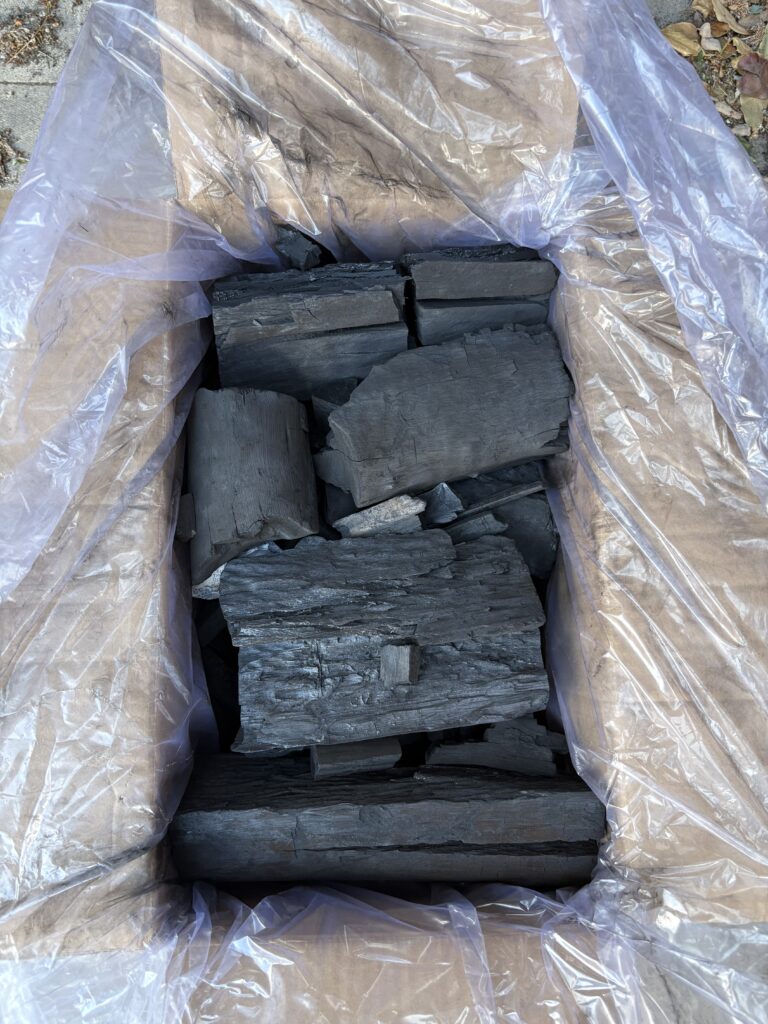
FAQ: Why does Big Ed’s Charcoal have a mix of big and small lumps?
Big Ed’s is all about top-quality, long-burning charcoal, made from a mix of Eucalyptus and Mangrove wood. Each 10kg box is packed with...