
Coffee Charcoal UK: A Buyer’s Guide to Choosing and Using It
A distinctive name doesn’t guarantee distinctive performance. If you’re considering coffee charcoal UK, check whether the fuel suits your barbecue and cooking style rather than choosing based on what its name suggests.
A product listing should help you understand what’s in the bag and how to use it. Yet “coffee charcoal” alone doesn’t confirm the raw material, production method, heat output or burn time. Even a description such as “restaurant charcoal” needs to be considered alongside clear product information.
This guide explains what to check before buying coffee charcoal, how to compare it with lumpwood and briquettes, and how to assess its suitability for your cooking setup. Use the product’s specifications and instructions to make your decision, rather than relying on an evocative name or unverified performance claims.
Key Takeaways
- For coffee charcoal UK, treat the name as a starting point and check the stated material, production method and intended use.
- Assess product specifications alongside your cooking method and barbecue, rather than relying on broad supplier claims.
- Compare coffee charcoal, lumpwood and briquettes by verified details, handling and suitability for your plans. There’s no universal best choice.
- Before ordering, check the packaging, product instructions and storage guidance, and keep the fuel dry as directed.
- The BBQ Experts lists coffee charcoal within its UK-wide fuel range. Ask the team about product-specific details that aren’t clear in the listing.
What Is Coffee Charcoal in the UK, and What Does the Name Tell You?
The name sounds specific, but it doesn’t identify exactly what is in the bag. “Coffee charcoal” is a product label for barbecue charcoal; the raw material and production method need to be confirmed in the product information.
Coffee charcoal is barbecue charcoal sold under the name “coffee”; its precise composition and production process depend on the product specification.
Charcoal is a solid fuel that generates heat as it burns. Its form and behaviour vary, so general information about what charcoal is can explain the category but can’t verify the properties of a particular product. For coffee charcoal UK buyers, distinguish what the label says from what the seller’s current specifications confirm.
Does coffee charcoal come from coffee plants or coffee waste?
The name alone doesn’t establish whether the product is made from coffee-plant wood, coffee waste or another material. It also doesn’t confirm the manufacturing process. Don’t assume the fuel is recycled, sustainable or made from a particular part of a coffee plant based only on its name.
Check the retailer’s current product specification for the raw material, production method and intended use. If those details aren’t provided, ask before buying. The BBQ Experts lists a coffee charcoal product described as A-grade, finest, restaurant charcoal. That description doesn’t confirm its source or technical performance.
Who might consider coffee charcoal in the UK?
Home barbecue cooks may want to compare it with fuels they already use. Foodservice buyers may want to assess it against their kitchen’s established requirements. In either case, treat it as an option to investigate, not a guaranteed flavour upgrade or a fuel that suits every setup.
Start with your equipment and cooking method. Check the barbecue manufacturer’s guidance and confirm that the fuel is intended for your appliance. Then compare the available product specifications with those of familiar lumpwood or briquettes. If a key detail is missing, ask the retailer rather than making an assumption.
How to Assess Coffee Charcoal’s Cooking Performance Before You Buy
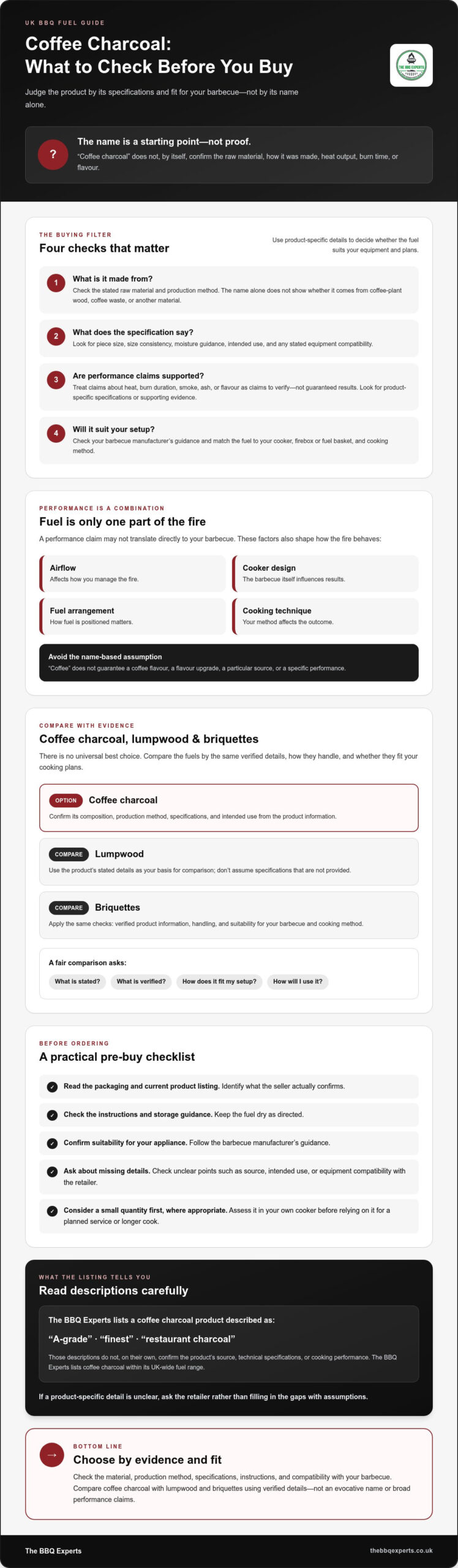
A fuel’s performance isn’t established by an evocative name or a premium-sounding description. For coffee charcoal UK buyers, useful evidence means product-specific specifications, clear instructions and suitability for the cooker and cooking method you use.
Use the product specification and your cooking setup to judge whether a fuel is suitable for your barbecue. Supplier descriptions can help identify what’s being sold, but treat claims about heat, burn duration, smoke, ash or flavour as claims to verify, not guaranteed results. Look for supporting specifications or test information. If a claim matters to your decision, ask the retailer what evidence is available.
Feedstock matters too. If the specification confirms that a fuel is wood-based, the U.S. Energy Information Administration’s overview of biomass energy offers general background on biomass as an energy source. It doesn’t confirm the composition, sustainability or cooking performance of a particular charcoal product.
Which fuel specifications matter for your barbecue?
Start with the details the seller actually provides. Check the stated piece size and consistency, any moisture guidance, the intended application and the manufacturer’s instructions for your cooker. Piece size affects how fuel fits together and how you arrange it around the cooking area. The barbecue’s design and airflow also affect how you manage the fire. If a detail is missing, ask rather than assuming.
- Piece size: Is a size range stated, and will the pieces suit your firebox or fuel basket?
- Consistency: Does the listing explain whether sizes vary, or is this information absent?
- Moisture guidance: Are storage or handling recommendations provided?
- Intended use: Does the supplier identify compatible cooking applications or equipment?
How should you judge heat, burn time and flavour claims?
These outcomes depend on more than the fuel. Airflow, cooker design, fuel arrangement and cooking technique all affect the fire, so a claim may not translate directly to your setup. Check whether performance statements are supported by product-specific specifications or independent evidence. Don’t infer a coffee flavour from the name. Follow the product guidance and, where appropriate, assess a small quantity in your own cooker before relying on it for a planned service or longer cook.
Still missing a key specification? Ask The BBQ Experts about coffee charcoal specifications before choosing, especially if you need to confirm intended use or equipment compatibility.
Coffee Charcoal vs Lumpwood and Briquettes: Which UK BBQ Fuel Fits?
Choose according to your cooking requirements, not the fuel with the most evocative name. Lumpwood is generally sold as separate pieces of charcoal, while briquettes are formed into more uniform shapes. These formats can affect how fuel is arranged and handled, but they don’t establish a particular product’s heat, burn time or suitability. For coffee charcoal UK buyers, compare the specific information the retailer confirms.
| Fuel | What can be compared | What to verify |
|---|---|---|
| Coffee charcoal | The BBQ Experts lists its coffee charcoal as “A-grade, finest, restaurant charcoal” and describes a two-box, 20 kg deal. Check the coffee-charcoal listing for current product details. | The supplied description doesn’t establish raw material, production method, piece size, handling characteristics or performance. Confirm these before drawing conclusions. |
| Lumpwood | A familiar fuel format sold as pieces rather than formed briquettes. Consider how the pieces fit your firebox and cooking routine. | Check the particular product’s stated size, consistency, intended use and instructions. Don’t assume all lumpwood performs alike. |
| Briquettes | A formed fuel format. Shape and consistency may influence how you arrange and handle them in your cooker. | Check the product’s composition, recommended application and performance information. Don’t generalise from the format alone. |
This comparison separates broad fuel formats from product-specific evidence. For a wider explanation of charcoal and its forms, see the overview linked earlier. It provides general context, not specifications for any fuel sold by a particular retailer.
When might coffee charcoal suit your cooking plans?
Start with your cooker, recipe and cooking duration, then follow the equipment manufacturer’s guidance. The listing’s “restaurant charcoal” wording describes how the retailer presents the product. It doesn’t prove that the fuel is exclusively for professional kitchens or suitable for every home barbecue. Ask about its intended application if that isn’t clear.
How does coffee charcoal differ from lumpwood and briquettes?
The coffee charcoal listing’s grade and restaurant wording don’t confirm whether its physical format or performance matches your expectations for lumpwood or briquettes. Compare stated composition, piece details, instructions and evidence for any heat, burn-time, smoke, ash or flavour claims. If those specifications aren’t available, treat the differences as unknown. Choose according to your equipment and cooking plan, not an assumed advantage.
How to Buy, Store, and Use Coffee Charcoal Safely in the UK
Make a careful purchase by checking the product details rather than relying on its name. Before ordering coffee charcoal UK, review what the listing confirms about composition, intended use and pack format, then check that the fuel suits your equipment. If essential information is missing, ask before relying on it for a cook.
What should you check on a coffee-charcoal listing?
Use the retailer’s coffee charcoal product page as a starting point and check the current listing before ordering. Its supplied title describes a two-box, 20 kg deal, and the product is described as A-grade, finest, restaurant charcoal. Neither description confirms the raw material, production process or detailed performance.
- Composition: Is the raw material and manufacturing method stated?
- Application: Does the listing explain what cooking use the fuel is intended for?
- Packaging: Are the pack details clear and consistent with your needs?
- Instructions: Are handling, lighting and use guidance provided?
If sourcing or specifications aren’t clear, ask the retailer instead of treating an assumption as a product fact. Check that the listing is current, particularly if packaging details or guidance may have changed.
How should you prepare and store charcoal responsibly?
Before using charcoal, read the fuel packaging and follow the barbecue manufacturer’s instructions for the appliance, lighting and cooking. Use an outdoor cooking setup as directed by its manufacturer. Don’t transfer instructions from another fuel to coffee charcoal unless the product guidance confirms they apply.
Keep the fuel dry and store it securely in line with the product label. Follow any handling advice supplied with the charcoal, and don’t improvise when instructions are unclear. These are practical checks, not coffee-charcoal-specific claims about lighting or storage.
If a listing leaves an important question unanswered, ask before ordering. Contact The BBQ Experts to check coffee charcoal’s product details and suitability for your cooking setup.
Where to Find Coffee Charcoal in the UK and What to Ask Next
Make your choice by confirming what the fuel is made from, reviewing the available specifications, checking that its stated use fits your cooker and following the supplier’s instructions. This approach helps you compare coffee charcoal UK options without relying on the product name or assuming a particular cooking result.
The BBQ Experts is a UK-wide specialist retailer that lists coffee charcoal alongside other barbecue fuels. Its product description calls the charcoal A-grade, finest, restaurant charcoal, but that wording alone doesn’t establish the raw material, production process or performance. Use the listing as a starting point, then compare the answers to your questions with your equipment and cooking plans.
What should you ask before choosing a coffee-charcoal product?
Before ordering, clarify any details the current listing doesn’t make clear. The answers can help you judge whether the fuel suits your cooking setup, but they shouldn’t be taken as a promise of a particular flavour or performance.
- Composition: What raw material is used, and how is the charcoal produced?
- Specifications: What product details are available, such as piece size or handling guidance?
- Intended use: Which cooking applications does the supplier recommend, and are there relevant instructions for your type of cooker?
- Order details: What packaging is currently offered, and is the product available to order?
Confirm packaging and availability directly rather than assuming details remain unchanged. Then weigh the information against your recipe, cooking method and appliance manufacturer’s guidance. If a specification can’t be confirmed, treat it as unknown rather than filling the gap with an assumption.
How can specialist advice make the choice clearer?
Product-specific answers can help you compare fuels using practical details and identify what still needs checking. They can’t guarantee how charcoal will perform in every cooker or cooking situation, so base your expectations on the information provided and your own setup.
If you’re considering alternatives, explore the bulk barbecue fuel range to see other fuel options listed by the retailer. Compare them on the same basis: composition, specifications, intended use and instructions.
Have a question about a listing or whether its stated use matches your equipment? Contact the team about coffee charcoal to ask for product-specific information before you decide.
Choose Your Next Barbecue Fuel with Confidence
Choose fuel based on verified details, not an evocative label. For coffee charcoal UK, check what the supplier confirms about composition, intended use and specifications, then weigh those details against your cooker and cooking plans. Compare it with lumpwood and briquettes according to practical requirements rather than assuming one format always performs best.
Before using any charcoal, follow the product instructions and your barbecue manufacturer’s safety guidance. If essential information is missing, ask before ordering instead of relying on assumptions about flavour, heat or burn time.
The BBQ Experts is a UK-wide specialist retailer with coffee charcoal in its listed fuel range and product-page information available to review. For details specific to the current listing, ask The BBQ Experts about coffee charcoal. Get clear answers, check that the fuel suits your setup, and plan your next outdoor cook with confidence.
Frequently Asked Questions
What is coffee charcoal made from?
The name alone doesn’t confirm coffee charcoal’s raw material. It may suggest a connection with coffee, but it doesn’t establish whether the fuel is made from coffee-plant wood, another material or a particular production process. Check the retailer’s current product specification for the stated composition and manufacturing method. If either detail is missing, ask the seller rather than treating an assumption based on the name as fact.
Is coffee charcoal good for barbecuing?
Coffee charcoal may suit barbecuing if the product is intended for that use and compatible with your appliance. Check the supplier’s application guidance, then compare it with your barbecue manufacturer’s instructions and your cooking method. A fuel that suits one setup may not suit another. If the listing doesn’t identify a recommended use, ask the retailer before buying rather than assuming the name guarantees suitability or a particular result.
Does coffee charcoal taste or smell like coffee?
The product name doesn’t prove that the charcoal will give food a coffee taste or produce a coffee-like smell. Don’t treat the name as evidence of flavour, aroma or smoke characteristics. Look for substantiated, product-specific information from the retailer and ask what evidence supports any sensory claims. If reliable details aren’t available, assess the fuel using its stated specifications rather than expecting a guaranteed flavour upgrade.
How does coffee charcoal compare with lumpwood charcoal?
Only product-specific information can establish how a particular coffee charcoal compares with a particular lumpwood fuel. Check the stated composition, form, intended use and available specifications for each. If those details aren’t provided, characteristics such as piece size, heat output and burn duration remain unconfirmed. The better choice depends on your cooker, cooking method and practical needs, so compare verified facts rather than fuel names alone.
Can you use coffee charcoal in any barbecue?
Don’t assume any single fuel is suitable for every barbecue. Check the charcoal’s stated intended use and follow the appliance manufacturer’s guidance on compatible fuels and operation. Consider your cooker’s design and how you plan to cook. If the product listing or manufacturer’s instructions leave compatibility unclear, contact the retailer or equipment manufacturer before using the fuel.
How should coffee charcoal be stored?
Follow the storage instructions on the product packaging, since guidance may differ between products. As a practical starting point, keep charcoal dry and store it securely in line with the label. Check the package for handling advice, and don’t assume instructions for another fuel apply. If the listing or packaging doesn’t answer a storage question, ask the retailer rather than guessing.
Where can I buy coffee charcoal in the UK?
The BBQ Experts, a UK-wide specialist retailer, lists coffee charcoal in its product range. For coffee charcoal UK buyers, the current product page is a useful starting point. Check its latest details for specifications, intended use, packaging and availability before ordering. Descriptive wording doesn’t confirm every product characteristic. If you need clarification, contact The BBQ Experts about coffee charcoal with your product questions.
Disclaimer
This article was produced with AI assistance. We use AI and Third Parties to help deliver more content to our BBQ website and community, but we always aim to ensure accuracy and quality as much as we can. If you spot anything that doesn't seem right, we'd love to hear from you

Recent News & Updates

Our Story, Values and Beliefs
Here at the BBQ experts we have a passion for BBQ food, outdoor living and spending time with family and friends. We offer you; A...
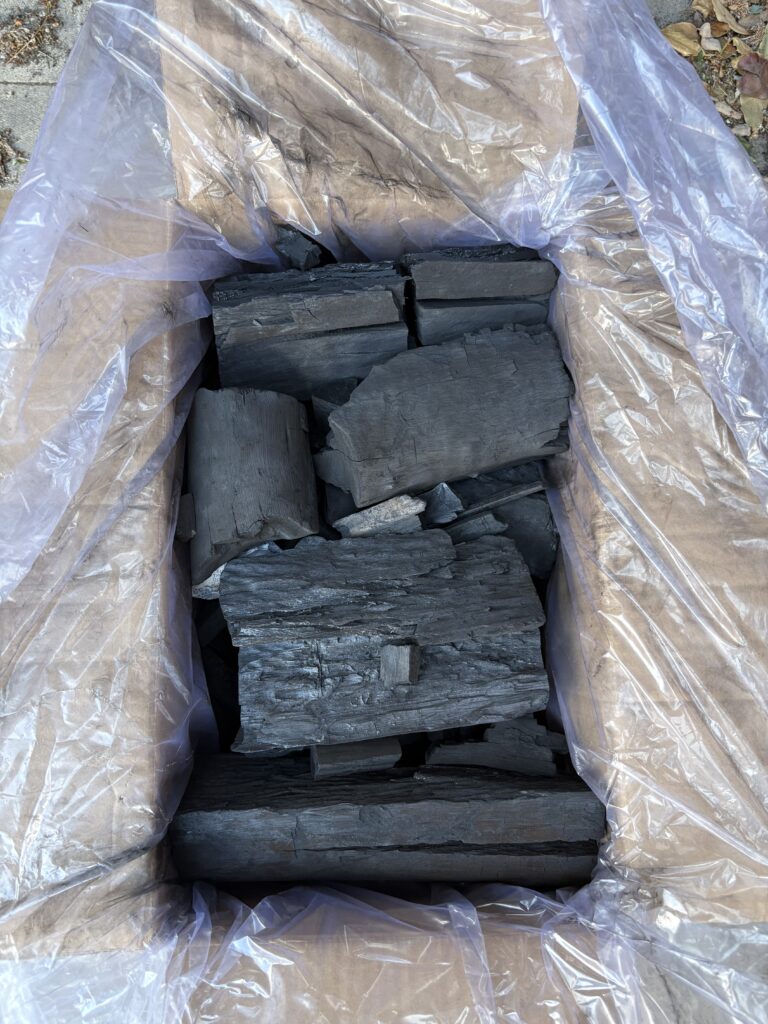
FAQ: Why does Big Ed’s Charcoal have a mix of big and small lumps?
Big Ed’s is all about top-quality, long-burning charcoal, made from a mix of Eucalyptus and Mangrove wood. Each 10kg box is packed with...