
Hibachi BBQ Grills for UK Buyers: Indoor Use and Care
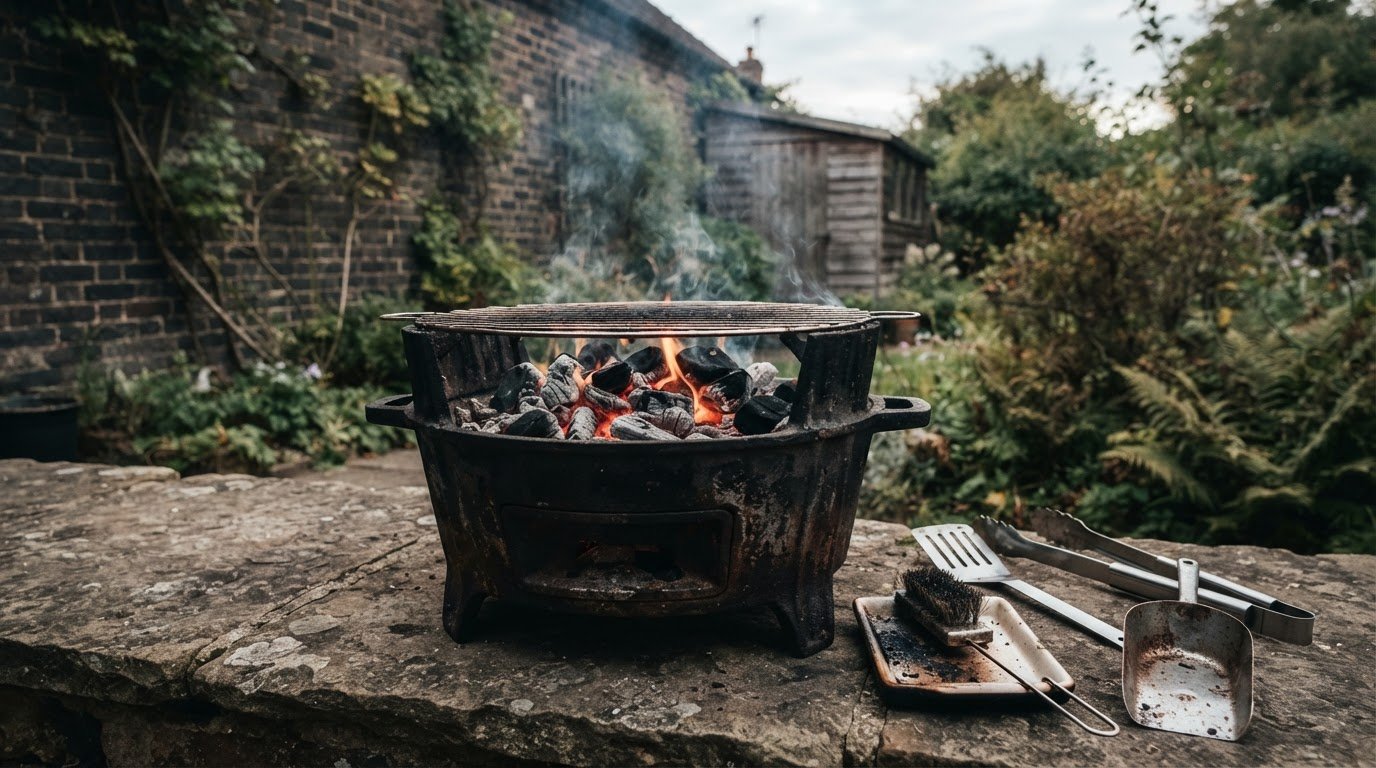
A hibachi BBQ grill in the UK is designed for outdoor cooking, not for use inside a home, conservatory, garage or other enclosed space. Charcoal produces smoke and combustion gases, so opening a window does not make an indoor room suitable. Choose an open-air position and follow the grill maker’s instructions for use and care.
A compact grill may suit a small patio, but it still needs a stable position and clear space around it. This guide explains how to assess whether a hibachi BBQ grill in the UK fits your outdoor setup, understand the names used for Japanese-style grills, and choose a tabletop model based on its cooking area and footprint. You’ll also find practical guidance on cleaning, storage and property or site rules to consider before lighting charcoal. Focus on the grill’s design and your cooking needs, rather than the label alone.
Key Takeaways
- Use a charcoal hibachi outdoors only, with open-air ventilation and a stable, heat-resistant surface.
- Learn how konro, hibachi and shichirin terms differ so you can choose a grill that suits your cooking style.
- Before using a grill on a balcony or in a small garden, consider the space, nearby materials and any building or local restrictions.
- Compare tabletop grills by their cooking area and footprint; one listed Japanese BBQ grill has a 24 x 12.5 cm grate.
- Keep your grill in good condition by managing ash safely, cleaning it after use and storing it dry.
Indoor use and grill care
A charcoal hibachi is for outdoor cooking, not for use in a kitchen, conservatory, garage or enclosed dining area. Burning charcoal produces smoke and combustion gases, which can build up indoors. Opening a kitchen window does not make an indoor room suitable for grilling. Choose a genuinely open-air position, away from doors, overhangs and materials that could catch heat.
Before lighting the grill, place it on a firm, level, heat-resistant surface. Stable paving is more suitable than a wobbly garden table or a fabric-covered surface. Clear away packaging, dry leaves and other clutter. Keep children and pets at a safe distance, stay close while charcoal is burning, and follow the maker’s operating and care instructions, particularly when handling hot components.
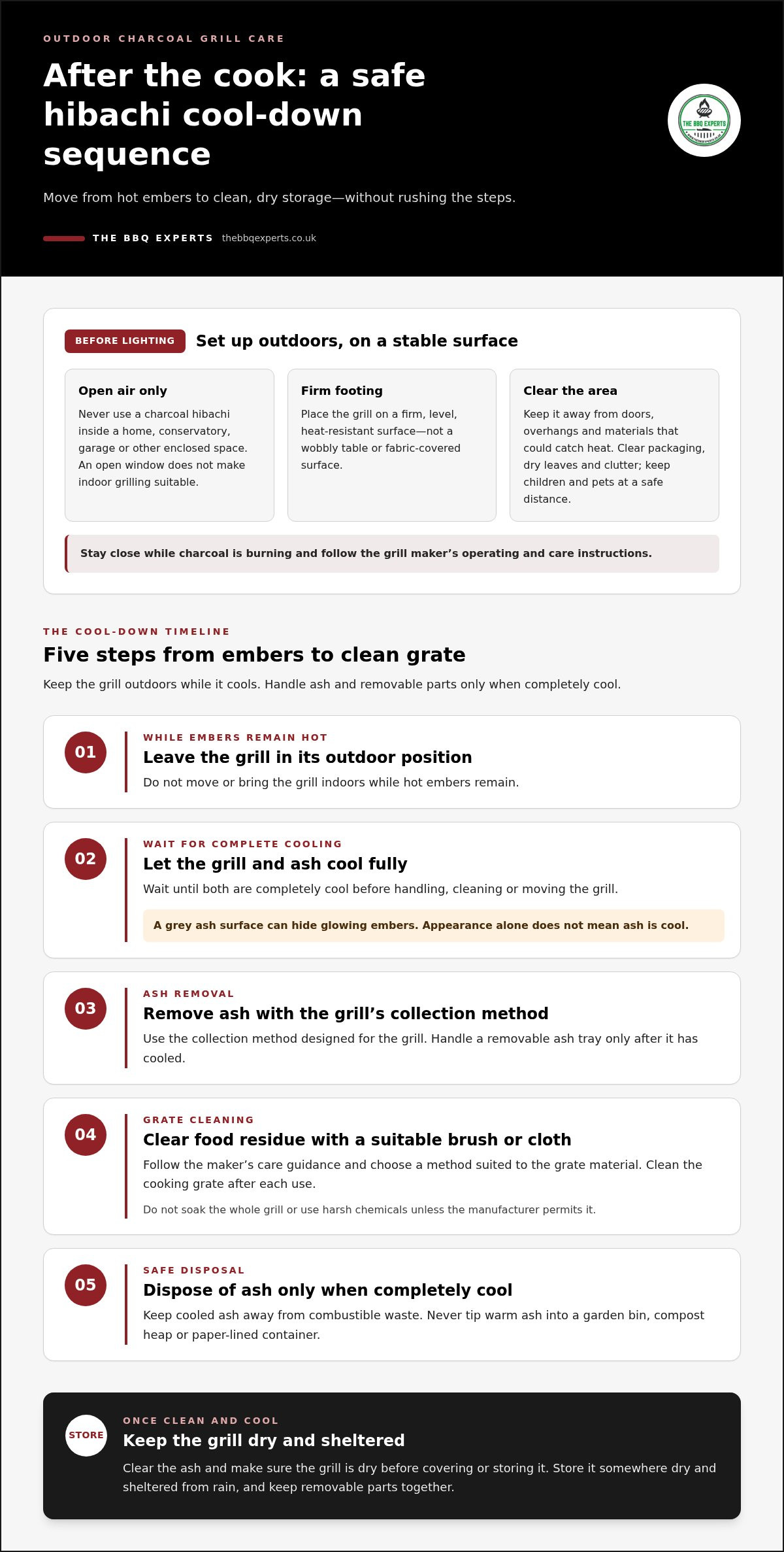
After cooking, let the charcoal burn out and the grill cool before cleaning or moving it. Follow this sequence:
- Leave the grill in its outdoor position while embers remain hot.
- Wait until the grill and ash have cooled completely before handling them.
- Remove ash carefully, using the collection method designed for the grill.
- Clean the grate with a suitable brush or cloth, following the maker’s care guidance.
- Dispose of cooled ash in a way that cannot expose it to combustible waste.
Take particular care with ash: a grey surface can conceal glowing embers. Don’t tip warm ash into a garden bin, compost heap or paper-lined container. Once it is completely cool, clear it from the fire area to prevent residue building up around the charcoal bed. Handle a removable ash tray only after it has cooled.
Clean food residue from the cooking grate after each use. Scrape off stuck-on pieces when the grate is safe to handle, then use a cleaning method suited to its material. Don’t soak the whole grill or use harsh chemicals unless the manufacturer permits it. Before lighting the grill again, inspect the grate and charcoal area for grease or old food that could affect cooking.
Konro, hibachi and shichirin differences
These three names overlap in English-language grill listings, but they do not always describe the same design. Shichirin generally refers to a compact Japanese charcoal stove used for grilling. Konro commonly describes a Japanese charcoal grill, often with a rectangular cooking area. In UK retail, hibachi can mean a small charcoal grill, although the word’s meaning varies across cultures and product descriptions.
That overlap matters when comparing a hibachi BBQ grill in the UK. A product label alone won’t tell you how much food the grill holds, the shape of its cooking surface or how it handles charcoal. Read the product description and examine the photographs. Check the actual dimensions, grate shape, fuel guidance and care instructions rather than assuming every grill called a konro or shichirin has the same design.
What the names tell you
Treat the names as clues, not complete specifications. Shichirin points towards the compact Japanese charcoal-cooking tradition. Konro often indicates a grill designed for direct cooking over charcoal, with rectangular models useful for arranging skewers in a row. Hibachi is widely used for small charcoal grills, including models with different shapes and materials.
In Japanese usage, hibachi has also referred to a charcoal-heating vessel rather than the familiar cooking grill. English-language sellers may use the word more broadly, so a product called a “hibachi” could resemble what another listing calls a Japanese charcoal grill. Its cooking function and construction are more useful buying clues than the name alone.
- Shichirin: a helpful term for compact Japanese charcoal grilling.
- Konro: a common label for Japanese charcoal grills, including rectangular styles.
- Hibachi: a broad retail term that can refer to small charcoal cooking grills.
Use these distinctions to narrow your search, then compare the practical details. A rectangular konro-style grill, for example, may suit a row of yakitori skewers, while a small square model may fit a compact outdoor cooking setup. These examples describe shapes, not guaranteed features of every product carrying those names. Check the grate layout and cooking area in the product listing.
Consider what you plan to cook. Skewers need enough space to rest securely across the grill, while small pieces of meat or vegetables benefit from a grate that keeps them contained. The charcoal bed, grate height and body shape all affect how you arrange food and manage heat. Comparing these features will tell you more than choosing by terminology alone.
If you’re weighing up the names against a particular cooking style, get guidance on choosing a grill before settling on a shape.
Are hibachi grills safe to use on balconies or in small gardens in the UK?
A balcony is generally a poor setting for a charcoal hibachi. Limited space can bring hot surfaces, smoke and sparks close to walls, furniture, glazing and neighbouring homes. Balconies may also be partly enclosed, limiting airflow. Treat a balcony as unsuitable unless building rules explicitly allow charcoal cooking and the space provides open-air ventilation, a stable heat-resistant surface and safe separation from combustible materials. Never use a charcoal grill inside a flat, conservatory or enclosed balcony.
Check restrictions before planning to cook on a balcony. A tenancy agreement, lease, building management rules or communal fire policy may prohibit barbecues, even on an open balcony. Keep the grill away from curtains, wooden screens, stored cushions and the balcony door. Smoke may enter your home or affect neighbours above and beside you. If the grill blocks access or leaves too little room to move safely, don’t light it there.
A small garden offers more options, but the layout still matters. Choose a level, non-combustible surface away from fences, sheds, overhanging branches and dry planting. Leave a clear route between the cooking area and the house. Position the grill in open air, not beneath a canopy or beside an open window. Consider the wind too: gusts can carry smoke, disturb embers and direct heat towards nearby materials.
Use this site check before lighting:
- Space: Confirm the grill has a stable position with room to cook and move safely.
- Surroundings: Move cushions, packaging, dry leaves and other combustible items away.
- Airflow: Choose an open garden position, not a covered nook or enclosed patio.
- People: Keep children and pets out of the cooking area while charcoal burns.
- Restrictions: Read relevant lease, tenancy or building rules before using a balcony.
Don’t light a balcony grill if the rules prohibit charcoal or the layout puts it beside combustible screens or furniture. In a small garden, postpone cooking if wind carries smoke towards open windows or neighbouring seating. Never try to solve cramped spacing by placing the grill on a ledge, unstable table or escape route. A compact Japanese charcoal grill still needs a safe, open position: small dimensions do not remove the risks from heat, smoke or embers.
Keep a suitable means of responding to an emergency close at hand, but not where heat could block access to it. Stay with the grill while it is lit, and don’t move it while the charcoal is hot. Let the embers cool completely outdoors before clearing the grill. A safe, open position is essential for outdoor cooking.
What UK fire safety rules or local restrictions apply to using a hibachi grill?
There is no single permission that covers every UK garden, balcony and shared outdoor space. Rules for using a hibachi depend on the property, its management arrangements and any local restrictions. Distinguish legal requirements from tenancy or building rules: a grill may be physically usable outdoors while still being prohibited by a lease or site policy.
Start by checking the rules for the place where you plan to cook. In a rented home, read the tenancy agreement and any barbecue or fire-safety guidance from the landlord. In a block of flats, check the lease and building management rules, especially for balconies and communal gardens. If charcoal cooking is prohibited, choose another cooking arrangement rather than moving the grill elsewhere within the same restricted area.
For a shared garden, check the fire policy set by the person or organisation responsible for the site. In a park, campsite or other public place, read signs and site rules before lighting charcoal. Rules may prohibit open flames, limit cooking to a designated barbecue area or ban barbecues in particular conditions. Don’t assume that permission to use a space includes permission to light a charcoal grill.
Local conditions also affect whether it is practical to cook. Dry vegetation, strong winds, nearby sheds and overhanging branches increase the consequences of stray sparks or heat. Smoke drifting into neighbouring homes can cause problems, even in a private garden. If wind carries smoke towards open windows, or embers could reach fences or planting, postpone cooking and choose a safer time or position.
Use this quick check before lighting:
- Property rules: Read your lease, tenancy agreement or building handbook for charcoal restrictions.
- Site rules: Check signs and barbecue policies in parks, campsites and shared gardens.
- Position: Choose stable, open ground away from combustible surfaces and vegetation.
- Conditions: Consider wind, dry planting and where smoke will travel.
- People: Keep children, pets and passers-by clear of the cooking area.
A compact hibachi still needs the same fire precautions as other charcoal grills. Its small footprint does not remove the risks from heat, smoke or embers. Never use it indoors, in a garage or inside an enclosed balcony. Stay with the grill while it is lit, follow its operating instructions and leave it in place until the charcoal and body have cooled.
If a property rule is unclear, read the relevant agreement or site policy and contact the organisation responsible for the space. For example, a tenant should clarify balcony restrictions with the landlord or managing agent before cooking. If the rules prohibit charcoal, respect them. Safe outdoor cooking starts with permission to use that location, followed by sensible control of heat, smoke and embers.
Table grill
A tabletop hibachi makes compact charcoal cooking possible, but “tabletop” describes its form, not permission to cook indoors. Choose a stable outdoor surface with room for the grill, food and utensils. A small patio table may work for serving dishes, but the grill itself needs a heat-resistant base. Keep the cooking area clear and avoid surfaces that could scorch, melt or wobble under the grill’s weight.
Compare the grate dimensions with the food you plan to cook. One Table Top Charcoal Japanese BBQ Grill listing gives a cooking grate of 24 x 12.5 cm. That compact rectangle can help you judge whether skewers, vegetables or individual portions will fit without crowding. Check the cooking surface shown in the product details, then picture the food arranged across it. Grate size is more useful than the tabletop label alone.
Body dimensions also affect placement and storage. A Cast Iron Charcoal Stove Korean Cooktop Japanese BBQ Grill listing gives dimensions of 25.5 x 25.5 x 11.5 cm. Compare those measurements with the clear outdoor surface available, not just the table’s overall width. Allow room to position food and handle tools without reaching over the hot cooking area. The footprint must fit safely, with the grill sitting flat.
Use these details to assess a table grill:
- Grate area: Match the cooking surface to your usual portions or skewers.
- Footprint: Compare the grill’s full dimensions with a stable, heat-resistant outdoor surface.
- Shape: A rectangular grate may suit food arranged in rows; a square body may fit a compact setup.
- Construction: Read the material description and care guidance before choosing how you’ll clean and store it.
Plan your cooking around the limited grate area. You might cook a small batch of skewers first, then prepare vegetables while the grill remains at a suitable heat. Keep uncooked food separate from cooked food and serving plates. Loading every ingredient onto a compact grill at once can make it harder to turn food and manage the heat.
A tabletop design can bring cooking closer to an outdoor dining area, but it shouldn’t become a centrepiece on a crowded table. Give the grill its own clear position, away from plates, napkins and serving boards. Measure the intended spot before buying, and compare both the grate and body dimensions. If you want help selecting a suitable format, get guidance on choosing a hibachi grill.
The BBQ Experts: Angus & Oink Rubs
The BBQ Experts offers a Hibachi Grill, charcoal and Angus & Oink Rubs for outdoor cooking. Once you’ve chosen a grill format and a safe place to use it, consider how you want to build flavour. Angus & Oink Rubs offer seasoning options to explore, while Big Eds Charcoal is a fuel choice for charcoal cooking. For open-fire cooking outdoors, The BBQ Experts also offers a Fire Cage.
Choose the equipment and seasonings that suit your cooking style, from a focused hibachi session to a broader outdoor fire setup. Explore The BBQ Experts’ range of Hibachi Grills, charcoal and Angus & Oink Rubs.
Make your next cook a considered one
Your first cook is a chance to establish a routine as well as test the grill. Choose a dish suited to the cooking surface, prepare ingredients before lighting the charcoal, and leave yourself room to focus on heat and timing. Taking a measured approach helps you refine your technique and enjoy cooking outdoors.
If you’re planning a hibachi BBQ grill in the UK, explore The BBQ Experts’ Hibachi Grill alongside Big Eds Charcoal and Angus & Oink Rubs. Consider how the grill, fuel and seasoning can work together for the food you enjoy preparing. A well-chosen setup can make each cook more deliberate, from lighting the charcoal to serving the meal.
Contact The BBQ Experts to discuss your outdoor cooking plans, and take the next step towards creating a space that brings people together around the grill.
Frequently Asked Questions
What are the best hibachi grills available in the UK?
The right grill suits your cooking habits, outdoor space and preferred construction. The BBQ Experts offers a Hibachi Grill and a Japanese Charcoal Grill. When choosing a hibachi BBQ grill in the UK, compare grate layout, body material, fuel guidance and cleaning instructions. If you often cook skewers, consider how the grate supports them; for varied ingredients, look for room to turn and reposition portions.
How much does a hibachi grill cost in the UK?
There isn’t one price for every model: cost depends on factors such as material, dimensions, construction and included components. A compact hibachi BBQ grill in the UK may differ in design and use from a heavier, more substantial model. Decide how much cooking surface you need and where the grill will sit outdoors. Then compare specifications on a like-for-like basis, including the grate and body, rather than judging by the hibachi label alone.
How do you light, use, and clean a hibachi BBQ grill?
Follow the grill’s instructions for arranging and lighting charcoal, as construction and airflow vary by model. Prepare food and utensils before cooking, then use tongs to turn portions and keep uncooked ingredients separate from cooked food. After cooking, let the grill cool completely before removing ash or cleaning the grate. Follow the maker’s care guidance for the body material, then store the clean, dry grill in a sheltered place.
Which hibachi grills are best for tabletop use, camping, or gardens?
For tabletop use, compare the grill’s cooking area and footprint; the Table Top Charcoal Japanese BBQ Grill has a 24 x 12.5 cm grate. In a garden, use a stable, level, heat-resistant surface in an open-air position.
What are the dimensions, cooking area, and weight of popular hibachi grills?
The Table Top Charcoal Japanese BBQ Grill has a 24 x 12.5 cm grate. The Cast Iron Charcoal Stove Korean Cooktop Japanese BBQ Grill measures 25.5 x 25.5 x 11.5 cm.
Disclaimer
This article was produced with AI assistance. We use AI and Third Parties to help deliver more content to our BBQ website and community, but we always aim to ensure accuracy and quality as much as we can. If you spot anything that doesn't seem right, we'd love to hear from you

Recent News & Updates
Sustainable BBQ charcoal UK: which fuel makes a difference
British-made charcoal can make a difference: where the wood comes from and how far it travels matter, while lumpwood versus briquettes is...

Our Story, Values and Beliefs
Here at the BBQ experts we have a passion for BBQ food, outdoor living and spending time with family and friends. We offer you; A...