
Short and Easy Guide to Meat Cooking Temperatures on a BBQ
Short and Easy Guide to Meat Cooking Temperatures
Nobody wants to serve undercooked chicken to their family. But nobody wants to eat a dried-out pork chop either. Most people end up guessing somewhere in between, poking at the meat, cutting it open, or just cooking everything until it’s bone dry “just to be safe.” That’s not a great system.
Knowing the right internal temperature for each type of meat takes all the stress out of cooking. It’s the difference between a juicy steak and a tough one, and it’s the only reliable way to make sure harmful bacteria are actually gone. A lot of the old rules people follow are outdated too. Pork doesn’t need to be cooked to leather anymore, and beef has more safe options than you might think.
This guide gives you the exact temperatures for every common meat, from poultry to seafood.
You’ll also learn how restaurant grade charcoal can improve your results on the grill, how to set up proper heat zones, and why resting your meat after cooking matters more than most people realize.
Essential Meat Temperature Chart: Safe Internal Temperatures by Type
Poultry Temperature Guidelines (Chicken, Turkey, Duck)
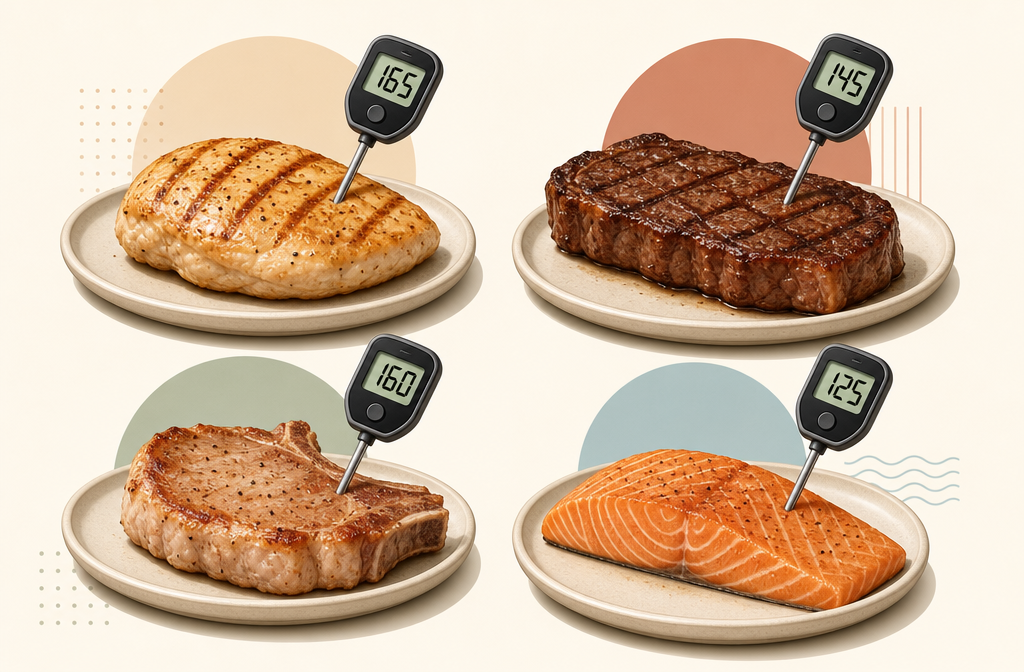
All poultry needs to hit 165°F (74°C) before you eat it. No exceptions here. Check the temperature at the thickest part of the breast and deep into the innermost part of the thigh, where the meat takes longest to cook through. These spots stay coolest during cooking, so if they’ve reached the safe zone, everything else has too.
Ground poultry follows the same 165°F standard set by the USDA. The grinding process spreads bacteria throughout the meat instead of keeping it on the surface. That means ground turkey burgers or chicken meatballs need complete cooking all the way through, not just a quick sear.
Give your chicken a break. After pulling poultry off the heat, let it rest for 3 to 5 minutes before slicing into it. This resting period lets carryover heat finish the cooking process while juices settle back into the meat fibers instead of running all over your cutting board.
Beef and Lamb Temperature Standards for Different Doneness Levels
Cooking beef and lamb gives you more flexibility than poultry since whole cuts can be safely enjoyed at lower temperatures. Here’s what you’re aiming for at the center of your steak or roast: rare clocks in at 125°F (52°C), medium-rare at 135°F (57°C), medium at 145°F (63°C), medium-well at 150°F (66°C), and well-done at 160°F (71°C).
The USDA recommends a minimum of 145°F with a 3-minute rest for whole cuts of beef and lamb. This covers food safety while still giving you that pink center many people prefer. Personal preference matters, but you should know the baseline for safe eating.
Ground beef is different. It must reach 160°F (71°C) all the way through. Grinding distributes E. coli and other surface bacteria throughout the meat, so that rare burger you’re craving actually carries real risk. When cooking temperatures used over restaurant grade charcoal reach those intense 700°F zones, you get amazing crust development on steaks and roasts while the interior cooks to your target temperature more evenly.
Pork Cooking Temperature Requirements
Fresh pork has come a long way. Chops, roasts, and tenderloin are perfectly safe at 145°F (63°C) when you give them a 3-minute rest afterward. Yes, you’ll see a slightly pink center, and that’s completely fine. Modern pork farming practiceshave nearly eliminated trichinosis, making lower cooking temperatures both safe and more delicious.
Ground pork still needs 160°F (71°C) throughout. The same grinding concerns that apply to beef apply here too. Already cooked ham just needs reheating to 140°F (60°C), while fresh ham requires the full 145°F (63°C) treatment.
Fish and Seafood Temperature Guidelines
Fish hits its sweet spot at 145°F (63°C). You can also check visually: the flesh should look opaque and separate easily when you nudge it with a fork. Shrimp, lobster, and crab follow the same 145°F rule, though most people judge doneness by appearance. The flesh turns pearly and opaque when ready.
Scallops need that same 145°F (63°C) mark. They’ll turn milky white or opaque and firm up nicely. The high, consistent heat from cooking temperatures used over restaurant grade charcoal creates that restaurant-quality sear on fish while keeping the inside moist, as long as you’re watching your thermometer.
Temperature Checking Best Practices
Stick your instant-read thermometer into the thickest part of whatever you’re cooking. Avoid bone, fat, or gristle since these materials conduct heat differently than muscle and throw off your reading. For thin cuts like burgers or pork chops, insert the thermometer sideways through the edge to reach the center without poking completely through.
Large roasts and whole birds need multiple temperature checks. One reading doesn’t tell the whole story. Test several spots to confirm even cooking throughout, especially in those thick breast and thigh areas on poultry.
Keep your thermometer clean and accurate. Test it in ice water, where it should read 32°F, and in boiling water, where it should hit 212°F at sea level. Regular calibration checks save you from serving undercooked meat or turning a perfect steak into shoe leather based on faulty readings.
We have a huge in-depth Blog on this very issue – Please CLICK HERE

Recent News & Updates

Our Story, Values and Beliefs
Here at the BBQ experts we have a passion for BBQ food, outdoor living and spending time with family and friends. We offer you; A...
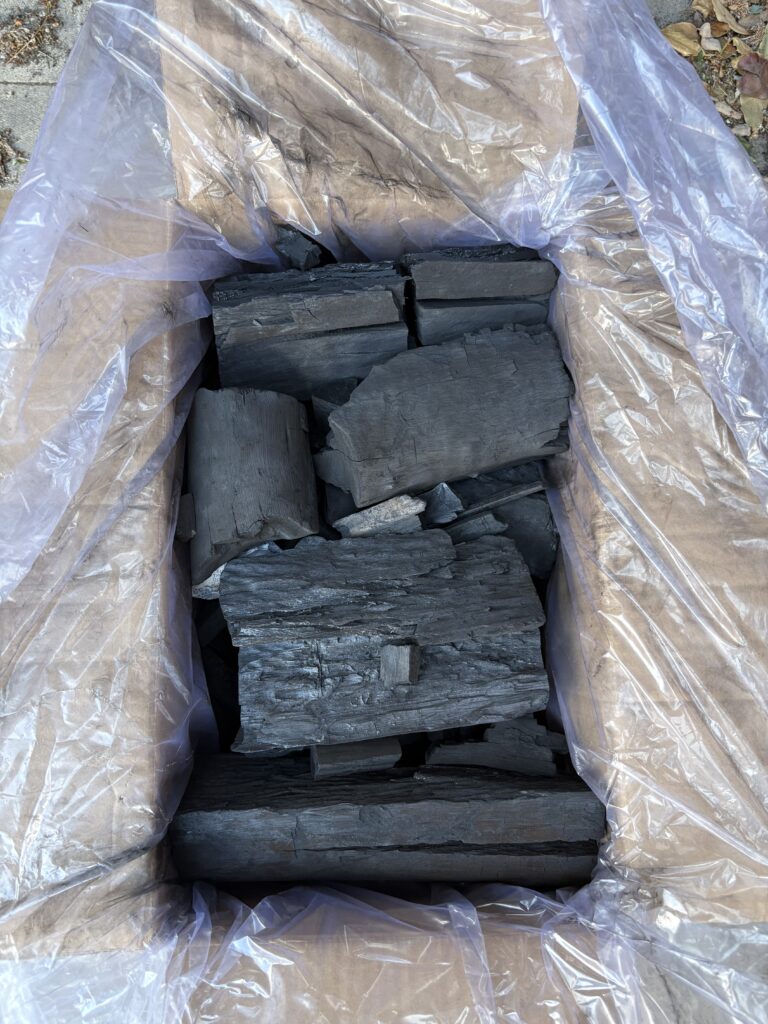
FAQ: Why does Big Ed’s Charcoal have a mix of big and small lumps?
Big Ed’s is all about top-quality, long-burning charcoal, made from a mix of Eucalyptus and Mangrove wood. Each 10kg box is packed with...