
Portable Japanese BBQ Grills for UK Outdoor Use
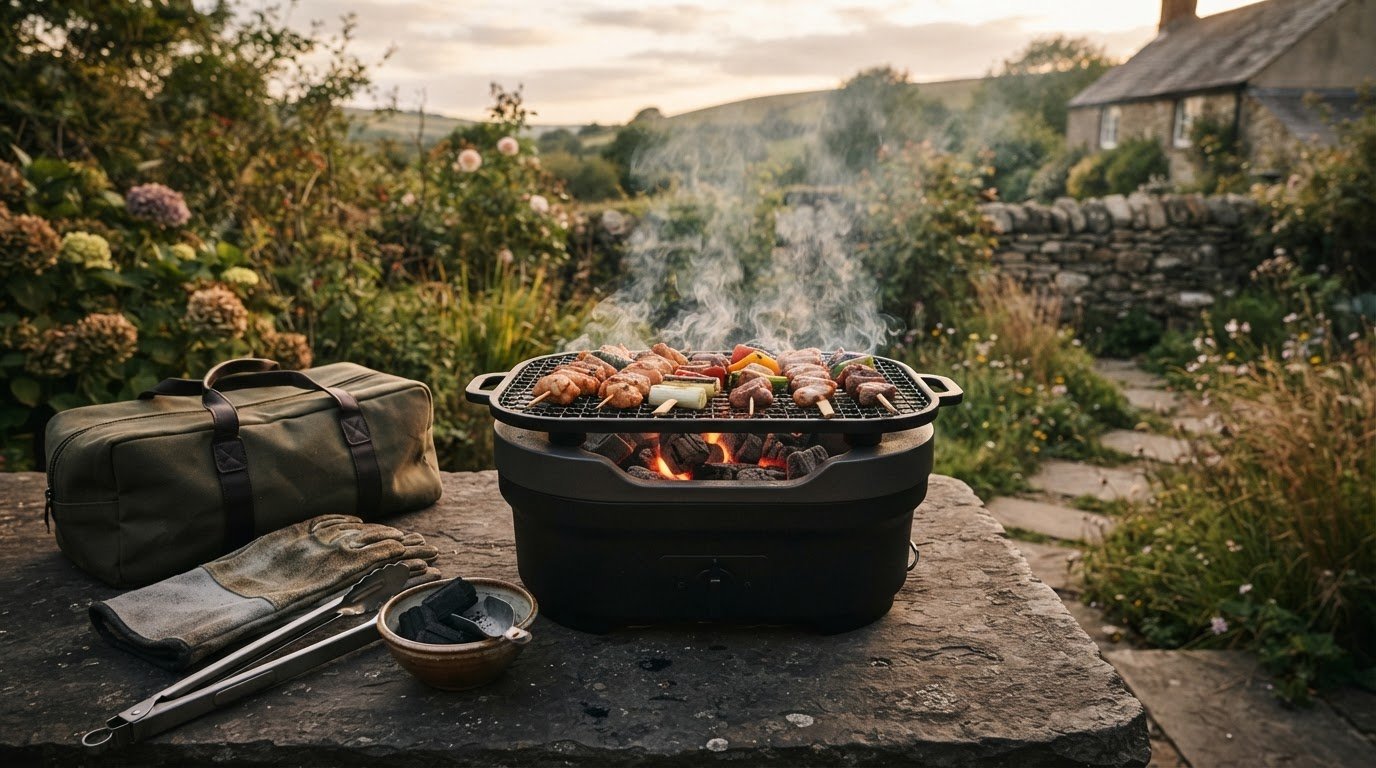
A compact footprint doesn’t have to limit your cooking ambitions. A Konro is a Japanese charcoal grill, and choosing a portable Japanese BBQ grill in the UK means comparing cooking area, weight, materials and heat management.
If you’re drawn to close-to-the-fire outdoor cooking, it’s natural to focus on grill size first. But portability also depends on how easily you can carry and store the grill, while its materials affect care and performance. This guide covers the practical details to weigh before choosing a model.
Learn what distinguishes a Konro, how to compare tabletop grills by dimensions and weight, and what to consider about materials, charcoal and safe outdoor use. The aim is to find a grill that suits your space and cooking style, for precise, sociable outdoor meals.
Key Takeaways
- Understand what sets a Konro apart and why its compact tabletop format suits focused outdoor charcoal cooking.
- Choose an outdoor cooking spot with ventilation and a stable, heat-resistant surface; charcoal grills aren’t for indoor use.
- Match the cooking area to your group size and the food you plan to grill, then consider how easily the model can be carried and stored.
- Compare a grill’s full dimensions and weight, not just its cooking surface, to see whether it fits your transport and storage needs.
- Assess materials, heat performance and charcoal together to find a setup that suits your style of cooking.
What is a Konro grill?
A Konro is a compact Japanese-style charcoal grill, commonly used to cook yakitori over direct heat. A portable Japanese BBQ grill in the UK brings this tabletop style outdoors, where size, fuel and accessories all shape the experience.
Portable Tabletop Charcoal Grilling
A tabletop Konro’s narrow cooking surface sits close to the food, making it well suited to skewers and small pieces of meat, fish or vegetables. Before choosing one, consider where it will sit, how much cooking space you need, and whether its weight suits your carrying and storage plans. Use it outdoors on a stable, heat-resistant surface, with clear space around the hot grill.
Charcoal Heat Retention and Control
The grill’s body helps contain heat around the charcoal, while airflow and the fuel bed affect how intensely it burns. Spread fuel evenly for a steady cooking zone, or concentrate it beneath food that benefits from stronger direct heat. Vents, grate height and cooking-surface size all influence how you manage heat.
Binchotan is a traditional Japanese charcoal associated with Konro cooking. Its dense form is valued for sustained heat, making it a popular choice for yakitori and other quick, direct-heat cooking. Your charcoal affects lighting, heat and flavour, so match the fuel to your cooking style and grill design. Don’t assume every charcoal type behaves the same way.
The right accessories can make tabletop grilling easier to control. A suitable grate supports the food, while long-handled tongs let you turn skewers without reaching close to the heat. A charcoal starter helps prepare fuel separately before it goes into the grill. Choose accessories that fit the cooking surface and leave room to move food safely.
Japanese charcoal grills vary in price according to dimensions, materials, construction and included accessories. Compare the complete setup, not just the grill: fuel and cooking tools may also be needed. A compact model may suit occasional meals for a few people, while a larger cooking surface gives you more room to cook batches at once.
Check the written return terms before ordering, including whether they differ for the grill and charcoal. Keep the packaging and included accessories together until you’ve inspected the delivery. Follow the fuel’s storage and handling guidance, and order only what you can store appropriately.
Outdoor use and indoor ventilation safety
A charcoal Konro belongs outdoors, not inside a home. Burning charcoal produces fumes, so a kitchen, conservatory, shed or garage is unsuitable, even with a door or window open. Keep the grill in open air, where smoke can disperse rather than collect around people.
Choose a firm, level surface before lighting the fuel. A stone patio or clear outdoor cooking station is steadier than a folding table or uneven paving. Keep the grill away from overhanging branches, outdoor cushions, dry foliage and anything else that could catch heat. Leave enough room to move around it without brushing against the hot body.
Plan the cooking area before guests arrive. Place the grill where smoke won’t blow directly towards seating, open windows or neighbouring doors. Wind can shift smoke and sparks, so pay attention to its direction before lighting and while cooking. If gusts make the flame or embers difficult to manage, pause cooking and address the conditions rather than moving the hot grill.
- Set the grill on a stable, heat-resistant surface.
- Keep children, pets and loose clothing away from the hot cooking area.
- Use long-handled tongs to turn yakitori skewers or seafood.
- Keep a suitable means of extinguishing embers close by.
These steps help make tabletop grilling more controlled, but indoor charcoal use is still unsuitable. A stainless steel finish may look sleek and be easy to wipe clean, but metal components become hot during cooking. Handle the grill only at designated points, and don’t touch its body or move it while charcoal is alight. Check the manufacturer’s care instructions before cleaning or storing it.
Food preparation also benefits from a well-planned outdoor setup. Keep raw seafood and meat separate from cooked food, and use clean plates and utensils for serving. Arrange ingredients, tongs and serving dishes before lighting the grill, so you don’t have to reach across hot charcoal. That leaves you free to focus on cooking, where a quick turn can preserve delicate texture and flavour.
After cooking, allow the charcoal and grill to cool completely in place. Don’t carry hot ash indoors or put it into a bin while it may still contain embers. Once cool, follow the grill’s care guidance for ash removal and storage. For help planning a safe outdoor cooking setup, discuss your grill plans with a specialist.
Compact tabletop grills for small groups
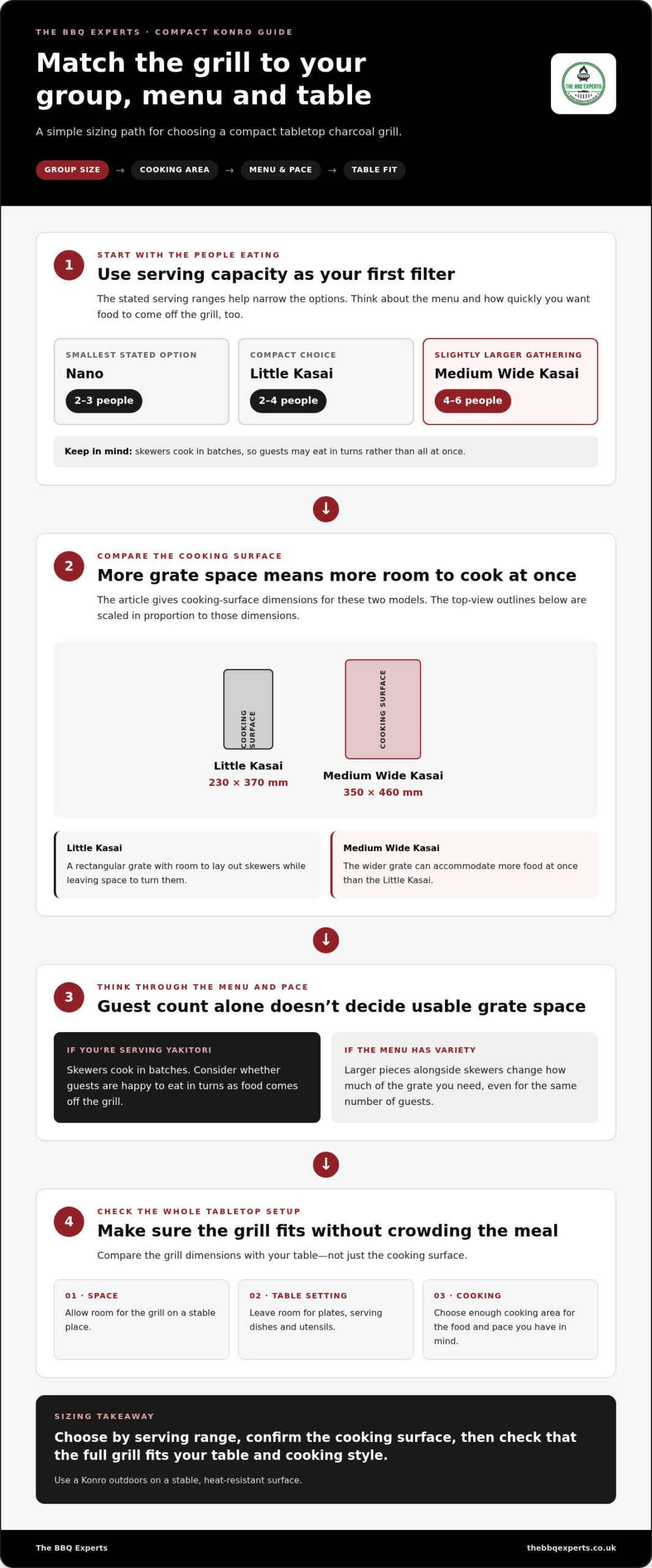
For a close-knit meal, choose a Konro by cooking area and stated serving capacity. The Nano is described for two to three people, while the Little Kasai suits two to four. Use those ranges as a starting point, but consider the menu and pace, too. Skewers cook in batches, so guests may eat in turns rather than all at once.
The Little Kasai has a cooking surface measuring 230 x 370mm. That rectangular area gives room to lay out skewers while leaving space to turn them. Compare the dimensions with your table before buying: the grill needs a stable place, and diners need room for plates, serving dishes and utensils. A compact footprint can still feel crowded if the table is already set for a full meal.
For a slightly larger gathering, the Medium Wide Kasai is described for four to six people and has a 350 x 460mm cooking surface. Its wider grate can accommodate more food at once than the Little Kasai. Consider whether you’ll serve yakitori continuously or cook larger pieces alongside skewers. The menu changes how much usable grate space you need, even with the same number of guests.
- Two to three people: the Nano is the smallest stated serving option.
- Two to four people: the Little Kasai offers a 230 x 370mm cooking surface.
- Four to six people: the Medium Wide Kasai provides a 350 x 460mm surface.
- Picnics or camping: choose a grill described for transport and outdoor use.
Portability involves more than a compact grate. A BBQ Konro Grill described for two to four people is transportable for outdoor grilling, picnics and camping. Before taking a tabletop grill out, consider its dimensions, weight, fuel and how you’ll carry it. A model that fits a garden table may still be awkward to pack with food and other equipment.
Before settling on a size, think through the whole serving routine. Prepare skewers in batches, keep uncooked ingredients separate from cooked food, and leave space for tongs and plates. A small grill can make cooking feel intimate, with each batch served hot from the charcoal. If guests want to eat together, a larger surface may reduce the wait between rounds.
Use stated capacity as a guide, then match it to your menu, table and transport plans. The Nano’s two-to-three-person range suits a different occasion from the Medium Wide’s four-to-six-person range. Compare these figures with the cooking surface to choose compact Konro grills for the way you host, rather than by appearance alone.
Grill dimensions and weight
Compare external measurements with cooking-surface dimensions, as they describe different things. A tape measure and the grill’s stated weight help you decide whether it suits your table, storage space and transport plans.
Grill Dimensions
Start with the grill’s full footprint, then consider height and cooking area separately. The BBQ Konro Nagomi measures 57cm wide, 23cm deep and 20.5cm high. By comparison, the BBQ Grill C-8 has base dimensions of 26cm by 23cm. Those figures show how models can occupy different amounts of table space, even when both are tabletop grills.
Check the measurements against where you’ll cook and store the grill. Allow room for the grill itself, as well as ingredients, serving plates and utensils. A narrow surface may suit skewers, while a broader one gives you more flexibility to arrange different foods. The classic rectangular shape makes orientation important, so measure both sides of your table before deciding where the grill will sit.
Read product dimensions carefully. A cooking-surface measurement describes the usable grate, not necessarily the appliance’s complete footprint. For example, the JKC BBQ Konro Medium measures 210mm high by 355mm wide. Compare those stated dimensions with your available storage space, and account for any handles or accessories described as part of the grill.
Grill Weight
Weight affects how easily you can move a grill between storage and its cooking spot. The JKC BBQ Konro Medium weighs 14.2kg, while the red BBQ Konro Grill for two to four people weighs 6.3kg. That difference can matter if you plan to carry the grill to a picnic or camping site, rather than leave it in one outdoor area.
Look at the weight alongside the dimensions, not in isolation. The BBQ Konro Nagomi has a gross weight of 15kg, a figure that includes packaging. Distinguish gross weight from the grill’s own weight when planning transport or lifting. A compact base doesn’t automatically mean a light grill, as the Nagomi’s 57cm length and gross weight demonstrate.
Before buying, measure the table, storage shelf and route between them. Compare these measurements with the grill’s external dimensions and stated weight. If you’ll carry ingredients and cooking equipment together, consider the combined load, too. This practical check helps balance cooking capacity and portability, rather than choosing by appearance alone.
Grill materials and heat range
Materials and temperature ratings offer clues to how a Japanese charcoal grill is built and intended to be used. Compare the maker’s construction details and stated heat range before choosing.
Grill Materials
Check the materials used for the body, cooking grate and fittings, rather than relying on a description of the finish alone. Stainless steel may be used for particular components, so check the specifications to see where. Material choice affects care, handling and how the grill responds to repeated heating. Follow the manufacturer’s cleaning guidance, especially for the grate and charcoal chamber.
Look for clear information about each part’s construction and finish. A polished exterior, for example, doesn’t tell you what material lies beneath or how the cooking surface is made. Consider where the grill will be stored between sessions, since moisture and ash affect cleaning and storage routines. Choose materials to suit how you plan to use the grill, not just how it looks.
Consider how the grill’s body contains heat around the charcoal. Construction, airflow and fuel work together, so material alone doesn’t determine cooking performance. A dense body may heat and cool differently from a lighter structure. Check the product specifications to understand its intended use, then choose fuel and cooking techniques suited to its design.
Grill Heat Range
Temperature figures give a useful reference, but they don’t describe every cooking condition. The JKC BBQ Konro Small has a stated working temperature range of 107°C to 350°C. That span signals the range associated with this model, not a guarantee that every part of the grate stays at one precise temperature.
Heat at the food depends on charcoal placement, airflow, grate position and how much food covers the surface. For a more controlled cook, arrange fuel evenly and leave room to move ingredients between hotter and cooler areas. Turn delicate seafood or thin skewers promptly; thicker pieces may need a less intense position to cook through.
Use the stated temperature range to guide your menu, rather than treating the highest figure as the target for every dish. Yakitori needs close attention because small pieces cook quickly over direct charcoal. For slower cooking, adjust the fuel layout and distance from the heat where the grill allows. Note the charcoal arrangement and results to refine your technique with each session.
For guidance on choosing a grill around its materials and heat performance, talk through your outdoor cooking requirements.
The BBQ Experts: Angus & Oink Rubs
The BBQ Experts brings together seasoning and outdoor cooking essentials for your charcoal setup. Angus & Oink Rubs add a flavourful seasoning layer to skewers, meat or vegetables, while Big Eds Charcoal offers a fuel option for your grilling plans.
If you’re still choosing a cooking style, consider the Hibachi Grill or Fire Cage for a different way to bring people together around live-fire cooking. The right setup depends on your menu, available space and preferred cooking style. Start with a grill and fuel that suit your needs, then choose a rub to complement the ingredients.
Contact The BBQ Experts to explore options for your outdoor cooking setup.
Make your next outdoor meal your own
A grill can be more than a cooking tool. It can shape a relaxed ritual: preparing ingredients together, tending the charcoal and sharing each fresh batch around the table. Choosing a portable Japanese BBQ grill in the UK is the start; the food, fuel and flavour you bring to each gathering make it your own.
The BBQ Experts can help you bring those elements together. Choose Big Eds Charcoal for fuel, Angus & Oink Rubs for seasoning, or a Hibachi Grill for another style of live-fire cooking. Let your menu and outdoor space guide your setup, then build confidence through practice and preparation.
If you’re ready to shape your outdoor cooking setup, contact The BBQ Experts for advice. Your next gathering can begin with a simple idea and grow into a memorable meal shared outdoors.
Frequently Asked Questions
What portable Japanese BBQ grills are available in the UK?
UK options include compact tabletop Konro grills, Hibachi-style grills and larger charcoal models. The Nano is described for two to three people, while the Little Kasai suits two to four. The portable Japanese BBQ grill in the UK that suits you depends on cooking surface, weight and where you’ll use it. Compare the full dimensions and stated capacity, not just product photos.
How much do portable Japanese BBQ grills cost in the UK?
Prices vary with a grill’s size, construction, cooking surface and included accessories. To compare models fairly, check whether the listing includes the grill alone or a grate, stand or other parts. Consider whether you’ll also need charcoal and cooking tools. A compact model and a larger, heavier grill serve different needs, so compare equivalent specifications rather than headline prices alone.
What are the best portable Japanese charcoal grills for travel and camping?
For travel, prioritise manageable weight, a shape that packs securely and a clear outdoor-use design. One red BBQ Konro Grill for two to four people is described for picnics and camping; it measures 41 x 23.5 x 18cm and weighs 6.3kg. Those dimensions help assess luggage space, but remember to plan separately for charcoal, food and safe transport of the grill after cooking.
What charcoal and fuel can be used in a portable Japanese BBQ grill?
Binchotan is a traditional fuel associated with Konro grilling, while other charcoal products include lumpwood and briquettes. The BBQ Experts offers Big Eds Charcoal, Oak Charcoal, Eucalyptus Charcoal, Coffee Charcoal and King Khaya Charcoal. Match fuel to the grill’s instructions and your cooking style. Check the fuel’s form and size before loading, so pieces sit securely in the charcoal chamber.
How do you light and use a portable Japanese BBQ grill safely?
Use the grill outdoors and follow the manufacturer’s lighting and operating instructions. Set it on a stable, heat-resistant surface, prepare your food and tools before lighting, and keep children and pets away from the hot cooking area. Use suitable tools to turn food, and don’t move the grill while it’s hot. After cooking, leave it in place until the charcoal and ash have cooled completely.
Are portable charcoal BBQ grills allowed at UK campsites, beaches, and parks?
Rules and current fire restrictions depend on the campsite, beach or park. Before packing a charcoal grill, read the site’s guidance and look for designated cooking areas or restrictions on open flames. Don’t assume a public outdoor space permits charcoal cooking. If barbecues are prohibited, choose another meal plan instead of lighting the grill in an unauthorised area.
What size portable Japanese BBQ grill is best for 2 to 4 people?
A model described for two to four people, such as the Little Kasai, is a sensible starting point. Consider the meal as well as the headcount: successive batches of skewers create a different rhythm from serving everyone at once. Check that the cooking surface suits the food you plan to prepare, and leave table space for plates, ingredients and utensils.
How do you clean and maintain a portable Japanese BBQ grill?
Let the grill and charcoal cool completely in place before removing ash or storing the grill, and follow the manufacturer’s care instructions. Stainless steel finishes can be wiped clean.
Disclaimer
This article was produced with AI assistance. We use AI and Third Parties to help deliver more content to our BBQ website and community, but we always aim to ensure accuracy and quality as much as we can. If you spot anything that doesn't seem right, we'd love to hear from you

Recent News & Updates
Sustainable BBQ charcoal UK: which fuel makes a difference
British-made charcoal can make a difference: where the wood comes from and how far it travels matter, while lumpwood versus briquettes is...

Our Story, Values and Beliefs
Here at the BBQ experts we have a passion for BBQ food, outdoor living and spending time with family and friends. We offer you; A...