
Mastering Authentic Japanese Grilling at Home: The Connoisseur’s Guide for 2026
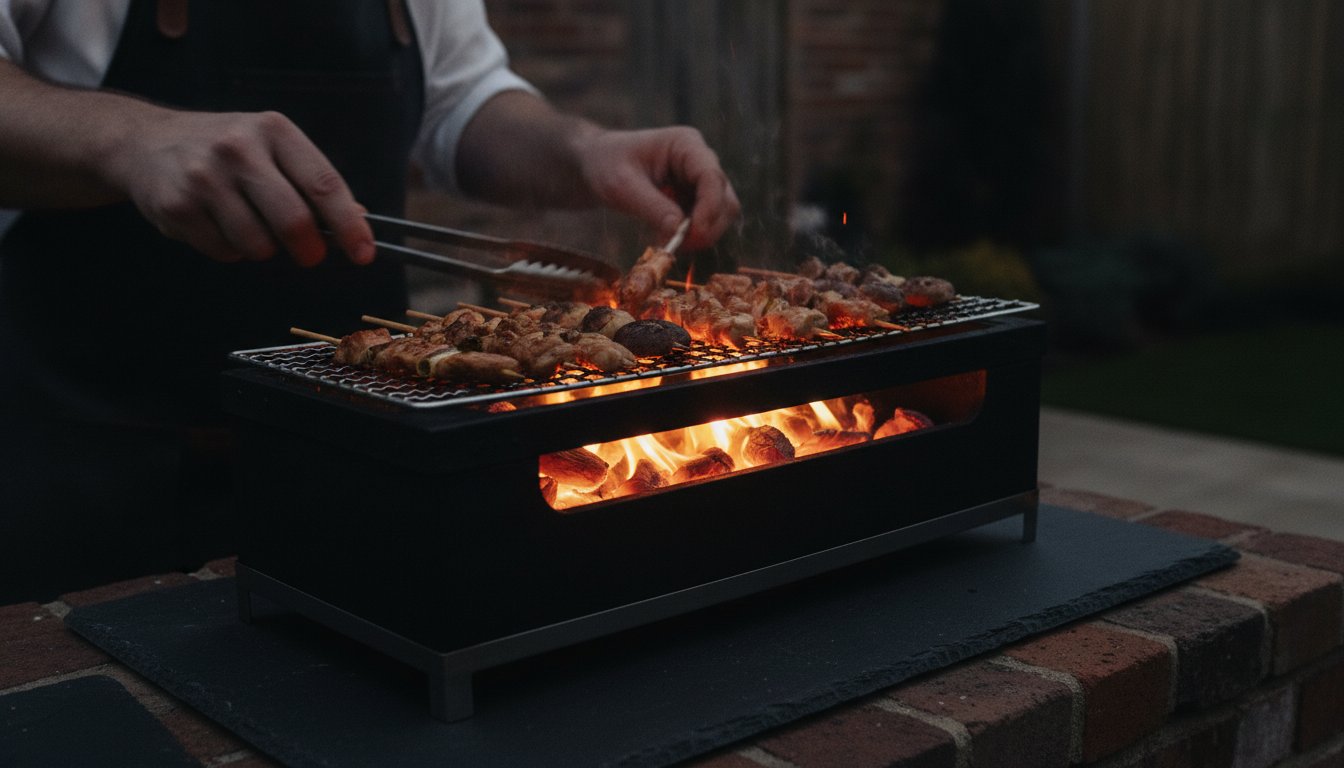
Why does your standard backyard BBQ often fall short of the clean, searing intensity found in a Tokyo izakaya? You’ve likely felt the frustration of acrid smoke masking the delicate sweetness of premium ingredients or struggled with the unpredictable flares of standard hardware. Achieving authentic japanese grilling at home requires more than just raw heat; it demands a sophisticated synergy of high-carbon fuel purity and precise thermal distribution. It’s a craft that turns a simple meal into a refined sensory experience, moving your outdoor space beyond basic cooking and into the realm of true gastronomy.
We understand that you value the raw joy of fire and the precision of professional-grade tools. This guide promises to transform your patio into a private retreat by mastering the specific techniques and hardware used by seasoned masters. You’ll learn the science behind infrared grilling and how to curate a high-end station using traditional Hibachi grills and superior charcoal varieties. From selecting the right energy source to understanding material longevity, we are providing the specialized knowledge you need to elevate your lifestyle and achieve a standard of excellence that standard grills simply cannot match.
Key Takeaways
- Discover why the secret to professional results lies in concentrated infrared heat, a stark departure from the “low and slow” methods of Western BBQ.
- Understand the engineering of a premium Japanese Charcoal Grill and why high-grade ceramic insulation is essential for authentic japanese grilling at home.
- Learn how to select high-carbon fuels that ensure thermal consistency and prevent acrid smoke from compromising your ingredients’ natural flavours.
- Master the art of the kushi (skewer) and the strategic management of thermal zones to achieve a perfect, restaurant-quality sear on every morsel.
- Elevate your outdoor space by curating a refined cooking station that blends traditional precision with the luxury of a modern social hub.
The Philosophy of Japanese Grilling: Why It Is the Peak of Outdoor Gastronomy
Japanese grilling isn’t merely a cooking method; it’s a mindful pursuit of culinary perfection. While many outdoor cooking styles focus on masking ingredients with heavy smoke or thick sauces, this tradition prioritizes the unadulterated purity of the product. The foundation of authentic japanese grilling at home lies in the mastery of concentrated infrared heat. It’s a refined approach that strips away the excess, allowing the natural character of a scallop, a slice of wagyu, or a spring onion to take center stage.
The sensory experience is starkly different from the “low and slow” philosophy of Western BBQ. Instead of the heavy, lingering scent of hickory or oak wood, you’re greeted by a clean, intense heat that sizzles with purpose. This style of cooking offers a unique sensory profile:
- Scent: A neutral, clean aroma that allows the natural oils of the protein to shine.
- Sound: The rhythmic, high-frequency sizzle of fats hitting luminescent coals.
- Visual: The hypnotic glow of high-carbon charcoal within a ceramic vessel.
Because the fuel used is highly carbonized, it produces virtually no acrid smoke. This lack of bitterness ensures that the delicate “Umami” flavours are amplified rather than obscured. When you use a premium fuel like Eucalyptus Binchotan, the charcoal acts as a distiller of flavour, caramelizing the surface of the food with surgical precision.
From Izakaya to Your Garden
The cultural heart of this craft beats in the narrow alleys of Tokyo, where the Shichirin grill and the rectangular Konro have been staples of street food for centuries. These tools were born from a need for efficiency and intimacy, designed to be placed at the center of a gathering. Bringing a Hibachi Grill into your garden transforms the environment from a simple cooking space into a private retreat. It invites guests to engage with the process, elevating the concept of authentic japanese grilling at home into a refined social hub where quality always triumphs over volume.
The Science of Infrared Heat
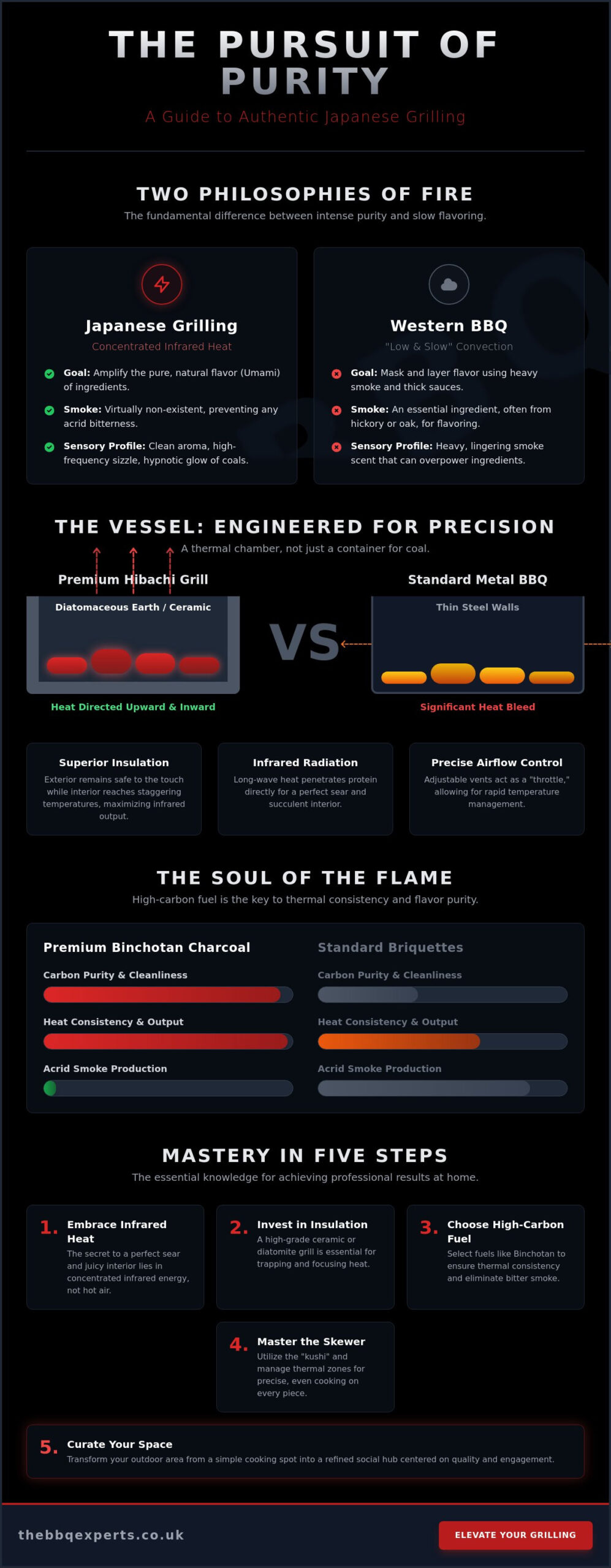
True mastery requires an understanding of how heat moves. Standard grills rely on convection, which uses hot air to cook. This often leads to uneven results and significant moisture loss. In contrast, authentic Japanese vessels are crafted from diatomaceous earth or high-grade ceramics that emit long-wave infrared radiation. These waves penetrate the protein directly and deeply. This creates a superior sear on the outside while the interior remains incredibly succulent. It’s this technical advantage that allows you to achieve professional-level results that standard metal BBQs simply cannot replicate.
Choosing Your Vessel: The Engineering of the Hibachi Grill
Selecting the right vessel is the most critical decision in your journey toward authentic japanese grilling at home. A premium Hibachi Grill isn’t just a container for coal; it’s a meticulously engineered thermal chamber. Unlike the thin steel walls of a standard barbecue that bleed heat into the atmosphere, these instruments are designed to trap and radiate energy with surgical precision. This efficiency is what allows you to maintain the intense, steady temperatures required for perfect searing without consuming excessive amounts of fuel.
The “throttle” of your cooking experience is controlled by the airflow vents located at the base. By adjusting these slides, you dictate the oxygen intake, allowing you to move from a gentle warming glow to a 400°C furnace in minutes. It’s this level of control that transforms the grill into a true culinary instrument. It demands respect and a refined touch, rewarding the patient chef with results that are impossible to achieve on a generic gas or metal charcoal unit.
Diatomaceous Earth vs. Standard Ceramics
The gold standard for these grills is diatomaceous earth, a natural material formed from fossilized algae. This substance possesses extraordinary thermal properties. It’s a natural insulator so effective that the exterior of the grill remains safe to the touch even while the interior reaches staggering temperatures. This insulation ensures that heat is directed upward and inward, maximizing the infrared output. Standard ceramics often crack under the thermal shock of high-intensity grilling, but high-grade diatomite is built for longevity. For those seeking a deeper dive into how these materials interact with traditional techniques, this Ultimate Japanese BBQ Guide provides excellent context on the synergy between fuel and vessel.
Size and Portability for the Modern Host
When curating your outdoor station, consider the scale of your gatherings. Compact tabletop models are perfect for intimate, interactive dining where guests cook their own morsels. However, if you’re planning multi-skewer Yakitori sessions, a larger rectangular Japanese Charcoal Grill provides the necessary surface area to manage different heat zones effectively.
In the UK climate, durability is paramount. While these grills are robust, the porous nature of diatomaceous earth means they must be protected from damp and frost. Storing your instrument in a dry environment ensures the material remains structurally sound for years of service. If you’re unsure which size fits your specific outdoor kitchen layout, you can always reach out for expert advice on selecting the perfect model for your space.
The Soul of the Flame: Selecting Premium Fuels for Authentic Results
The fuel you choose is the heartbeat of your grill. If you’ve ever used standard supermarket briquettes, you’ve likely fought against thick, yellow smoke and unpredictable flare-ups that ruin delicate ingredients. These mass-produced options are often riddled with chemical binders or under-carbonized wood. For authentic japanese grilling at home, you must move beyond these amateur fuels. True excellence requires high carbon purity. This ensures a clean burn that won’t taint your scallops or wagyu with the bitter taste of incomplete combustion. It’s the difference between a meal that tastes of fire and one that tastes of refined distillation.
Serious enthusiasts understand that fuel is an investment in flavour. Securing bulk fuel deals ensures you’re never caught without the right energy source for a spontaneous gathering. High-carbon fuels don’t just burn hotter; they burn with a steady, predictable infrared output that acts as a precision tool for the chef. When your fuel is pure, you aren’t fighting the fire. Instead, you’re orchestrating it.
The Binchotan Standard and Beyond
Binchotan is famous for its “metallic” ring when two pieces are struck together, a clear sign of its incredible density and carbon content. While traditional Kishu Binchotan is the heritage choice, modern connoisseurs often turn to Eucalyptus Binchotan. It offers the same legendary high-heat burn and neutrality, making it a staple for authentic japanese grilling at home. If consistency is your primary priority, Hexagonal Pro Briquettes are the professional standard. Their uniform shape eliminates air pockets in your grill, providing a perfectly even thermal bed that lasts for hours without needing a top-up.
Exploring Exotic Flavour Profiles
Don’t limit yourself to just one profile. For heavier meats like beef short ribs or duck, Coffee Restaurant Charcoal provides a dense, long-lasting heat with a unique character. Alternatively, the classic appeal of Oak Charcoal offers a subtle, wood-fired finish that complements traditional yakitori skewers. Never compromise the purity of these fuels by using liquid accelerants or chemical starters. Using Natural Firelighters is essential. They ignite your coals without introducing chemical taints, preserving the unadulterated flavour of your ingredients from the very first spark to the final bite.
Mastering the Skewer: Techniques and Seasoning for Professional Results
Once you’ve secured a premium vessel and high-carbon fuel, your focus must shift to the kushi, or the art of the skewer. Precision threading is the secret to maximizing the surface area exposed to that intense infrared heat. You aren’t just placing meat on a stick; you’re creating a flat, uniform surface that allows the thermal energy to sear every millimetre of the protein simultaneously. This technique ensures a consistent crust while keeping the interior succulent. Achieving authentic japanese grilling at home is as much about these deliberate hand movements as it is about your hardware.
On a narrow rectangular Japanese Charcoal Grill, heat management is a game of geography. By concentrated placement of your coals, you can create distinct thermal zones. Use the center for aggressive searing and the outer edges for gentle rendering or keeping finished skewers warm. You’ll also face the classic choice between Shio (salt) and Tare (sauce). While salt highlights the unadulterated purity of the ingredient, a rich tare provides a lacquered, caramelized finish that many connoisseurs find irresistible. If you’re ready to build your bespoke setup, you can get in touch with our specialists for tailored equipment advice.
The Yakitori Masterclass
To replicate the precision of a master chef, follow this methodical approach:
- Step 1: Soak bamboo skewers for at least 30 minutes. Use a “shield” of foil over the exposed handles on the grill to prevent them from carbonizing.
- Step 2: Cut your ingredients into uniform 1-inch cubes. Inconsistency is the enemy of perfection; pieces must be identical to cook at the same rate.
- Step 3: Use the “fan and flip” technique. A traditional fan allows you to clear ash and boost oxygen levels instantly, giving you total control over the sizzle.
- Step 4: Rest the meat. Even small skewers benefit from a 60-second rest to allow juices to redistribute before the first bite.
Elevating Flavour with Angus & Oink
While traditionalists may stick to simple seasonings, the modern connoisseur understands the power of fusion. Integrating Angus & Oink Rubs into your process creates a sophisticated “Western-Japanese” profile that standard salt cannot match. These high-quality rubs develop a complex bark when exposed to the clean, high-intensity heat of Binchotan. Use lighter, citrus-forward profiles for seafood and deep, umami-rich rubs for Wagyu beef or Iberico pork. For a deeper dive into these flavour profiles, explore The Ultimate Guide to Angus & Oink Rubs to discover how to perfectly pair your seasonings with your authentic japanese grilling at home.
Creating the Ultimate Japanese Grilling Station at Home
Every connoisseur knows that the right accessories are an extension of the chef’s own hands. Long-handled stainless steel tongs provide the reach needed for precise skewer rotation, while a traditional hand fan acts as your manual temperature controller, clearing ash to keep the coals luminescent. High-quality Japanese knives are equally essential, ensuring those uniform one-inch cuts we discussed earlier are achieved with surgical ease. For those looking to expand their repertoire, positioning a Fire Cage nearby provides a versatile secondary prep area. It allows you to manage open-fire elements or pre-heat larger ingredients before they meet the concentrated heat of the charcoal bed.
Safety and Maintenance
Maintaining the integrity of your equipment is a mark of a true master. Because these grills utilize high-carbon fuels, they generate significant heat and carbon monoxide; they are designed for outdoor use only. When the evening concludes, never use water to extinguish the coals or clean the vessel. Water will cause diatomaceous earth to degrade or crack. Instead, close the vents and allow the coals to starve of oxygen naturally. Your premium fuels also require respect; store them in a dry, airtight container to prevent moisture absorption, which can lead to popping and inconsistent thermal output during your next session.
The Lifestyle Upgrade
The ultimate reward for your technical precision is the “Yakitori Party,” an interactive dining experience where the boundary between host and guest vanishes. This is the peak of outdoor gastronomy, where the tactile joy of the sizzle meets the refined flavours of your curation. Pair your grilled delicacies with a dry, premium sake or a complex Japanese malt whisky to cut through the rich umami of the meat. This isn’t just about food; it’s about a transformed lifestyle where your exterior space becomes a private sanctuary of flavour. If you’re ready to complete your collection, explore our full range of professional fuels and grills to ensure your next gathering reaches the standard of excellence you’ve worked so hard to achieve.
Begin Your Culinary Transformation
Mastering the art of authentic japanese grilling at home is a journey into the heart of culinary precision. You’ve discovered how the synergy between high-carbon fuels and the insulated engineering of a Hibachi Grill creates a searing intensity that standard BBQs simply cannot match. By embracing the methodical “fan and flip” technique and the purity of long-wave infrared heat, you’re no longer just cooking. You are curating a refined experience that values quality craftsmanship and the raw, sensory joy of outdoor gastronomy.
We take immense pride in our role as the bridge between professional-grade equipment and the home enthusiast. As a specialist UK retailer of Big Eds and Angus & Oink, our expert-curated selection of fuels ensures your station remains a center of excellence. With national delivery available on all our professional-grade hardware, the tools for your private retreat are within reach. Upgrade your outdoor gastronomy with our professional Hibachi Grills and premium fuels. Your garden is ready to become the primary social hub of your home; it’s time to start the fire.
Frequently Asked Questions
Can I use a Japanese Konro grill indoors?
You should never use a Japanese Konro grill indoors due to the significant risk of carbon monoxide poisoning. While these grills are compact, they’re designed specifically for well-ventilated outdoor environments. Even with a powerful extractor, the intense heat and invisible gases produced by high-carbon fuels require the open air to remain safe. Always prioritize safety to ensure your culinary experience remains a joyful one.
How long does Binchotan charcoal stay hot?
Premium Binchotan charcoal can maintain a steady, high-intensity heat for 4 to 5 hours. This extraordinary burn time is a result of its extreme density and high carbon content. Unlike standard charcoal that burns out quickly, Binchotan allows for a long, relaxed evening of grilling. It’s a hallmark of authentic japanese grilling at home, providing the thermal consistency needed for multiple rounds of skewers without needing a top-up.
What is the difference between a Hibachi and a Konro grill?
Traditionally, a Hibachi was a charcoal-fired room heater, while a Konro refers specifically to the specialized cooking vessel used for grilling. In Western culinary circles, the terms are often used interchangeably to describe the small, portable ceramic grills we value today. Whether you call it a Hibachi Grill or a Konro, the defining characteristic is the superior insulation provided by diatomaceous earth or high-grade ceramic materials.
Do I need to soak my bamboo skewers before grilling?
You must soak your bamboo skewers in water for at least 30 minutes before they meet the flame. This simple preparation prevents the wood from igniting or becoming brittle under the intense infrared heat of the grill. For the best results, we also recommend shielding the exposed handles with a small strip of foil. This attention to detail ensures your skewers remain structurally sound and aesthetically pleasing throughout the cooking process.
How do I light Binchotan or high-density charcoal briquettes?
Lighting high-density fuels like Binchotan requires patience and a chimney starter or a specialized gas burner. Because these fuels are so dense, they can take 20 to 30 minutes to reach their optimal glowing state. Avoid using liquid chemical starters at all costs, as they’ll ruin the purity of your ingredients. Instead, use natural firelighters to ignite a base of regular charcoal, then place your Binchotan on top to catch the heat.
What is the best meat for Japanese grilling at home?
Highly marbled beef like Wagyu and succulent chicken thighs are the gold standards for authentic japanese grilling at home. These proteins benefit most from the rapid, intense searing that a ceramic grill provides, creating a crisp exterior while the interior remains buttery and tender. Pork belly and fatty seafood like mackerel are also excellent choices, as their natural oils respond beautifully to the concentrated infrared energy of the coals.
Can I use regular lumpwood charcoal in a Hibachi grill?
You can use regular lumpwood charcoal in a Hibachi Grill, but you’ll sacrifice the precision and clean flavour of high-carbon alternatives. Standard lumpwood tends to spark more frequently and burns through much faster, requiring constant attention and frequent refills. For a truly elevated experience, we recommend using professional-grade fuels like Oak Charcoal or Eucalyptus Binchotan. These provide the steady, smoke-free heat that allows your ingredients to shine without distraction.
Disclaimer
This article was produced with AI assistance. We use AI and Third Parties to help deliver more content to our BBQ website and community, but we always aim to ensure accuracy and quality as much as we can. If you spot anything that doesn't seem right, we'd love to hear from you

Recent News & Updates

Our Story, Values and Beliefs
Here at the BBQ experts we have a passion for BBQ food, outdoor living and spending time with family and friends. We offer you; A...
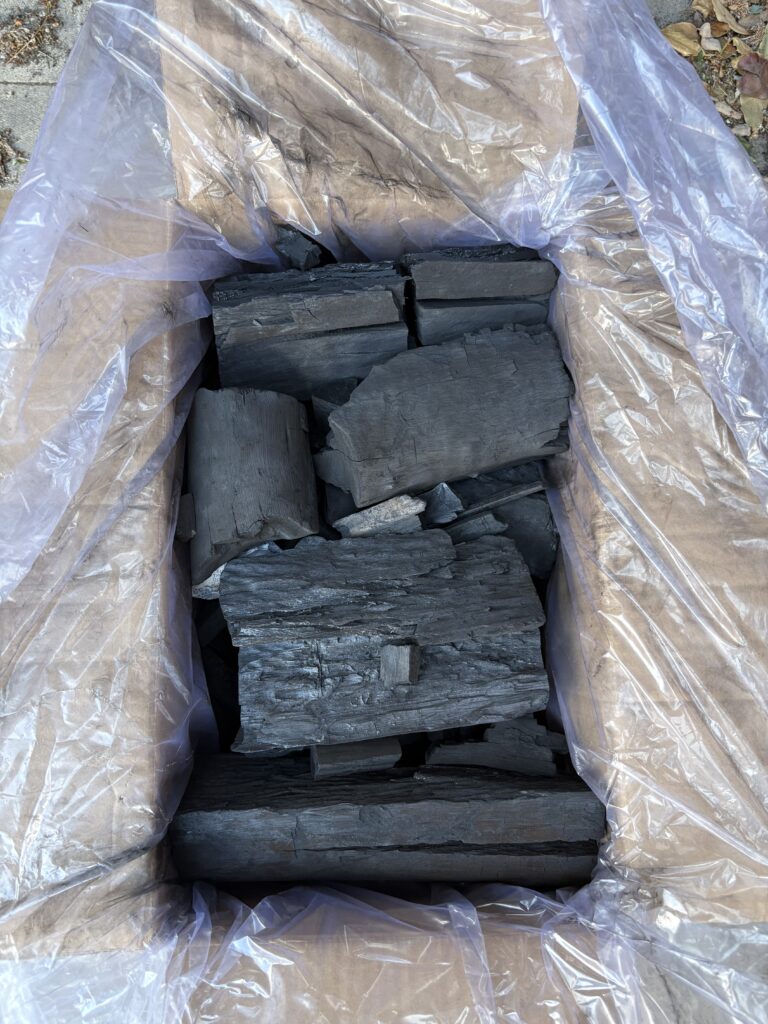
FAQ: Why does Big Ed’s Charcoal have a mix of big and small lumps?
Big Ed’s is all about top-quality, long-burning charcoal, made from a mix of Eucalyptus and Mangrove wood. Each 10kg box is packed with...