
How to Check Gas Connections to Fix BBQ Temperature Swings
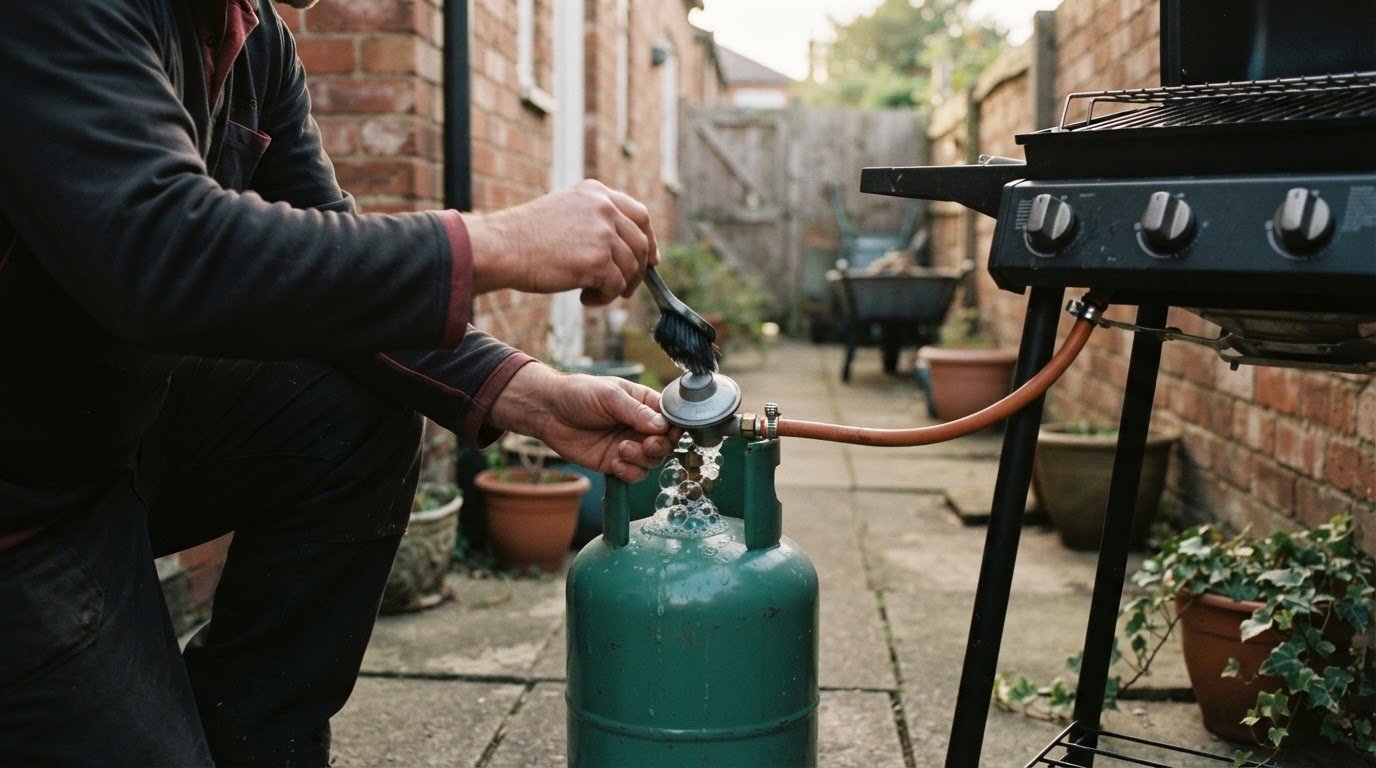
Temperature swings often start with an uneven gas supply or a burner that isn’t burning cleanly. To begin troubleshooting bbq temperature swings, check that the gas cylinder is full and properly connected, then inspect the regulator and connections for damage or leaks. Yellow or orange flames can indicate restricted airflow or debris around the burner.
Unsteady heat is frustrating, especially when you want an even cook and a relaxed meal outdoors. A methodical check can help you identify whether the issue is with the gas supply, a connection or the burner, and when it’s safer to stop cooking.
Learn how to check connections for leaks with soapy water, what to do if bubbles appear, and why you must never ignite the BBQ during a leak check while gas is flowing. We’ll also cover warning signs such as yellow or orange flames and basic cleaning steps that can help restore a cleaner, steadier burn.
Key Takeaways
- Use your cooking target and the food you’re preparing to judge whether a temperature change needs attention; a brief fluctuation may matter less than a sustained one.
- Yellow or orange flames can signal restricted airflow, so inspect burner bars and tubes for debris as part of your troubleshooting.
- On a charcoal BBQ, make controlled adjustments and allow the heat to respond before changing it again.
- Learn which gas-supply and burner issues you can identify safely, and when continuing to use the BBQ is unwise.
Tightening or replacing faulty gas connections
- Turn off the BBQ and close the gas supply before inspecting connections. Check that the cylinder is full and properly connected. If gas still doesn’t reach the burners, try another cylinder if available. These checks make troubleshooting BBQ temperature swings more focused by helping distinguish supply problems from burner faults.
- Inspect the regulator and hose for visible cracks or damage. A damaged regulator can restrict gas flow, so replace it if necessary rather than trying to repair it. Check that connections are seated correctly, but don’t force a fitting or continue using damaged parts.
- Test connections for leaks with soapy water. Apply it to each connection and watch for bubbles that form and grow. If bubbles appear, shut off the gas supply immediately. Never ignite the BBQ while gas is flowing into the system during a leak check.
- If the flame remains weak or irregular, check beyond the hose. Clogged burner jets can restrict output. With the gas off, remove the burner bars and clear a jet hole with a pin. Refit the parts before using the BBQ, and stop if you can’t identify the blockage.
- To prevent temperature swings on a pellet smoker, keep pellets dry, clear the fire pot and avoid opening the lid repeatedly. The controller feeds in more pellets when the temperature falls below its set threshold, so frequent lid opening can cause further fluctuations.
- Place a separate BBQ thermometer at grate level, near the food but not touching it or the metal grill. Built-in lid gauges measure a different area, so their readings may differ from the cooking temperature. Compare readings during the same cook rather than assuming either is exact.
- Wind, rain and cold can draw heat from an outdoor BBQ and slow its recovery. Choose a sheltered, well-ventilated position and monitor the grate temperature. This helps distinguish weather effects from a gas fault when troubleshooting BBQ temperature swings. If you detect a leak or abnormal flame, stop cooking.
Yellow or orange flames
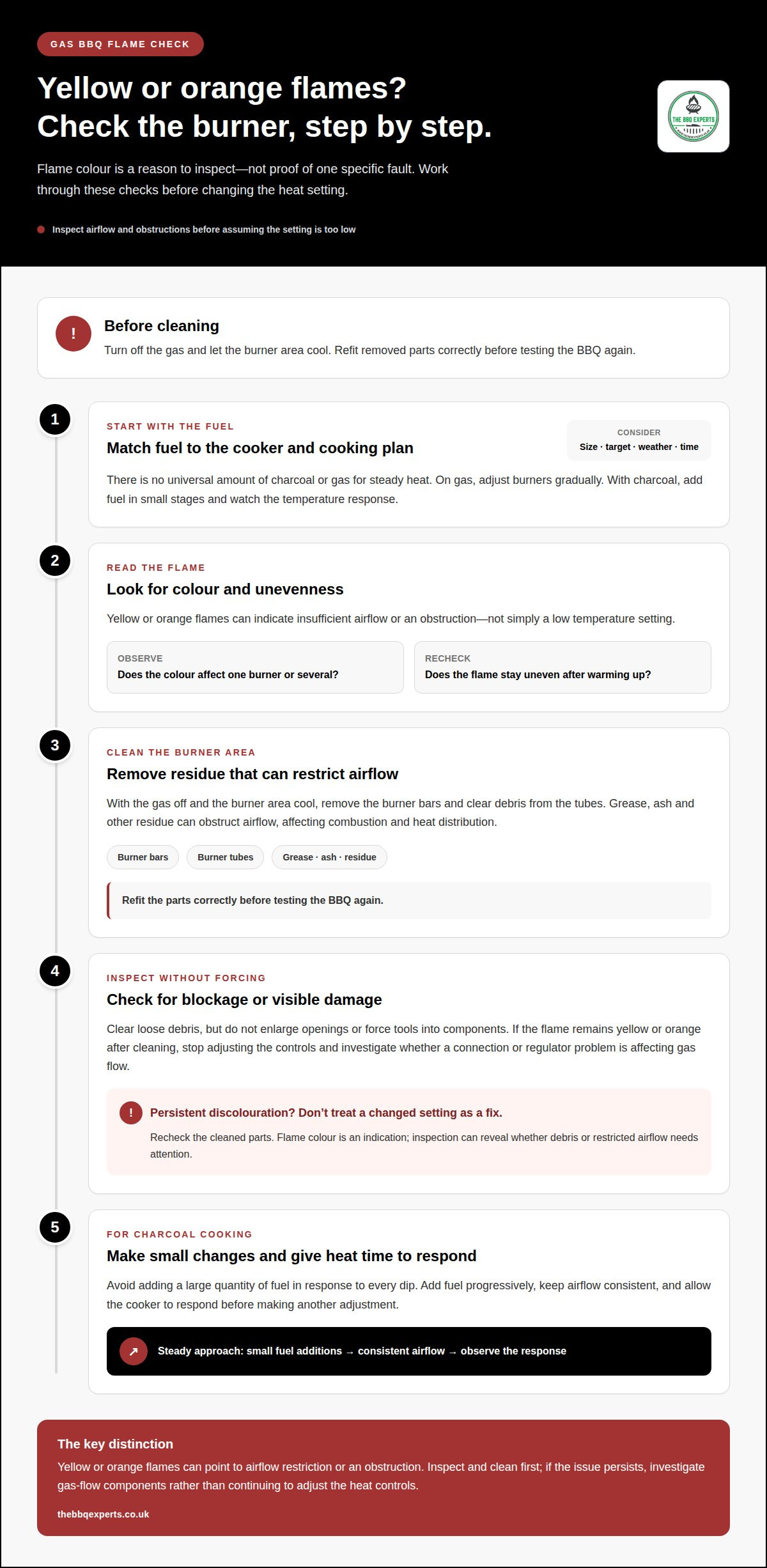
- Match the fuel to your cooker and cooking plan. There’s no universal amount of charcoal or gas for steady heat: the BBQ’s size, target temperature, weather and cooking time all affect fuel demand. On gas, adjust the burners gradually. With charcoal, add fuel in small stages and watch how the temperature responds.
- Check the flame before changing the controls. A yellow or orange flame can indicate insufficient airflow or an obstruction, rather than simply a low temperature setting. Note whether the colour affects one burner or several, and whether the flame remains uneven after the BBQ warms up.
- Turn off the gas and let the burner area cool before cleaning. Remove the burner bars, then clear debris from the tubes. Grease, ash and other residue can obstruct airflow, affecting combustion and heat distribution. Refit the parts correctly before testing the BBQ again.
- While the burner bars are removed, check for visible blockages and damage. Clear loose debris, but don’t enlarge openings or force tools into components. If the flame remains yellow or orange after cleaning, stop adjusting the controls and investigate whether a connection or regulator problem is affecting gas flow.
- For charcoal cooking, avoid responding to every dip by adding a large quantity at once. Add fuel progressively, keep airflow consistent, and allow the cooker time to respond before making another adjustment. Big Eds lumpwood charcoal is one option for a charcoal BBQ. If you’re choosing fuel for your setup, contact the team about charcoal options.
Treat the flame’s colour as a reason to inspect the burner area, not as proof of a specific fault. Yellow or orange flames on a gas BBQ can indicate insufficient airflow or an obstruction, so check the burner bars and tubes. Clean the parts and remove debris from the tubes. If the colour persists, don’t assume changing the heat setting has resolved the airflow or obstruction issue. Recheck the cleaned parts: the flame is an indication, while inspection can reveal whether debris or restricted airflow needs attention.
What temperature range is normal for a BBQ or smoker?
- Set a target based on the food and cooking style, not a single universal range. For low-and-slow cooking, 220-300°F is commonly workable. Ribs, for example, can be cooked towards 275°F, with 225-300°F providing a usable range. Keep your target steady where possible, and judge changes against the cooking plan.
- Track the pattern, not just one reading. A 25°F swing during a cook lasting more than eight hours may have little effect on the average temperature. By contrast, a 50°F swing can affect cooking time, so note how long the grill stays above or below target.
- Allow for how your cooker works. A pellet grill set to its HIGH SMOKE setting marked 220 may feed more pellets when its temperature drops below the controller’s threshold. One reported example reached 60-80°F above its set temperature and fell 5-40°F below its base temperature. Use repeated readings to spot a pattern.
- Account for conditions around the BBQ. In hot desert conditions, a cooker set to 225°F has been reported to exceed 300°F at the grate, even in shade. The example shows why the grate reading can differ from the setting. Check the temperature near the food before making a major adjustment.
- Decide whether a swing needs action by considering its size, duration and effect on the cook. A 100°F fluctuation is high, though it may matter less for pork shoulder than for a tightly timed dish. If the temperature repeatedly moves far from target, check the fuel supply, airflow and measurement position before changing your cooking plan.
For ribs, one participant describes a target of 275 degrees F and says they are comfortable with temperatures from 225 to 300 degrees F. That account supports treating the range as a practical window rather than a strict pass-or-fail boundary: the cook can aim near the chosen target while accepting variation, then consider the food and overall cooking plan before reacting to a brief change.
How do I stabilise temperature on a charcoal BBQ?
- Choose a target temperature that suits your cook, then arrange the charcoal for controlled heat. For indirect cooking, bank the fuel to one side and position food away from the embers. Keep the cooking area consistent so opening the lid or moving food doesn’t become a repeated source of temperature changes.
- Regulate airflow with small vent adjustments. Air entering the BBQ feeds the fire, so changing a vent can alter the heat and burn rate. Make one adjustment, then give the cooker time to respond before changing another. Large, frequent adjustments make it harder to identify what’s affecting the temperature.
- Keep the lid closed between checks. Each time you open it, heat escapes and airflow changes. Repeated peeking can create temperature dips that tempt you to add charcoal. Monitor the temperature with a probe or gauge, and wait for the readings to show that the fire needs more fuel before adding any.
- Respond to sustained changes, not every small fluctuation. A swing of 5 degrees or less is generally not a concern, while 50 degrees is a point to start watching more closely. A 100-degree swing is high, although it may matter less for pork shoulder than a dish with tighter timing.
- Set sensible alarm limits to catch a developing problem without reacting to every movement. For a 225°F cook, one suggested setup uses a low alarm near 140°F and a high alarm near 310°F. Treat those as alert thresholds for that example, not the target cooking range.
- Review the pattern after the cook: note vent positions, fuel additions and temperature changes. If the BBQ keeps swinging despite measured adjustments, ask The BBQ Experts for charcoal-cooking guidance. A concise record can help pinpoint whether airflow, fuel arrangement or repeated lid opening is disrupting the fire.
The BBQ Experts
The BBQ Experts offers outdoor cooking equipment and fuel to help you create a considered cooking setup. If a gas BBQ continues to fluctuate after safe checks, don’t treat charcoal as a fix for a faulty gas connection. Stop using the affected grill until the issue is resolved. If you’re considering charcoal cooking, explore our charcoal and equipment, including the Hibachi Grill and Fire Cage. Angus & Oink Rubs can add flavour to your next cook. Choose a cooking method and fuel suited to your food and outdoor space, then manage temperature through airflow, fuel arrangement and attentive monitoring.
For guidance on outdoor cooking equipment and fuel, contact The BBQ Experts.
Make every cook more your own
Use your next barbecue to shape a cooking routine around the food you enjoy and the space you have. A steady approach to troubleshooting BBQ temperature swings can build confidence, while each cook gives you a chance to adapt your technique. Notice what works for your preferred flavours, cooking style and outdoor setting.
For thoughtful guidance as you refine your setup, contact The BBQ Experts. Your next memorable meal starts with a confident first step.
Frequently Asked Questions
What causes BBQ temperature swings in charcoal, gas and pellet grills?
Temperature changes usually come from shifts in fuel delivery, airflow or heat measurement. On a charcoal grill, the fire responds to how air reaches the coals and how they’re arranged. Gas models can fluctuate if burner output differs across the cooking surface. Pellet grills use a controller to feed pellets when readings drop below its threshold, which can create cycles of rising and falling heat.
How do I fix temperature fluctuations on a gas BBQ?
First, note whether every burner fluctuates or just one. A single uneven burner points to a local issue, while changes across the grill suggest a wider supply problem. Turn off the BBQ before inspecting components, and don’t try to compensate by constantly adjusting the controls. If you detect a leak, shut off the gas and don’t ignite the BBQ. Resume cooking only once the cause has been addressed.
Disclaimer
This article was produced with AI assistance. We use AI and Third Parties to help deliver more content to our BBQ website and community, but we always aim to ensure accuracy and quality as much as we can. If you spot anything that doesn't seem right, we'd love to hear from you

Recent News & Updates
Hibachi Party Ideas for Small Gatherings: What Home Hosting Costs
The chef and cooking setup shape the cost of a small at-home hibachi party more than the finishing touches. For hibachi party ideas for...

Our Story, Values and Beliefs
Here at the BBQ experts we have a passion for BBQ food, outdoor living and spending time with family and friends. We offer you; A...