
How to Get Clean Smoke from Charcoal for Better Flavor
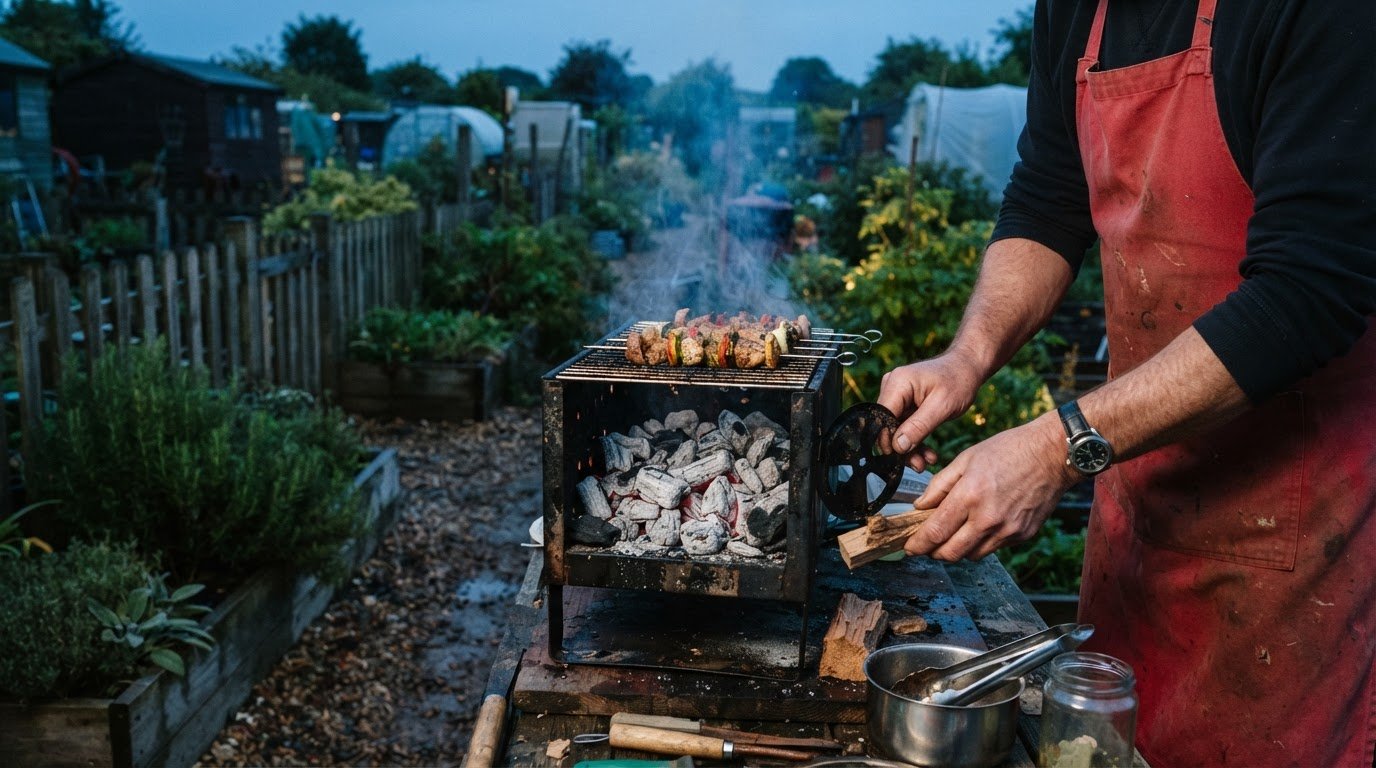
Harsh, bitter barbecue flavour often starts with a fire that isn’t burning cleanly. To get clean smoke from charcoal, use dry fuel, maintain good airflow and add smoking wood sparingly once the coals are hot. Look for thin, light-blue smoke, or smoke that is almost invisible, rather than dense white or grey billows.
If you’ve opened the lid to find acrid smoke hanging over the grill, you know that more smoke doesn’t mean better flavour. The difference lies in how the fuel burns. A little patience can make the smoke gentler and the flavour more balanced.
You’ll learn what happens as charcoal and wood heat up, how to recognise clean versus dirty smoke, and what to adjust when smoke turns thick or bitter. From airflow and fuel moisture to the amount of wood you add, each choice helps shape the aroma that reaches your food.
Key Takeaways
- Dry fuel and open airflow help charcoal burn cleanly; adding too much wood to a cool coal bed can create dense, harsh smoke.
- Thin, light-blue or nearly invisible smoke is a useful sign of a cleaner burn, while thick white or grey smoke can leave food acrid and bitter.
- Start with a fuel mix of around 30% smoking wood and 70% charcoal, then adjust the wood to suit the strength of flavour you want.
- Learn how to light charcoal without lighter fluid and recognise when the initial dense smoke has cleared before cooking.
What is Actually Happening to Wood or Lump Charcoal When it Burns?
Wood and lump charcoal pass through drying, pyrolysis and combustion as heat rises. During drying, moisture leaves the fuel; wood cannot get much above 212°F while this is happening. The AmazingRibs.com description places wood dehydration at temperatures up to about 500°F, then combustion between 700 and 1,000°F. Charcoal forms above 1,000°F. This progression explains why damp fuel or a cool fire can produce dense smoke instead of a clean burn.
Choose dry, well-made charcoal and dry, seasoned smoking wood. Wet or resinous wood can create thick, dirty smoke, while hardwood lump charcoal stored in rain or a very moist place may need time to burn off moisture. A balanced starting mix is around 30% smoking wood and 70% charcoal. Use less wood if you want a gentler smoky flavour, and add only a few chunks to hot coals at a time. An oversized addition can overwhelm a coal bed that isn’t hot enough.
As wood heats, aromatic compounds useful for cooking come off around 650 to 750°F. Above 750°F, wood can produce acrid, bitter and possibly hazardous compounds, according to the AmazingRibs.com description. This makes fuel quality only part of the equation: airflow and the heat of the coal bed shape the smoke, too. Wood doesn’t need soaking when the coal bed is at the right temperature. A water pan is separate; it adds moisture to the cooking environment, not to the fire, and won’t correct damp fuel.
Use a charcoal barbecue outdoors in the UK and follow the manufacturer’s safety instructions. After cooking, let the fuel burn down safely and never leave a live fire unattended.
There’s no fixed waiting time before adding food to a smoker. Wait until the charcoal bed is hot and the dense white smoke from lighting has cleared. The smoke should be light and clean before the food goes on.
Avoiding harsh and bitter smoke flavours
Thick, billowing white smoke signals incomplete burning and can leave meat tasting harsh, bitter or acrid. Too much carbon in the smoke is one cause; wet wood, restricted airflow, a smothered fire and an oversized fuel load can all contribute. If the smoke turns dense, open the smoker vents first. More oxygen helps the fuel burn rather than smoulder.
Resist the urge to choke the fire to lower the cooking temperature. Closing the vents restricts oxygen and can suffocate combustion, making dirty smoke worse. Instead, adjust the vents gradually and watch how the fire responds. Add only a modest amount of wood so the coal bed can burn it cleanly. Too much wood can overwhelm the available heat and airflow.
Fuel choice shapes both flavour and smoke quality. Hickory and oak have a stronger character, while fruit woods tend to be milder and sweeter. If the food tastes too smoky, reduce the wood and rely more on charcoal. Smoke is most useful early in cooking, while meat is still absorbing flavour. Adding wood throughout the cook can overpower it.
Wait for dense white smoke to clear before placing food on the grill. During a pause in cooking, keep one or both vents slightly open so the fire isn’t starved of oxygen. A clean, well-maintained grill matters too: poor ventilation, moisture inside the cooker and accumulated residue can undermine a well-managed fire. If the smoke stays dirty after you improve airflow and reduce the wood, inspect the fuel and grill before adding food.
For a balanced cook, treat airflow, fuel quantity and wood intensity as connected controls, not separate fixes. Change one at a time, then observe the smoke and taste the result. If you’d like help refining your approach, get guidance on cleaner smoke for your next barbecue.
Keep airflow up and wood modest to limit smoky flavour; cooking at 275 degrees or above can make wood chunks burn somewhat cleaner. Avoid cooking over thick, billowing smoke when first lighting the fire.
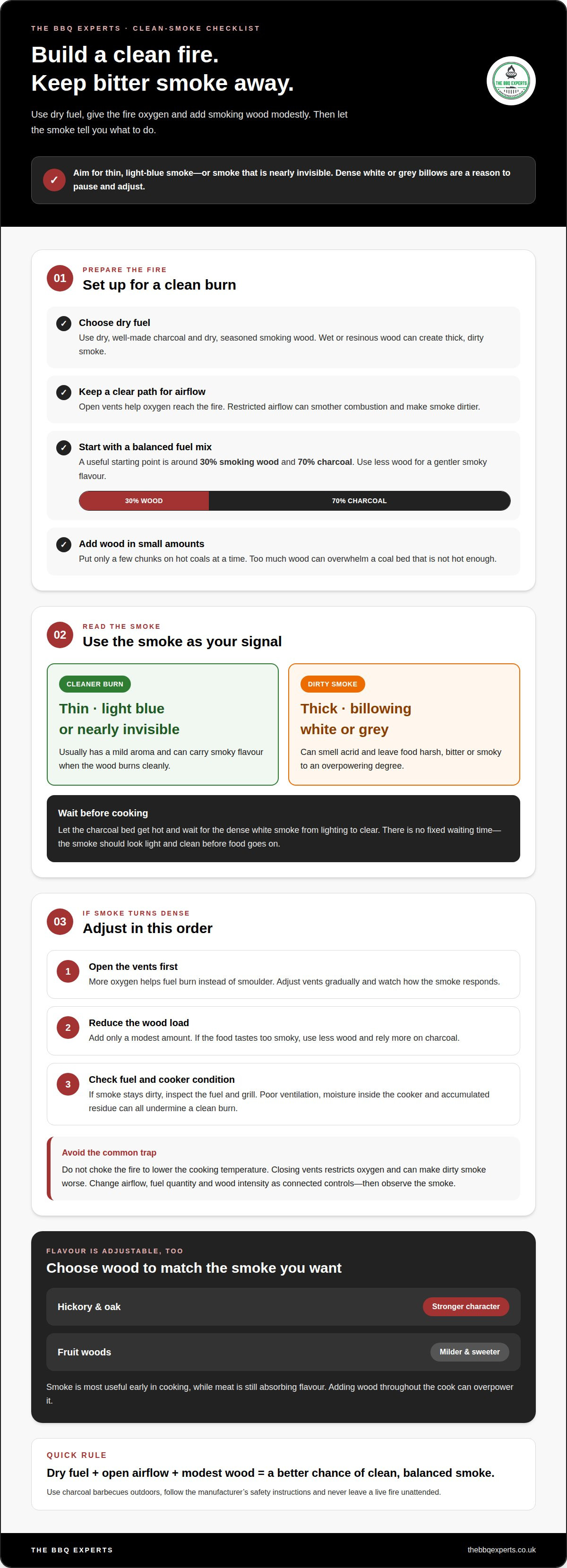
Clean smoke versus dirty smoke
Smoke’s colour, thickness and smell offer practical clues about combustion. Reading them helps you decide whether to cook, adjust the airflow or wait.
Clean and Dirty Smoke Characteristics
Clean smoke is usually thin, light blue or nearly invisible, with a mild aroma and pleasant flavour. Dirty smoke is thick, billowing and often white or grey; its acrid smell can translate into bitter food. Thin blue smoke carries smoky flavour when wood burns cleanly at the right temperature. Treat the smoke as a useful visual cue, not a guarantee of taste: strong smoke can still overpower delicate ingredients.
Smoke in Kettle BBQs and Dedicated Smokers
A kettle BBQ and a dedicated smoker both need steady airflow, but their layouts affect how the fire responds. In a kettle, arrange the charcoal to create a clear cooking zone, then place a small amount of smoking wood over hot coals. Keep the vents open enough to sustain combustion and observe how adjustments affect the smoke. In a dedicated smoker, the coal bed supplies heat while small additions of wood maintain flavour. With either cooker, wait for the initial dense smoke to clear before adding food.
Causes of Thick White or Black Smoke
Thick white smoke often appears when fuel is wet, airflow is restricted, the fire is smothered or too much fuel is added at once. Black smoke can also indicate poor ventilation, poor-quality fuel or a grill that needs maintenance. Moisture inside the cooker can contribute to dirty smoke, too. Check the vents, fuel and cooking chamber before adding more wood, as each can affect how cleanly the fire burns.
Don’t deliberately breathe charcoal smoke. Use a barbecue outdoors, avoid standing in the smoke plume and move away if smoke is blowing towards you. These precautions reduce direct exposure while allowing the fire to ventilate.
How to light charcoal for clean smoke without lighter fluid
A clean start begins with dry charcoal, a clear path for airflow and an ignition source that won’t leave chemical odours on the fuel. Use a charcoal chimney or natural firelighters, then let the coals establish before adding smoking wood. Follow the barbecue manufacturer’s lighting instructions, as vents and fuel arrangements vary between cookers.
- Prepare the grill. Empty excess ash from the firebox so air can reach the fuel. Open the vents as directed for lighting.
- Arrange the charcoal. Place charcoal in a chimney starter, or build a loose mound above a natural firelighter. Avoid packing pieces tightly together.
- Light and wait. Ignite the firelighter and allow the charcoal to catch across the pile. Transfer chimney-lit coals carefully, then arrange them for your cooking method.
Natural firelighters offer a simple alternative to lighter fluid. Place one beneath the charcoal rather than adding it after the fuel is burning. Once the fire is lit, don’t pour liquid accelerants onto it. A clear, steady path for air helps the charcoal establish instead of smouldering.
The fire may release dense smoke at first as the firelighter and charcoal catch. Don’t add food or smoking wood during this initial phase. Wait until the charcoal is glowing and the thick smoke has cleared. Then add a small amount of dry smoking wood and let the hot coals ignite it gradually.
If the smoke turns thick again, pause before adding more wood. Check that the vents are open and ash isn’t blocking airflow. A small, controlled fire is easier to manage than a mound overloaded with fuel. This measured start gives the cooking chamber time to settle before the food goes on.
For a straightforward ignition option, choose natural firelighters and build your charcoal bed patiently. Get help refining your charcoal-lighting approach for your cooking setup.
The BBQ Experts
The BBQ Experts brings together charcoal, outdoor cooking equipment and seasonings for a more considered barbecue. If you’re refining your smoke, the fuel you choose is part of the equation; the right grill and a measured approach to wood help you put the techniques in this guide into practice. Explore Big Eds Charcoal for your fire, then pair your cooking setup with a Hibachi Grill or Fire Cage where it suits your style. Angus & Oink Rubs offer another way to build flavour without relying on heavier smoke. For help choosing an option that fits your cooking, contact The BBQ Experts.
Make Every Cook Your Own
If you’re refining how to get clean smoke from charcoal, The BBQ Experts can help you choose fuel and equipment for your style of outdoor cooking. Angus & Oink Rubs, Big Eds Charcoal and a Hibachi Grill can each have a place in your setup, depending on what you want to prepare.
Contact The BBQ Experts for advice and take your next cook in a direction that feels distinctly yours.
Frequently Asked Questions
What is Thin Blue Smoke?
Thin blue smoke is a light, delicate plume from clean-burning wood, often faint enough to seem almost invisible. It carries aroma without the heavy, acrid character that can overwhelm other flavours. For a practical check, look at the smoke drifting from the cooker rather than judging the fire by its brightness alone. A strong flame doesn’t necessarily mean the smoke is clean.
What does clean blue smoke look like when cooking with charcoal?
Clean blue smoke appears as a fine, pale wisp rather than a dense cloud. In bright daylight, it may be hard to see until it catches the light, so assess its mild, clean aroma as well. Compare it with smoke that hangs visibly around the cooker or pours from the exhaust. If a breeze carries the plume away quickly, use smell and taste as well as appearance rather than relying on colour alone.
How much charcoal and wood chunks should I use for clean smoke?
A useful starting point is a fuel mix of around 70% charcoal and 30% smoking wood. Treat that as a starting balance, not a fixed recipe: a smaller smoker or a milder flavour preference calls for less wood. Add only a few chunks to the hot coals, then assess the smoke and food before adding more. Increase charcoal relative to wood if the finished flavour is too strong.
Best charcoal types for clean smoke: lumpwood or briquettes
Choose dry, well-made charcoal. Briquettes with fillers can burn inconsistently and create off-flavours, while hardwood lump charcoal should be dry before use.
Disclaimer
This article was produced with AI assistance. We use AI and Third Parties to help deliver more content to our BBQ website and community, but we always aim to ensure accuracy and quality as much as we can. If you spot anything that doesn't seem right, we'd love to hear from you

Recent News & Updates
Hibachi Party Ideas for Small Gatherings: What Home Hosting Costs
The chef and cooking setup shape the cost of a small at-home hibachi party more than the finishing touches. For hibachi party ideas for...

Our Story, Values and Beliefs
Here at the BBQ experts we have a passion for BBQ food, outdoor living and spending time with family and friends. We offer you; A...