
Cooking Meat and Vegetables on a Konro Grill
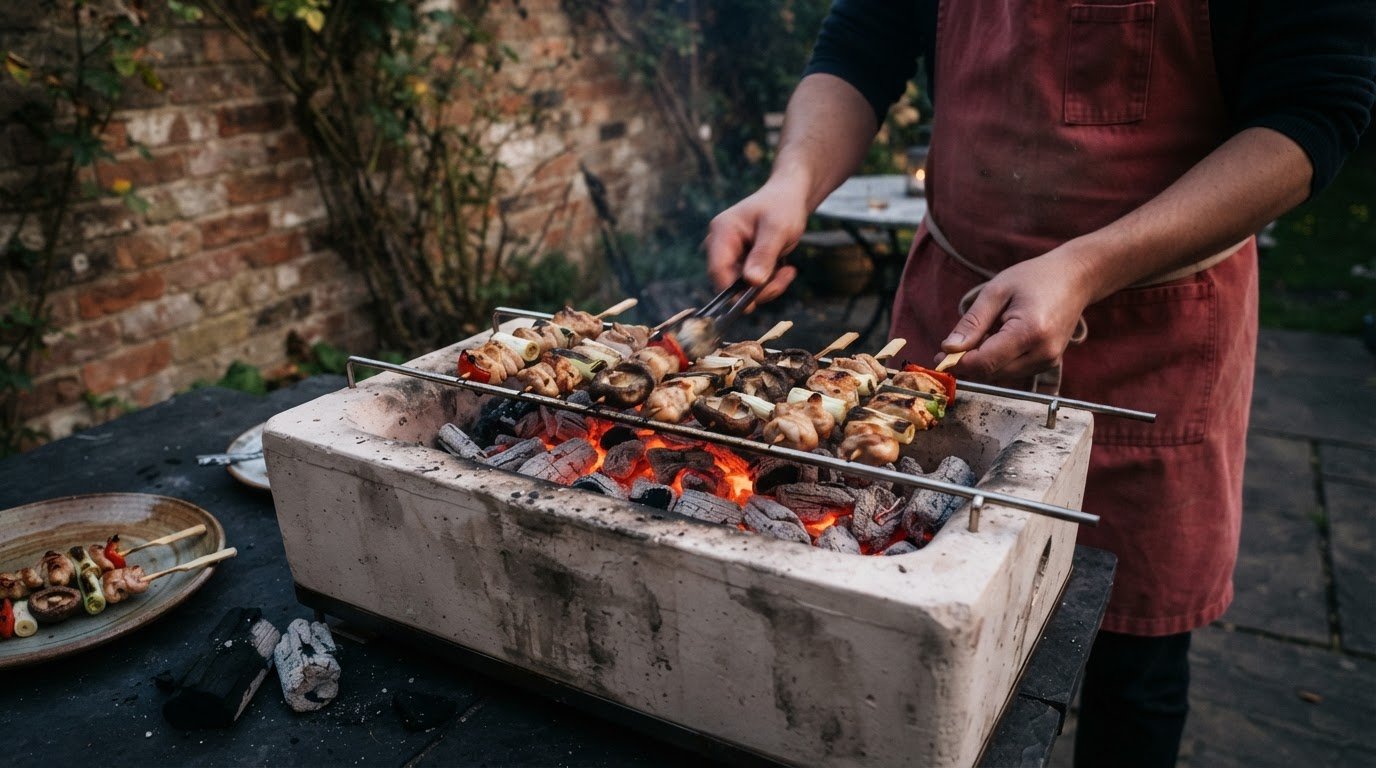
A Konro brings Japanese charcoal cooking to a compact, box-shaped grill designed for direct heat and yakitori-style cooking. Traditional models are made from diatomaceous earth, and the cooking temperature is managed by arranging the coals and positioning the food. Japanese Konro-style grills with a skewer holder and skewers make it straightforward to cook meat and vegetables over charcoal.
The appeal lies in the details: glowing charcoal, carefully turned skewers and ingredients cooked until lightly charred and succulent. A Konro is not simply a smaller version of any charcoal barbecue. This guide explains what defines the grill, how to prepare and cook meat and vegetables on skewers, and how Japanese-style grills compare with alternatives such as kamado and robata grills. You’ll also find practical points to consider when choosing a model for the way you like to cook outdoors.
Key Takeaways
- Understand how binchotan charcoal shapes the heat and cooking rhythm of a Konro.
- Prepare skewered meat and vegetables for direct cooking, and learn what to watch as they colour and char.
- Compare Konro grills with kamado and robata styles to find the cooking approach that suits your outdoor meals.
- Explore how charcoal, rubs and compact hibachi-style equipment can help build a more considered grilling setup.
What is a Konro grill?
A Konro is a compact, box-shaped Japanese charcoal grill associated with yakitori cooking. Its origins reach back to Japan’s Edo period, and traditional models use diatomaceous earth, formed from fossilised plankton. The material retains heat, helping create an intense cooking surface for small pieces of meat and vegetables.
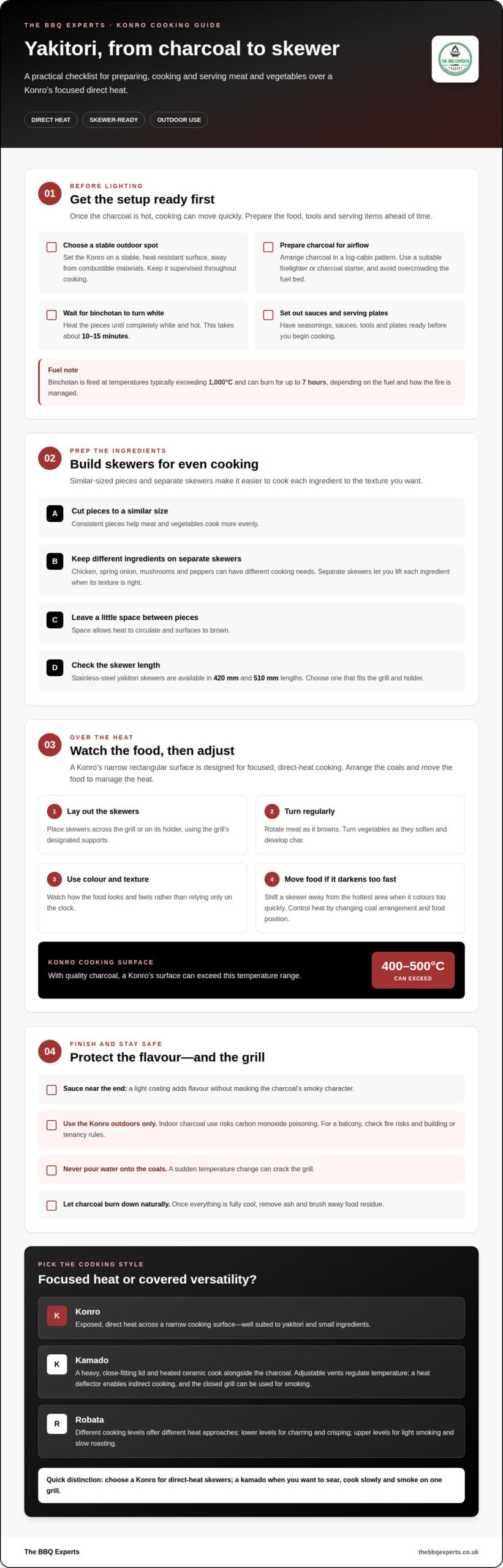
Binchotan, or Japanese white charcoal, is a popular fuel choice. It’s fired at temperatures typically exceeding 1,000°C and burns for hours without adding an unnatural flavour to food. Heat the pieces until they’re completely white and hot, which takes about 10 to 15 minutes. With binchotan, a Konro can cook for up to 7 hours, depending on the fuel and how the fire is managed.
A bed of charcoal radiates heat directly towards the food, creating the crisp edges and light charring prized in yakitori. Control cooking by arranging the coals and moving food closer to or farther from the heat, rather than relying on a temperature knob. Prepare the ingredients, sauces and tools before lighting the grill, as cooking can move quickly once the charcoal is hot.
In the UK, use a charcoal Konro outdoors: using it indoors risks carbon monoxide poisoning. A balcony is outdoors, but fire risks and building or tenancy rules still apply, so make sure charcoal cooking is permitted. Keep the grill stable and away from combustible materials, supervise it throughout cooking, and take care around hot surfaces and skewers. Never pour water onto Konro coals, as a sudden temperature change can crack the grill.
A skewer holder supports skewers above the charcoal; place it on the grill’s designated supports and arrange skewers across it. The accompanying skewers suit yakitori-style cooking. Stainless-steel yakitori skewers are available in 420 mm and 510 mm lengths, so choose a length that fits the grill and holder. Japanese konro-style grills are designed for this focused, direct-heat approach, while charcoal options such as oak, eucalyptus and coffee offer alternatives to binchotan.
Cooking meat and vegetables on skewers
Yakitori-style cooking rewards preparation. Cut meat and vegetables into similarly sized pieces so they cook more evenly. Thread chicken, spring onion, mushrooms or peppers onto separate skewers rather than combining ingredients with different cooking needs. Leave a little space between pieces so heat can circulate and the surfaces can brown. Have sauces, seasonings and serving plates ready before cooking begins.
A Konro’s narrow, rectangular surface is well suited to skewers, allowing food to sit over direct heat along the grill. Lay the skewers across the grill or its holder and turn them regularly. Watch their colour and texture rather than relying only on the clock. Rotate meat as it browns, and move a skewer away from the hottest area if it darkens too quickly. Turn vegetables as they soften and develop char. A light coating of sauce near the end adds flavour without masking the charcoal’s smoky character.
Recipe videos can show the rhythm of yakitori cooking, including how to arrange ingredients and turn skewers. Use them for inspiration, then adapt the sequence to your grill and ingredients. For a simple first cook, try chicken with spring onion on one skewer and mushrooms or peppers on another. Separate skewers make it easier to lift each ingredient when its texture is right.
Compact grills bring this style of cooking to an outdoor table, creating a sociable meal where guests can watch each skewer colour over the heat. Set the grill on a stable, heat-resistant surface outdoors. Robata cooking offers another way to manage charcoal heat: lower levels suit charring and crisping, while upper levels suit light smoking and slow roasting. A Konro provides focused, direct heat, while a ceramic kamado uses adjustable shelf distance and cooking levels to shape the heat. Trying both methods can help you find the textures and flavours that suit your menu.
Konro grills compared with other charcoal grills
A Konro concentrates direct heat across a narrow cooking surface, making it well suited to yakitori and small ingredients. With quality charcoal, its surface can exceed 400-500°C. Diatomaceous-earth construction retains heat and supports even distribution, while vents near the base help control airflow. A rounder shichirin shares Japanese charcoal-grill heritage, but its shape differs from the Konro’s rectangular profile.
A kamado works differently. Its heavy, close-fitting lid and heated ceramic cook alongside the charcoal, while vents in the base and lid regulate the temperature. Add a heat deflector for indirect cooking, or use the closed grill for smoking. Choose a Konro for exposed, direct-heat cooking, or a kamado when you want the flexibility to sear, cook slowly and smoke on one grill.
To light the grill, arrange charcoal in a log-cabin pattern to encourage airflow, then use a suitable firelighter or charcoal starter. Add enough charcoal for the cooking area and food, but avoid overcrowding the fuel bed, which can restrict airflow. When cooking is finished, let the charcoal burn down naturally. Never pour water onto Konro coals, as a sudden temperature change can crack the grill. Once everything is fully cool, remove the ash and brush away food residue.
Returns for charcoal and cooking equipment are subject to the seller’s stated terms. Keep the packaging and proof of purchase, and read the return conditions before ordering, especially for opened fuel or used equipment. A restaurant kitchen may prioritise a Konro’s direct heat for skewers, while a home cook may value a kamado’s covered, indirect cooking options. Match the grill to the ingredients you usually cook and the methods you enjoy, rather than choosing by appearance alone.
Japanese konro-style grills and alternative brands
Japanese Konro-style grills vary in shape, material and cooking area, so compare the details with the dishes you plan to serve. Kaginushi models are made from diatomaceous earth, a heat-retaining material suited to intense charcoal cooking. A small model measures 230 mm wide, 310 mm long and 200 mm high, and weighs 6.5 kg. It’s described as suitable for grilling for two to four people.
For a broader cooking surface, the medium-wide Kaginushi measures 46 cm long, 33 cm wide and 20 cm high. It includes a cooking grid measuring 450 mm wide by 300 mm deep. The large model weighs 10 kg, while the large-and-long model weighs 17 kg and the XXL weighs 25 kg. Those differences matter if you’ll move the grill between outdoor cooking spots or leave it in a dedicated barbecue area.
Shape is another useful point of comparison. A shichirin is generally rounder than a box-shaped Konro, creating a different cooking layout even when both use charcoal. The saying that “shichirin” means “seven wheels”, referring to the money once needed to buy coal for a grill, is folklore rather than a specification. Compare the cooking surface, weight and included grill instead.
Choose a compact Japanese model for skewers and small portions; select a wider format if you want more room for several dishes. The right choice depends on how much food you cook at once, how you arrange the grill outdoors, and whether portability matters. Compare those practical details before deciding, rather than choosing by brand name alone. For help narrowing down a Japanese charcoal grill style for your cooking plans, get in touch with the team.
The BBQ Experts: Angus & Oink Rubs
The BBQ Experts offers options for building a charcoal cooking setup around skewers and Japanese-style grilling. Angus & Oink Rubs season meat or vegetables before they meet the heat, while Big Eds Charcoal is a fuel option for outdoor cooking. A Hibachi Grill suits compact, direct-heat meals, while a Fire Cage offers a different format for open-fire cooking.
Choose according to the meal you want to prepare: season your skewers with a rub, select charcoal to suit your cooking style, and match the grill to your space and routine. For guidance on refining your setup or choosing where to start, contact The BBQ Experts.
Make your next outdoor cook your own
Your first cook is a chance to develop a style of your own. Choose a simple combination of meat, vegetables and seasoning, then notice the texture and char each ingredient develops. A Japanese Konro-style grill with a skewer holder and skewers makes this focused, hands-on approach a natural part of an outdoor meal shared around the grill.
The BBQ Experts offers Angus & Oink Rubs to add character to ingredients, Big Eds Charcoal for charcoal cooking, and a Hibachi Grill for compact grilling. Consider which option best supports the way you want to cook, whether you’re refining your seasoning or creating a dedicated space for live-fire meals.
Contact The BBQ Experts to explore your outdoor cooking plans and take the next step towards making every gathering around the grill memorable.
Frequently Asked Questions
What is binchotan charcoal?
Binchotan is Japanese white charcoal, prized for its long, clean-burning heat. It’s fired at temperatures typically exceeding 1,000°C, creating dense pieces that can glow steadily for hours without adding unnatural flavours to food. For a Konro, arrange the pieces to leave room for airflow and allow them to become completely white and hot before cooking. Its steady radiant heat suits skewers and small ingredients.
What is a Japanese Konro grill and how does it compare with other portable charcoal grills?
A Japanese Konro is a compact charcoal grill designed for direct cooking, particularly yakitori-style skewers. Its rectangular shape provides a long, continuous cooking surface for skewers. A shichirin is generally rounder, while a kamado’s ceramic body and fitted lid support covered cooking, indirect heat and smoking. Choose according to your preferred style: a Konro for close, direct grilling, or a kamado for more varied methods.
What are the best Konro-style grills available in the UK and how much do they cost?
The right choice depends on whether you prioritise a compact format, ceramic construction or yakitori cooking. Compare the grill’s shape and material with the way you intend to cook.
What are the dimensions, materials and cooking capacity of this grill?
Dimensions, materials and capacity depend on the specific model. The BBQ Experts lists a 17″ Medium Kimstone Ceramic Konro BBQ Grill, identifying its ceramic material and size category. A product’s stated size alone doesn’t tell you how many skewers or ingredients will fit at once. Consider the usable cooking surface and how you’ll position skewers, then match that space to the portions you plan to serve.
How do you light and safely control charcoal in a Konro grill?
For binchotan, allow about 10 to 15 minutes for the pieces to become completely white and hot. Arrange them in a log-cabin pattern to encourage airflow, then manage heat by shifting the coals and repositioning food. Use the grill outdoors because indoor charcoal use risks carbon monoxide poisoning. Never pour water over the coals: the sudden temperature change can crack the grill.
How do you barbecue meat skewers on a Konro grill, including preparation and cooking times?
Cut meat into even-sized pieces and leave a little space between them on each skewer so heat can reach the surfaces evenly. Keep different ingredients on separate skewers so you can lift each one as its colour and texture develop. Turn the skewers regularly over direct heat. Cooking time varies with the size of the pieces, charcoal intensity and position, so judge progress by the meat’s appearance and texture rather than relying on a fixed timer.
Disclaimer
This article was produced with AI assistance. We use AI and Third Parties to help deliver more content to our BBQ website and community, but we always aim to ensure accuracy and quality as much as we can. If you spot anything that doesn't seem right, we'd love to hear from you

Recent News & Updates
Cooking Meat and Vegetables on a Konro Grill
A Konro brings Japanese charcoal cooking to a compact, box-shaped grill designed for direct heat and yakitori-style cooking. Traditional...

Our Story, Values and Beliefs
Here at the BBQ experts we have a passion for BBQ food, outdoor living and spending time with family and friends. We offer you; A...