
Hibachi Grills: What They Are and How to Cook Over One
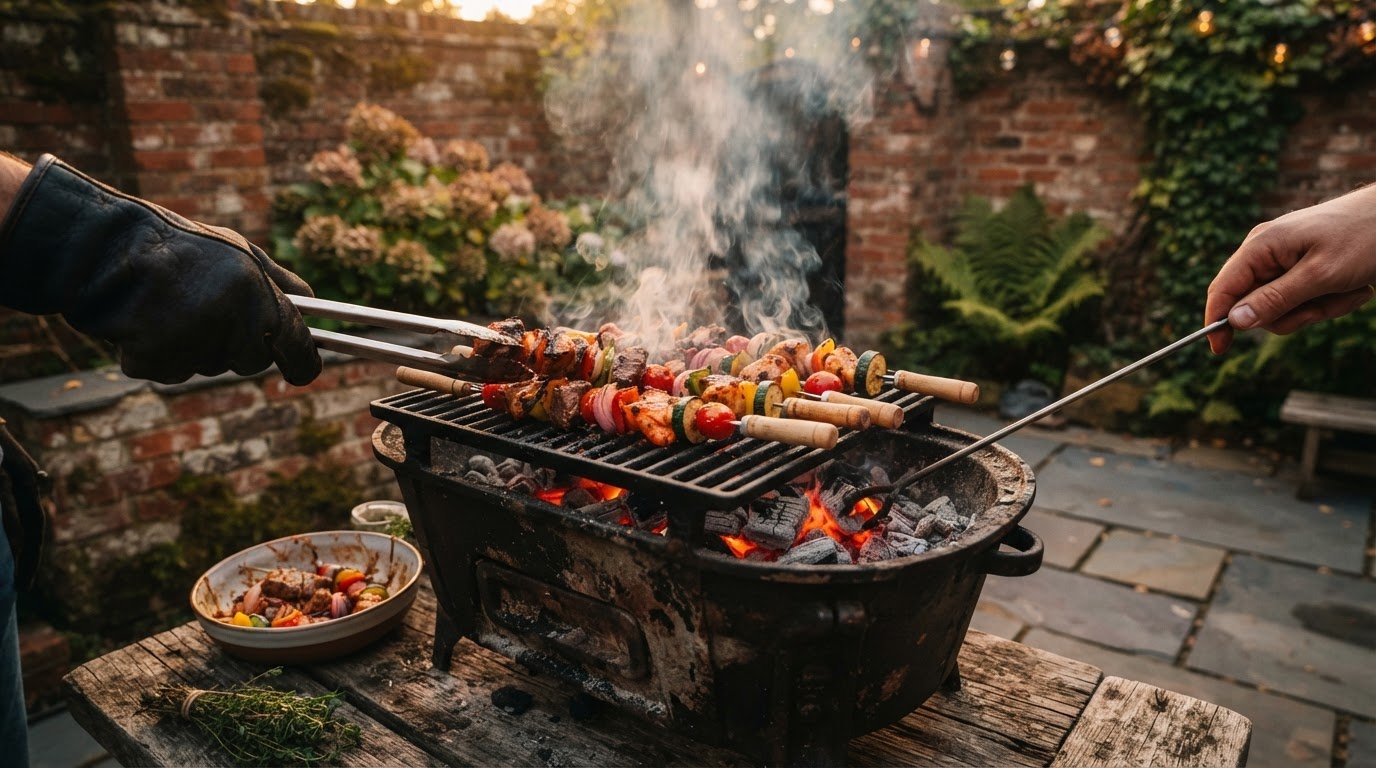
What if the hibachi you picture from a restaurant isn’t the same kind of cooking you’ll do at home? The word is often used loosely, so it’s easy to confuse a charcoal grill with the lively, flat-griddle cooking commonly called teppanyaki. For outdoor cooking, a hibachi-style grill means a compact open grate, glowing charcoal and food cooked close to the heat.
If the terminology feels muddled, or you’re unsure how a small grill will suit your plans, you’re not alone. Cooking over charcoal raises practical questions: which fuel to choose, how to light it and how to manage the heat without rushing the food. This guide explains what hibachi means, how the cooking style differs from teppanyaki, and how to prepare and cook on a hibachi-style grill. It also covers what to consider when choosing between charcoal options such as Big Eds Charcoal and Oak Briquettes, and whether a compact grill suits the meals and gatherings you have in mind. With a little preparation, charcoal becomes part of the experience, bringing smoky flavour and a more hands-on rhythm to outdoor cooking.
Key Takeaways
- Understand why “hibachi” can describe different things, and how a charcoal grill differs from teppanyaki cooking.
- Learn how ember distance and charcoal placement influence direct heat, so you can adjust your cooking approach.
- Match a hibachi grill or broader charcoal setup to your usual meals, gathering size and available outdoor space.
- Follow a considered sequence for positioning, fuelling, lighting and cooking, using the grill maker’s instructions and relevant fire-safety guidance.
- Explore Hibachi Grill and Japanese Charcoal Grill options alongside fuel choices such as Big Eds Charcoal and Oak Briquettes.
What Is a Hibachi Grill? Understand the Name and Cooking Style
A hibachi-style grill is a compact charcoal cooking setup: food sits on a grate above hot fuel and cooks over direct heat. That simple arrangement is the focus here, rather than a restaurant performance or assumptions about the size, materials or features of a particular grill. It’s a hands-on way to cook outdoors, with glowing charcoal and the aroma of food over embers shaping the experience.
Why hibachi can mean more than one thing
The name has different meanings in different contexts. In traditional Japanese use, a traditional Japanese hibachi refers to a vessel associated with holding charcoal for heat, rather than necessarily a cooking grill. In modern Western grilling, the word commonly describes a small charcoal grill with an open cooking grate. The meanings overlap in conversation, but don’t always refer to the same object or purpose.
That distinction explains why a search may lead to a home grill, a discussion of Japanese heating traditions or a restaurant advertising “hibachi” dining. In North America, the word is also often associated with teppanyaki-style restaurant cooking. Usage varies, so look at the equipment and method being described instead of assuming every result refers to the same setup. This guide uses the term for outdoor charcoal grilling at home.
Hibachi grilling versus teppanyaki
The clearest difference is the cooking surface and heat source. A charcoal grill uses burning fuel beneath a grate, so food cooks directly above the embers. The open space between the bars lets heat and smoke reach the food, contributing the aromas associated with charcoal. You manage the cook by moving food across the grate, changing its position over the fuel or distributing the charcoal differently.
Teppanyaki, by contrast, is cooking on a hot, flat metal plate. Food rests on that surface and is heated through direct contact, rather than above an open charcoal grate. The cook can move ingredients around the plate, and restaurant versions may bring diners close to the cooking action. That theatrical setting is a dining experience, not a description of the equipment used for home charcoal grilling.
Neither format is a substitute for the other. Choose charcoal grilling when you want to cook outdoors over embers and work with direct radiant heat. Think of teppanyaki as hot-plate cooking, with a broad flat surface and a different style of heat transfer. Keeping these categories separate makes it easier to identify the equipment and cooking method that suit your plans.
How Hibachi Grilling Works: Charcoal, Heat, and Direct Cooking
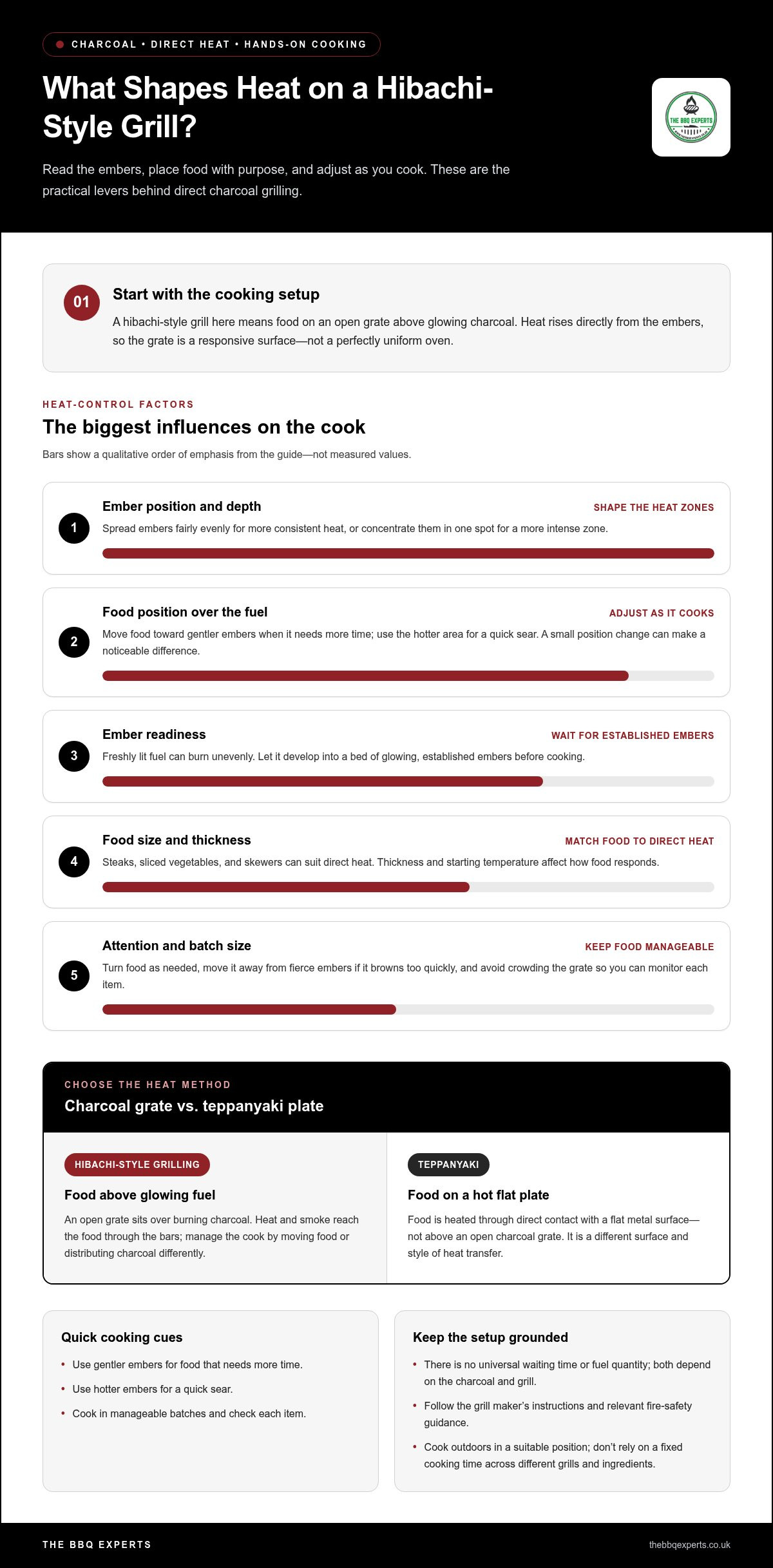
Charcoal grilling is direct cooking: food sits on a grate above glowing fuel, where radiant heat cooks it from below. The coals also warm the cooking surface and surrounding air, while smoke from the fire can add aroma. Because food is close to the heat source, even a small change in position can make a noticeable difference. Learning to read the embers, rather than relying on a dial, is central to cooking over a hibachi-style grill.
How charcoal creates a usable cooking heat
Light the fuel as directed for your grill, then let it develop into a bed of established embers before cooking. Freshly lit fuel can burn unevenly; glowing coals provide more settled heat. There’s no universal waiting time or fuel quantity, since both depend on the charcoal and grill. Follow the maker’s instructions, and don’t add fuel in a way those instructions advise against.
The position and depth of the embers matter. A fairly even layer beneath the grate can help spread heat across the cooking area, while a deeper concentration in one spot creates a more intense zone. If the grill allows you to move food safely, use the area above gentler embers for items that need more time and the hotter area for a quick sear. Treat the grate as a responsive cooking surface, not a perfectly uniform oven.
Direct heat and the food it suits
Direct heat is particularly practical for foods that cook relatively quickly, such as steaks, sliced vegetables and skewers. Smaller or thinner portions are often easier to manage over concentrated heat because you can turn and check them without leaving the centre exposed for too long. Results still depend on thickness, starting temperature, charcoal condition and the grill’s dimensions.
Stay attentive as you cook. Turn food as needed, move it away from especially fierce embers if it is browning too quickly, and check that it is cooked to your preference using suitable food-safety guidance. Don’t treat a fixed cooking time as reliable across different grills and ingredients. A vegetable skewer and a thick steak, for example, won’t respond to the same heat in the same way. Cook in manageable batches so you can monitor each item and avoid crowding the grate.
Each model has its own dimensions, fuel instructions and safe operating limits. Read the grill maker’s guidance before lighting, and use the grill outdoors in a suitable position, following applicable fire-safety advice. The The BBQ Experts contact page is available for questions about charcoal options for your cooking plans.
Choosing a Hibachi Grill: Match the Setup to Your Cooking
The right grill is the one that fits the way you cook, the space you have and the meals you want to serve. Before choosing a hibachi-style setup, picture a typical occasion: a quick outdoor lunch, a few skewers for friends or several dishes for a larger gathering. Then compare that plan with the actual cooking area and the maker’s guidance for the grill. Compact charcoal cooking can be inviting and hands-on, but it won’t suit every menu or group size.
Which cooking occasions suit a hibachi-style grill?
This format may suit quick meals, smaller portions and occasions when you enjoy tending food over charcoal. Think sliced vegetables and skewers cooked in manageable batches, rather than assuming the grate can hold everything for a gathering at once. Check the usable cooking surface against the portions you usually prepare, leaving room to turn and handle food safely. If you regularly cook for a larger group or want to prepare several items at once, a broader charcoal grill may better match your routine.
Consider the space around the grate, too. Think about where the grill will sit during use, where you’ll store it and whether its care requirements fit your outdoor cooking area. A compact footprint may be useful where space is limited, but the cooking area still needs to work for your typical meal. Let your menu and hosting habits guide the decision instead of choosing on size alone.
What to compare before choosing equipment
Compare practical details rather than assumptions about the category. Review the cooking surface and overall dimensions, construction materials, included components, and the manufacturer’s instructions for use, cleaning and storage. These details vary by model, so don’t assume every charcoal grill has the same layout, capacity or maintenance needs. Manufacturer guidance also explains the equipment’s intended use and safe operating limits.
A compact charcoal grill and a broader charcoal barbecue offer different setups, not a universal winner. The compact format may suit direct, small-batch cooking; a larger grill may better accommodate a fuller menu or more food at once. Think about how much tending you enjoy, how many dishes you usually serve and whether you’re comfortable cooking in batches. That comparison will help you judge whether a Hibachi Grill fits your plans without relying on a one-size-fits-all verdict.
Fuel is part of the decision. Consider which fuel format you prefer to handle and what the grill maker permits, then explore the charcoal fuel guide to compare options. The BBQ Experts’ Hibachi Grill is a relevant category to consider alongside its Japanese Charcoal Grill range. Match the equipment and fuel to your cooking habits for a more considered foundation for outdoor meals.
How to Set Up, Light, and Cook on a Hibachi Grill
An organised setup makes charcoal cooking easier to manage. Before lighting, read the grill maker’s instructions for fuel, placement and operation, and follow applicable fire-safety guidance. Keep the grill outdoors, on a stable, level surface, with clear space around it and away from anything that could catch fire. Stay with it throughout cooking, and keep children and pets at a safe distance.
Prepare the cooking area and light the charcoal
Set out ingredients, utensils and serving plates before lighting, so you’re not searching for equipment beside hot embers. Check that the grill is assembled and positioned as its maker directs. Choose a lighting method suitable for that model, and use only fuels and firelighters permitted by its instructions. Natural firelighters can be an option for starting charcoal when suitable for your grill and used as directed.
Follow the instructions in order: prepare the fuel, light it using the recommended method, then allow it to develop into a suitable bed of embers before cooking. Don’t use accelerants or improvise with a lighting method the manufacturer doesn’t recommend. Never use a charcoal grill indoors. If conditions make the outdoor cooking area unsuitable, wait rather than lighting the grill.
Cook steadily and manage the heat
Once the fuel is ready for cooking according to the maker’s guidance, arrange food in manageable batches. Leave room to turn each item and observe how it responds to the heat. A thin vegetable slice or small skewer may cook differently from a thicker piece of meat, so use the food’s size and position over the embers to guide your approach. Avoid relying on a single cooking time for different grills, fuels and portions.
Keep checking as you cook. If food browns faster than expected, move it to a less intense part of the grate if the design allows, or cook a smaller batch. Use suitable utensils to turn and lift food; avoid reaching over the fire or touching hot parts. Follow appropriate food-safety guidance, including keeping raw and cooked foods separate and checking that food is cooked thoroughly.
- Position: Choose a stable outdoor spot with clear space around the grill.
- Prepare: Arrange fuel and food, and have utensils ready before lighting.
- Light: Use only the method and firelighting products permitted by the grill maker.
- Wait: Let the charcoal reach the cooking state specified in the instructions.
- Cook: Work in batches, turn and check food, and adjust its position as needed.
Careful preparation leaves you free to focus on flavour and the rhythm of cooking over charcoal. The contact page provides a way to get in touch with The BBQ Experts about grill or fuel choices.
Bring Hibachi Cooking Home with The BBQ Experts
Good outdoor cooking starts with a setup that suits your habits, not simply the smallest grill or the most elaborate one. Consider the cooking style you enjoy, the portions you usually prepare, the space available and the care the equipment requires. Then plan how you’ll light and use it safely outdoors. These choices help make charcoal cooking a more considered part of time spent outside.
Pair the grill with a considered charcoal choice
Fuel belongs in the cooking plan, so choose it alongside the grill rather than as an afterthought. The BBQ Experts offers a Hibachi Grill and a Japanese Charcoal Grill, as well as charcoal options including Big Eds Charcoal and Oak Briquettes. These are different fuel choices to explore, not a promise of a particular cooking result. Always follow the grill maker’s instructions about suitable fuel and use.
If you’re comparing fuels, think about the format you prefer to handle and how it fits the cooking session you have in mind. The charcoal fuel guide lets you explore the options available. Pair that research with the instructions for your chosen grill, since equipment and fuel guidance can vary. Planning before lighting gives you a clearer starting point for the meal.
Take the next step towards cooking outdoors
Before settling on a setup, consider a few practical questions. Do you want to cook directly over charcoal, and what foods do you most often plan to serve? How much cooking area would your usual portions need? Where can you position the grill safely outdoors, and are you comfortable with its care instructions? Your answers can help you decide whether a compact grill suits your routine or whether a different charcoal format is a better fit.
The BBQ Experts’ Hibachi Grill and Japanese Charcoal Grill provide relevant categories to consider as you shape an outdoor cooking space. Keep the grill, fuel and safe setup in mind together, and use the manufacturer’s guidance when preparing to cook. The aim isn’t to choose equipment based on a label alone; it’s to find a format that works with your menu, available space and preferred way of cooking.
Ready to explore a suitable hibachi and charcoal setup for your outdoor cooking plans? Contact The BBQ Experts for guidance on choosing your setup.
Make Your Outdoor Cooking Space Your Own
Your first charcoal cook is the beginning, not the finished picture. As you gain confidence, you’ll find the dishes, pace and setup that feel right for your home, whether you’re preparing a relaxed meal outdoors or making cooking part of a gathering. Let each session teach you how you like to arrange your space, which foods you enjoy cooking over embers and what makes the process comfortable and rewarding.
A hibachi setup can become a natural centrepiece for outdoor meals when it suits your routine and the way you like to cook. Take time to shape an approach that feels practical, safe and distinctly yours. Thoughtful choices can help turn a simple cooking area into a welcoming place to share good food and fresh air.
Contact The BBQ Experts to explore a hibachi cooking setup for your outdoor cooking plans.
Frequently Asked Questions
Is a hibachi the same as a teppanyaki grill?
No. A charcoal hibachi-style grill cooks food on a grate above burning fuel, while teppanyaki uses a heated flat plate. The difference affects how food meets the heat: on a grate, it cooks above the embers; on a hot plate, it contacts the cooking surface. A restaurant’s teppanyaki setup is therefore a different equipment format from a home charcoal grill.
Can you use a hibachi grill indoors?
No. A charcoal grill should be used outdoors, never inside a home, conservatory or garage. Burning charcoal produces carbon monoxide, a dangerous gas that can build up indoors. Choose a suitable outdoor position and follow the grill maker’s instructions and relevant fire-safety guidance. If you can’t set up safely outside, don’t light the grill; wait until conditions allow outdoor use.
What food can you cook on a hibachi grill?
You can cook a range of foods suited to direct heat, such as sliced peppers, mushrooms, halloumi and prawns. Cut ingredients into portions that are practical to turn and check, and avoid crowding the grate. Keep raw and ready-to-eat foods separate, use clean plates and utensils for cooked food, and check that meat and seafood are thoroughly cooked before serving.
How do you light a hibachi grill?
Follow the grill maker’s lighting instructions, using only suitable fuel and a recommended lighting method. Set up outdoors on a stable surface, prepare the charcoal as directed, then light it with an appropriate firelighter if the instructions allow. Never use petrol or other accelerants. Give the fuel time to reach the cooking state specified by the maker before putting food on the grate.
Which charcoal is best for a hibachi grill?
There isn’t one best charcoal for every grill. Choose fuel that the grill maker permits, then consider the format you prefer to handle and the cooking session you’re planning. The BBQ Experts offers Big Eds Charcoal and Oak Briquettes among its fuel choices. Follow the product and grill instructions, since fuel suitability and use can vary between models.
Do you need special tools to cook on a hibachi?
No specialist tool set is essential, but a few practical utensils make cooking easier. Long-handled tongs help you turn food while keeping your hands away from the grate, and a suitable spatula can help lift delicate items. Use clean tools for cooked food, keep a food thermometer handy for checking doneness, and never handle hot grill parts or embers with bare hands.
Disclaimer
This article was produced with AI assistance. We use AI and Third Parties to help deliver more content to our BBQ website and community, but we always aim to ensure accuracy and quality as much as we can. If you spot anything that doesn't seem right, we'd love to hear from you

Recent News & Updates

Our Story, Values and Beliefs
Here at the BBQ experts we have a passion for BBQ food, outdoor living and spending time with family and friends. We offer you; A...
Hibachi Grills: What They Are and How to Cook Over One
What if the hibachi you picture from a restaurant isn’t the same kind of cooking you’ll do at home? The word is often used loosely, so...