
Asado: How to Cook Over an Open Fire in 2026
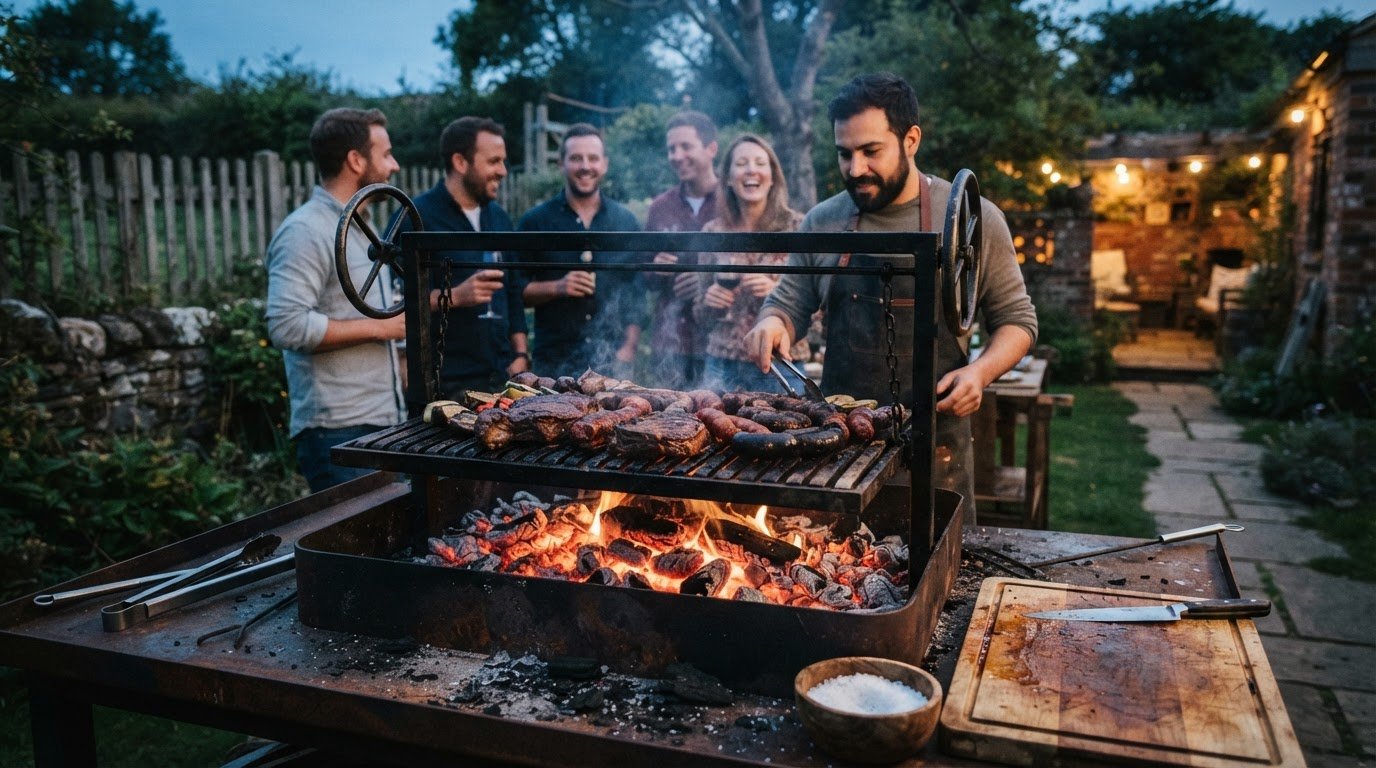
What if the best asado begins when the flames are gone? It’s tempting to put meat straight over a roaring fire, but this patient style of open-fire cooking depends on glowing embers, not fierce flames. If you’ve wondered what separates an asado from an ordinary barbecue, or how to judge when the heat is ready, you’re asking exactly the right questions.
With a steady bed of embers and a little practice, you can cook flavourful meat without letting flare-ups take over. This guide shows you how to build and manage the fire, arrange hotter and cooler areas, and choose cuts and seasonings for an asado-style cook. Follow the process from lighting the fuel to serving, with practical ways to manage cooking order and adjust the heat. By the end, you’ll understand the ritual as well as the technique, and feel ready to bring people together around the fire.
Key Takeaways
- See asado as both a live-fire cooking method and a meal built around sharing food.
- Choose cuts by thickness and fat, then season simply to let the meat’s flavour shine.
- Build hotter and cooler cooking zones so different foods can cook at their own pace.
- Rest meat before serving, and slice against the grain where appropriate for a tender result.
- Prepare a safe fire area, suitable utensils and a clean resting surface before you start cooking.
What Is Asado? Understand the Open-Fire Cooking Tradition
A useful definition: “Asado is an open-fire cooking tradition centred on controlled heat and shared food.” It describes both how food is cooked and the meal gathered around it. Rather than relying on a burst of flame, the cook works with the fire as it settles, using glowing embers and careful pacing to bring food to the table with a rich, gently smoky flavour.
Associated especially with Argentina and other parts of Latin America, the tradition has variations rather than one single rulebook. The menu, fire setup and pace can differ from one cook to another, but the social element matters: food is prepared over time and enjoyed together. The What is Asado? overview explores its cultural significance, ingredients and different cooking methods.
What makes asado different from ordinary barbecue?
The distinction is less about a fixed menu and more about how you manage the fire. Direct cooking over tall, aggressive flames can scorch the outside before the centre is ready. Instead, let the fuel burn down to embers, then manage the heat by spreading them, shifting food or changing its distance from the fire. A parrilla is the Spanish term for the grill grate that holds food above the embers. The cook’s attention stays on heat and timing, not simply on turning meat.
Does asado require a specialist grill?
No single grill defines the method. You need a stable cooking surface, a fire setup suited to the space and a way to manage the distance between food and embers. Adjustable height or a separate area for making embers can make control easier, but these are useful design features, not essential principles. A Fire Cage is one open-fire option.
Start with equipment you can use safely and confidently. Keep the cooking surface steady, leave room to move food away from stronger heat, and build a consistent supply of embers rather than chasing dramatic flames. The fuel matters too: options such as Big Eds Charcoal and Oak Briquettes can be used for open-fire cooking. Choose based on your setup and the way you plan to cook.
How to Build an Asado Fire and Turn Flames into Cooking Embers
The fire is your heat source, not a showpiece. Build it with enough space for the fuel to burn and produce embers you can move beneath the cooking surface. Keep the fire on a stable, non-combustible base, away from anything that could catch fire, and account for wind before lighting.
- 1. Prepare the area. Set up your fire and cooking surface securely, with clear space around them and tools close at hand.
- 2. Light the fuel. Arrange suitable cooking fuel so air can circulate, then light it with an appropriate firelighter. Add fuel gradually rather than smothering the first flames.
- 3. Let it burn down. Allow the fuel to catch and develop into glowing embers. Resist putting food over high, active flames.
- 4. Arrange the embers. Rake a layer beneath the cooking area, leaving some embers to one side for replenishing the heat or creating a cooler zone.
Steady embers make heat easier to manage than open flames because they provide a more consistent source of radiant heat. For a longer cook, prepare fuel in stages so you can add fresh embers as the first bed fades. Your choice of charcoal affects how you build and maintain that supply. Explore Big Eds charcoal as one option for open-fire cooking.
When are the embers ready for cooking?
Look for fuel that has settled into a glowing bed, with most of the tall, lively flames gone. There should be enough embers to distribute beneath the food, rather than isolated hot spots surrounded by unburnt fuel. Start too early and flames and uneven heat can char the surface before the food cooks through. Keep a separate supply burning and replenish the cooking bed in stages as needed.
How can you control heat and avoid flare-ups?
Think of heat as adjustable. Spread embers for broader, more even warmth, or gather them beneath food that needs stronger heat. Raise the grate or move food further away to slow cooking; bring it closer for more intensity. If dripping fat triggers sudden flames, shift the food to a cooler area until they settle. Some parrilla designs channel drippings away from the heat, but this feature isn’t universal.
Make small adjustments and watch how the food responds before changing the fire again. Explore the open-fire equipment and fuel available from The BBQ Experts as you plan your setup.
Choose Asado Ingredients, Cuts and Seasoning for a Balanced Cook
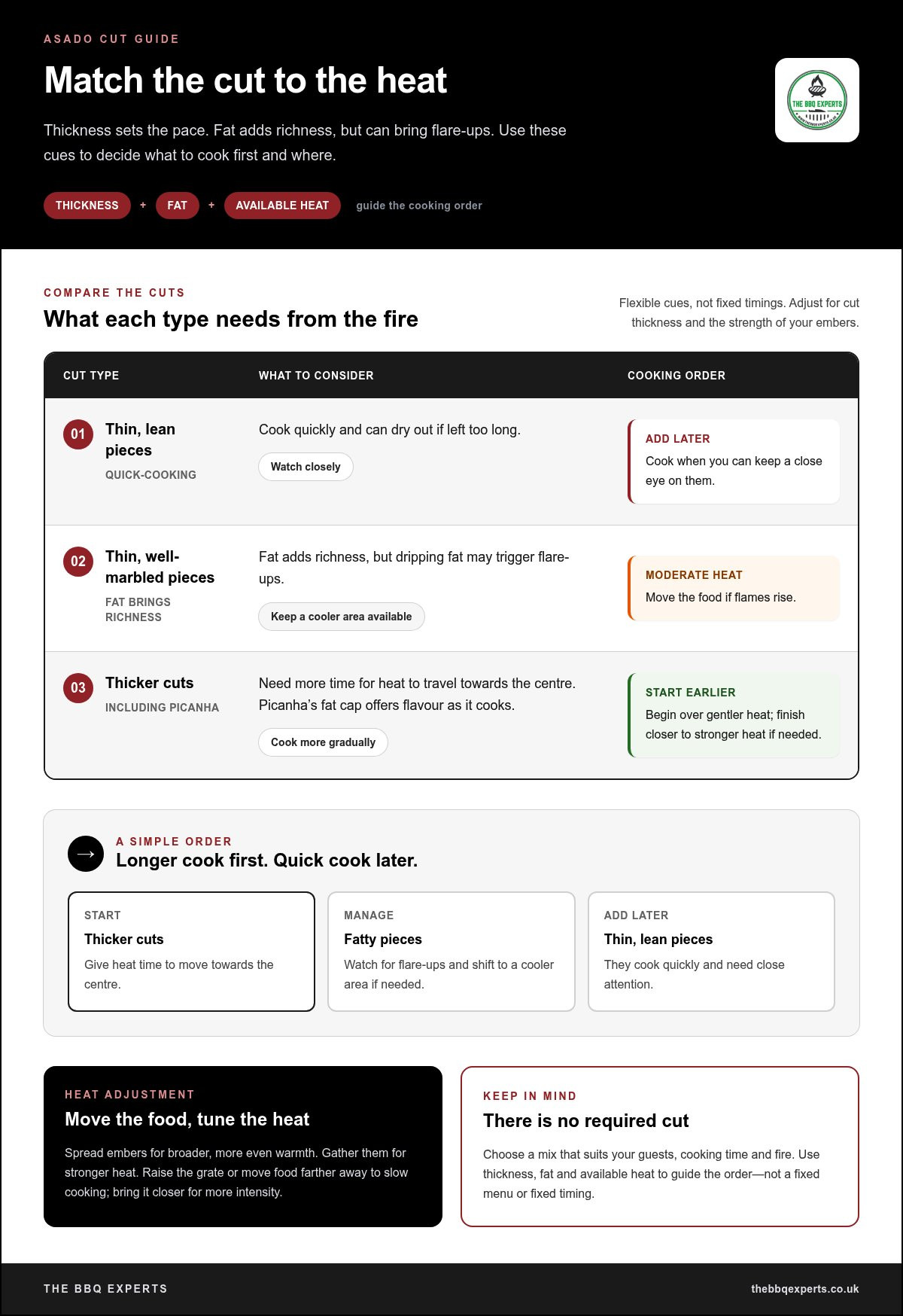
Plan the cooking order around thickness, fat and the heat you have available. Thin pieces cook quickly and need close attention; thicker cuts take longer and benefit from gentler heat. Fat can add flavour and moisture, but dripping fat may also cause flare-ups, so leave room to move food to a cooler part of the grill. There’s no single required cut for an asado. Choose a mix that suits your guests, cooking time and fire.
Which cuts work well for an asado?
Think in terms of pace. A thin, evenly sized piece is useful when you want food ready sooner, while a thicker cut gives you time to cook more gradually. Picanha is one option, with its fat cap offering flavour as it cooks. For a dedicated walkthrough, see our picanha cooking guide.
| Type of cut | What to consider | Cooking order |
|---|---|---|
| Thin, lean pieces | Cook quickly and can dry out if left too long. | Add later, when you can watch them closely. |
| Thin, well-marbled pieces | Fat brings richness, but watch for flare-ups. | Cook over moderate heat and move if flames rise. |
| Thicker cuts, including picanha | Need more time for heat to travel towards the centre. | Start earlier over gentler heat; finish closer to stronger heat if needed. |
Use these as flexible cues, not fixed timings. Cut thickness and the strength of your embers both affect how quickly food cooks.
When should you season the meat and serve sauces?
For a clean, direct taste of the meat, keep seasoning restrained and use salt before cooking. A heavier rub creates a bolder crust and adds its own flavour, so use it more sparingly if you want the cut itself to remain the focus. Angus & Oink Rubs offer another way to add flavour to the cook. Choose seasoning to suit the meat and the balance you want across the meal.
Serve sauces separately so guests can add them to taste. Chimichurri is a familiar accompaniment to grilled meat, rather than something you need to use as a marinade. Keeping it on the side preserves the contrast between savoury meat, smoky edges and a bright, fresh sauce.
Cook an Asado Step by Step and Adjust for Different Foods
Control heat by changing the embers or the food’s distance from them, not by letting flames dictate the pace. That principle gives you room to cook different ingredients over one fire without forcing everything to finish at once.
- Prepare the grill. Make sure the cooking surface is stable and clean, and have tongs and a suitable thermometer within reach.
- Arrange the embers. Spread a stronger bed beneath one area and leave another with fewer embers for gentler cooking. If the heat is too fierce, move embers out or raise the food if your setup allows.
- Add food in stages. Start with thicker cuts that need longer, steadier cooking. Add thinner or quicker-cooking items later, keeping an eye on how rapidly they colour.
- Adjust as you cook. Move food between hotter and cooler zones as its surface browns or the heat changes. If flare-ups appear, shift the food away rather than letting it char.
- Check, rest and serve. Use a food thermometer where appropriate, then rest thicker cuts before slicing and serving.
What order should food go on the grill?
Let thickness and required doneness set the order, rather than relying on fixed timings. Put substantial cuts on first, positioned where the heat is steady rather than fierce. As they cook, add thinner pieces that need less time, placing them over a warmer zone only when you can watch them closely. Wind, ember depth and the cut itself all change cooking speed, so judge progress by the food in front of you.
How do you know when the food is ready?
Colour and feel can help you assess progress: a browned surface shows where heat has worked, while a thicker piece may feel firmer as it cooks. These are clues, not a substitute for food-safety checks. Insert a clean digital thermometer into the thickest part, avoiding bone, and follow the Food Standards Agency’s cooking guidance for the food you’re preparing. Its guidance includes cooking food to 70°C for two minutes, or an equivalent time and temperature combination.
After cooking, rest thicker cuts on a clean plate or board before slicing. This gives the juices time to settle and makes serving easier. Keep raw and cooked foods, plates and utensils separate throughout preparation. The BBQ Experts offers open-fire cooking equipment and fuels to support your setup.
Serve Asado Confidently and Choose Practical Open-Fire Equipment
As the meat finishes, transfer it to a clean resting surface and give thicker cuts time to rest before slicing. Where the grain is visible, cut across it to make each piece easier to chew. Serve while warm, with clean utensils and serving dishes ready so food doesn’t sit waiting while you prepare the table.
What equipment helps make an asado easier?
Prioritise a stable cooking surface, long-handled tongs and a safe way to move or manage embers. An area for making embers separately can help maintain a steady supply, while an adjustable grate offers another way to fine-tune heat. Neither is essential: suitable fuel and careful heat management matter more than a particular grill. The BBQ Experts offers a Fire Cage for open-fire cooking. For fuel, explore Big Eds lumpwood charcoal.
How can you make the first cook more manageable?
Keep the menu focused. Choose a small number of ingredients that need different levels of heat, rather than trying to cook a full spread at once. Set out serving plates, clean utensils and a thermometer before lighting the fire. This leaves you free to watch the food and adjust its position as the embers change.
Use this quick checklist before cooking:
- Fire safety: Set up on a stable, suitable surface with clear space around the fire.
- Heat zones: Leave room for a warmer area and a cooler place to move food.
- Utensils: Keep long-handled tools close by for turning food and adjusting embers.
- Resting surface: Have a clean board or plate ready for cooked meat.
The best setup is one you can control with confidence. Learn how your fuel behaves, keep a steady supply of embers, and make small adjustments rather than chasing flames. The BBQ Experts’ range includes open-fire equipment and charcoal fuels for outdoor cooking.
Make Your Next Cook a Live-Fire Gathering
Mastering asado is less about chasing high flames and more about tending a steady supply of embers. Choose cuts to suit your cooking time, season with intention and adjust food position as the heat changes. With a little preparation, the fire becomes part of the occasion, not a source of uncertainty.
The BBQ Experts is a specialist retailer of open-fire cooking equipment and charcoal fuels. A Fire Cage offers an open-fire option, while Big Eds Charcoal and Oak Briquettes can support your fuel setup. Angus & Oink Rubs add another flavour option when you want more than simple seasoning. Dependable embers and confident heat management matter more than a particular grill.
Ready to shape your outdoor cooking setup? Explore open-fire cooking options with The BBQ Experts. Start with a simple menu, take your time with the fire and enjoy bringing everyone together around it.
Frequently Asked Questions
What does asado mean?
Asado refers to both a way of cooking over fire and the meal shared around it. The word is especially associated with Argentina and other parts of Latin America, where open-fire cooking brings people together over food prepared at a measured pace. The exact cuts, seasonings and setup vary between cooks and regions, so there isn’t one fixed menu or single approach that defines every asado.
What is the difference between asado and barbecue?
Asado is a style of open-fire cooking where the cook manages embers, heat and cooking distance carefully, often without a lid. Barbecue is a broad term that covers many methods, including covered low-and-slow cooking and direct grilling over charcoal. The distinction isn’t absolute: equipment and traditions vary. The key idea is to let controlled heat and patient cooking shape the meal, rather than relying on tall flames.
How do you make an asado fire?
Set up a stable fire area with clear space around it, then light suitable fuel and let it burn until it produces a useful bed of embers. Spread some embers beneath the cooking surface and keep others aside to replenish the heat as you cook. Avoid placing food over tall, active flames. Follow the instructions for your equipment and fuel, and keep children and pets at a safe distance.
How do you know when charcoal is ready for asado?
Look for charcoal that has settled into glowing embers, with active flames reduced and enough heat to spread beneath the cooking surface. Don’t judge readiness by flame height alone. Starting too early can expose food to uneven, intense heat and cause the outside to char quickly. Keep extra fuel burning separately so you can top up the ember bed in stages as the cook continues.
Can you cook asado on a regular charcoal grill?
Yes, provided your grill has a stable cooking surface and lets you manage the distance between food and embers. Arrange charcoal to create a warmer area and a cooler zone, then move food as it cooks. An adjustable grate can make heat control easier, but it isn’t essential. The important skills are building a steady supply of embers and adjusting their placement to suit the food.
What meat is best for asado?
Choose cuts according to thickness, fat and the time you have. Cross-cut beef short ribs, flank or skirt steak, and picanha can all work well, but no single cut is essential. Thicker pieces need longer, gentler cooking; thinner cuts cook faster and need closer attention. A mix of cuts lets you serve food in stages. Season simply if you want the meat’s own flavour to lead.
How do you stop meat flaring up over an open fire?
Move meat to a cooler part of the grill when fat drips and flames rise. You can also spread embers out, reduce the amount directly beneath the food, or increase the distance from the heat if your setup allows. Trim excessive surface fat if appropriate, and avoid leaving food over sudden flames. Keep long-handled tongs nearby so you can reposition meat promptly without reaching over the fire.
Disclaimer
This article was produced with AI assistance. We use AI and Third Parties to help deliver more content to our BBQ website and community, but we always aim to ensure accuracy and quality as much as we can. If you spot anything that doesn't seem right, we'd love to hear from you

Recent News & Updates
Asado: How to Cook Over an Open Fire in 2026
What if the best asado begins when the flames are gone? It’s tempting to put meat straight over a roaring fire, but this patient style of...

Our Story, Values and Beliefs
Here at the BBQ experts we have a passion for BBQ food, outdoor living and spending time with family and friends. We offer you; A...