
Best UK Charcoal for Smoking: 2026 Fuel Guide
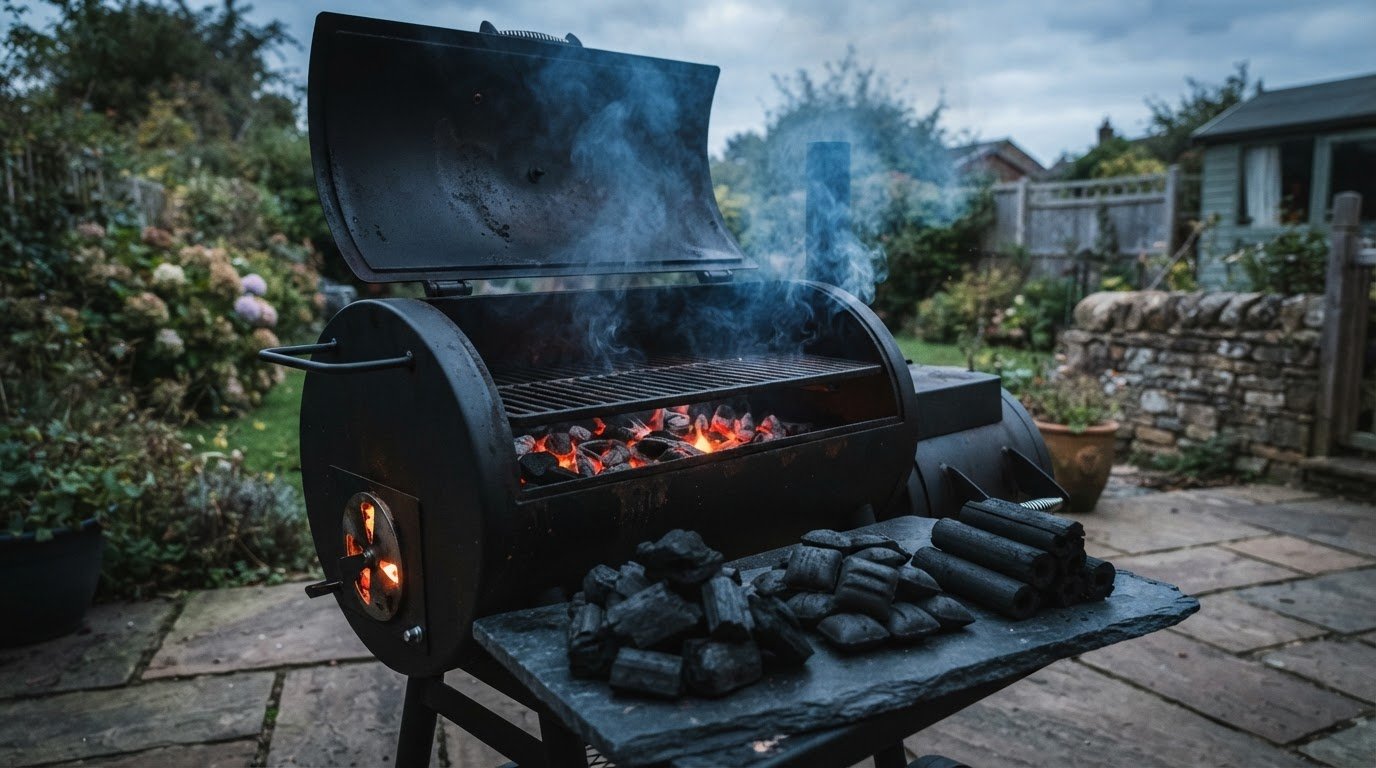
The charcoal that burns hottest may not be the best choice for your smoker. If you’re searching for the best charcoal for smoking uk, focus on the fuel that gives you manageable heat for the cook ahead. Advice can conflict because lumpwood, briquettes and specialist charcoal behave differently. A fuel that suits a quick, hot cook may not be the easiest to manage for a long, low one.
You don’t need one best choice for every session. Match the fuel to your smoker, cooking style and flavour plans, then use a repeatable approach to managing the fire. This guide compares irregular lumpwood, uniform briquettes and specialist charcoal, and explains what to consider for a consistent burn. Your smoker’s design and airflow also affect heat management, while wood added separately can shape the smoke character. From Big Eds Charcoal and Oak Briquettes to oak, eucalyptus, coffee and King Khaya charcoal, you’ll find a practical way to narrow down the options for your next smoke.
Key Takeaways
- Choose fuel for the fire behaviour your cook needs, and make sure it suits your smoker’s design and airflow.
- Charcoal provides heat; wood added separately can bring extra smoke flavour. Keep the two roles distinct when planning your cook.
- Lumpwood, briquettes and specialist charcoal differ in consistency and handling. Performance varies by product, so don’t assume every fuel of the same type burns alike.
- For a steadier cook, begin with a manageable amount of fuel and adjust airflow gradually. Add more only as needed.
- Finding the best charcoal for smoking uk means matching the fuel to your cooking style. Consider options such as Big Eds Charcoal and Oak Briquettes as examples, not universal choices.
Best charcoal for smoking in the UK: what makes a fuel the right choice?
Choose charcoal based on how well you can control the fire, how it works with your smoker and what you plan to cook. A long, low-and-slow session calls for manageable, steady heat. A shorter cook may suit a different fire and a different approach to tending it. There’s no universal winner: the best charcoal for smoking uk is the fuel that helps you maintain the conditions your cook needs.
Smoking charcoal is solid fuel that provides heat in a smoker, while wood added separately can contribute smoke flavour. Charcoal is made by heating wood with limited oxygen. Read more about what charcoal is and how it is produced. Charcoal type alone doesn’t determine the final flavour. The wood used for smoke, the food and the way you manage the fire all play a part.
What does charcoal contribute to a smoking cook?
Charcoal supplies heat. Airflow and the amount of fuel help you regulate the fire. During low-and-slow cooking, gradual changes can make it easier to maintain an even cooking temperature without frequent, dramatic corrections. That can make temperature management less daunting for beginners, though results still depend on the smoker and how you operate it. Add flavour wood separately if you want to shape the smoke character.
Is there one best charcoal for every smoker?
No. A kettle-style grill, kamado cooker and dedicated smoker can handle airflow and heat differently, so the same fuel may behave differently in each. Cooking duration and how often you’re willing to tend the fire matter too. Lumpwood and briquettes have different characteristics, but neither is a universal winner. Composition and performance can vary between products, so consider the specific fuel rather than assuming all charcoal of one type behaves alike.
Start with a fire your equipment can control, then decide whether you prefer to tend it actively or follow a more predictable routine. Once you’ve found a fuel that suits your setup, explore bulk-buy charcoal options for future cooks. A useful choice is one you can repeat: compatible fuel, a manageable fire and a flavour plan that lets the food shine.
Lumpwood, briquettes and specialist charcoal: how smoking fuels differ
Compare fuels by the qualities you can work with: how uniform the pieces are, how easily you can portion them and how much you want to tend the fire. The broad differences between lumpwood, briquettes and specialist charcoal are a useful starting point. Composition and performance vary between products, so treat these as practical tendencies, not guarantees of flavour or burn duration.
| Fuel type | Consistency | Handling | Potential use |
|---|---|---|---|
| Lumpwood | Irregular pieces, with varied sizes | Sort or arrange pieces to suit the fire | For cooks who prefer responsive fire management |
| Briquettes | Often more uniform in shape | Consistent pieces can make portions easier to repeat | For cooks who value a measured, repeatable setup |
| Specialist charcoal | Depends on the fuel and its composition | Follow the characteristics of the specific product | For cooks exploring a particular fuel choice |
Lumpwood charcoal: when natural variation suits your cook
Lumpwood pieces vary in size, so they may catch and behave differently. Arranging them can be part of managing the fire. This may suit you if you like to respond actively to changing heat rather than rely on identical portions. It doesn’t guarantee a particular flavour or performance. Big Eds Charcoal is one lumpwood option; see Big Eds finest lumpwood charcoal as a product example.
Briquettes and specialist charcoal: when consistency matters
Uniform briquettes can make it easier to repeat the amount of fuel you add from one cook to the next. That can help when you’re developing a routine, though a consistent shape alone can’t promise a specific temperature or burn duration. Oak Briquettes and specialist charcoal, including oak, eucalyptus and coffee charcoal, are options to weigh against your cooking needs, not automatic performance upgrades.
For the best charcoal for smoking uk cooks, choose fuel that fits the smoker and your approach to tending the fire. If you’re comparing options for your setup, get guidance on choosing smoking charcoal.
Which smoking charcoal suits your smoker, food and cooking style?
Start with the cooker, then consider the session. Kettle-style grills, kamado cookers and dedicated smokers handle airflow and fuel differently, so choose charcoal you can control in your setup. Think about how long you’ll cook, how often you want to tend the fire, and whether you prefer repeatable fuel portions or the flexibility to arrange pieces of different sizes.
Cooker design and fire control matter just as much as charcoal type when choosing fuel for smoking. To find the best charcoal for smoking uk cooks can use with confidence, match the fuel to your equipment and routine, not just the food you’re preparing.
How does smoker design affect charcoal choice?
A kettle-style grill may need thoughtful fuel placement to create the cooking conditions you want, while a kamado’s airflow controls affect how the fire responds to adjustments. In a dedicated smoker, the firebox layout shapes how you load and manage fuel. If you value repeatable portions, more uniform pieces may be easier to measure. If you prefer to arrange individual pieces and respond as you go, varied lump sizes may suit your approach. Explore the guide to choosing a BBQ smoker to consider equipment alongside your cooking plans.
How should you match fuel to the food?
You can smoke brisket, pork and poultry with different charcoal choices; the food doesn’t dictate one correct fuel. Think instead about the length of the session and the fire you’re comfortable managing. A shorter cook may give you more opportunities to adjust the fire, while a longer low-and-slow session benefits from a measured approach to fuel and airflow. Charcoal supplies heat. Smoking wood contributes much of the chosen wood’s aroma, while technique shapes the result.
Build a repeatable method by noting the fuel type and amount, where you place it, and how you adjust the vents as the cook progresses. Change one variable at a time, then use your notes to refine the next brisket, pork shoulder or bird. This helps you learn what works in your cooker rather than relying on a supposedly universal pairing. For help choosing charcoal for your setup and cooking style, speak with The BBQ Experts.
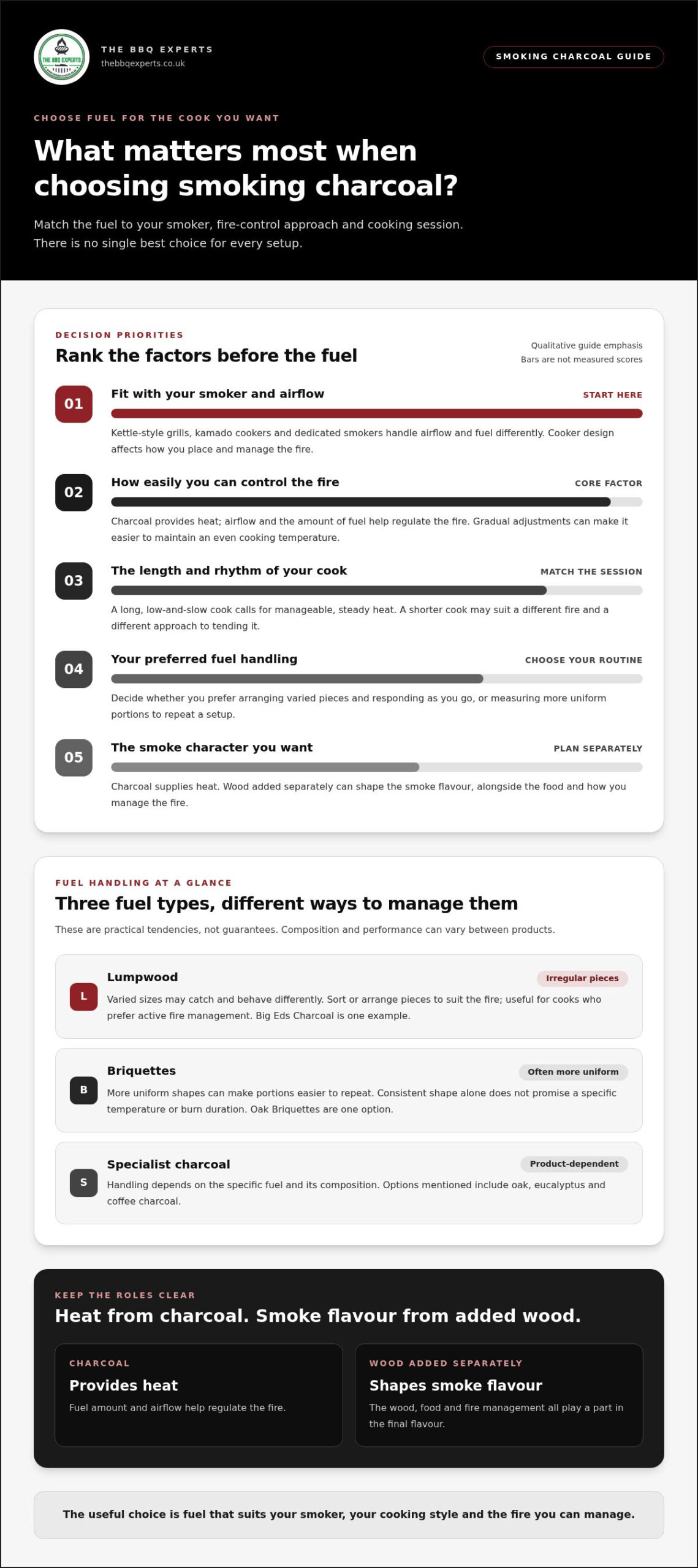
How to choose and manage smoking charcoal for a steadier cook
A reliable smoking session starts before you light the charcoal. Match your fuel to the cooker and planned cook, then give the fire time and room to settle. The aim isn’t to chase a perfect number with constant adjustments. Make measured changes and give the smoker time to respond.
A simple pre-cook fuel selection checklist
- Check your smoker: Note its design, firebox layout and how its vents control airflow. Follow the manufacturer’s instructions for fuel, lighting and operation.
- Plan the session: Consider whether you’re cooking briefly or aiming for a longer smoke, and how hands-on you want to be with the fire.
- Choose your fuel: Select lumpwood, briquettes or specialist charcoal according to your priorities and experience managing it.
- Prepare sensibly: Have suitable fuel ready for the planned cook, but start with a manageable amount rather than loading the smoker unnecessarily.
To compare fuel options for your cooker and cooking style, contact The BBQ Experts for charcoal guidance.
How to keep the fire controlled during smoking
Once you’ve chosen your fuel, follow a calm sequence. Safe setup matters as much as the charcoal itself: position the cooker on a stable, suitable surface, use a lighting method recommended for your equipment, and keep the cooking area clear of anything that could catch fire. Follow the manufacturer’s guidance rather than improvising.
- 1. Set up and light: Check that the smoker is assembled and positioned securely, then light the fuel as instructed by its manufacturer.
- 2. Let the fire establish: Give the charcoal time to settle before making large vent changes. Use a reliable thermometer to monitor the cooking temperature.
- 3. Adjust airflow gradually: Make small vent changes, then allow time for the temperature to respond before adjusting again.
- 4. Add fuel only as needed: If the fire needs more fuel, add it carefully and continue monitoring. Prioritise stable heat over claims about a particular fuel’s burn duration.
Make one small airflow or fuel adjustment at a time, then wait and check the temperature before changing anything else. This measured approach helps you learn how your smoker responds and build a repeatable routine. The best charcoal for smoking uk cooks can rely on is only part of the process; careful setup, patient tending and equipment guidance matter too.
Find the right smoking charcoal for your next UK barbecue
The right fuel isn’t a universal winner. It’s the one that fits your smoker, planned cook and preferred way of managing the fire. If repeatable portions matter most, consider briquettes. If you’d rather arrange and adjust varied pieces, lumpwood may suit your style. Specialist charcoal is another option if you have a particular fuel in mind. In every case, technique and cooker design affect the result.
Which fuel should you try first?
Choose one fuel that suits your equipment and planned session, then observe how it behaves in your setup. Switching fuel types from cook to cook can make it harder to identify what’s influencing the fire. Keep a simple record of the fuel and amount used, vent positions, cooking temperature and how the smoker responds. These notes give you a useful reference for your next barbecue.
Big Eds Charcoal and Oak Briquettes are among the options from The BBQ Experts, alongside oak, eucalyptus, coffee and King Khaya charcoal. Consider each against your own priorities, rather than as a guaranteed upgrade or a single answer for every cook. The best charcoal for smoking uk enthusiasts choose is the fuel they can manage consistently in their cooker.
Where can you explore charcoal for smoking?
Let your cooking plans guide your shortlist. Consider whether you want portions that are easier to repeat, the flexibility of lumpwood, or a particular specialist fuel. Then give your chosen charcoal a fair trial. Keep your lighting method and fire-management approach consistent so you can learn from the result.
If you’re planning future cooks, browse bulk-buy charcoal and fuel options to plan your supply. For help thinking through fuel choices alongside your smoker and cooking style, speak to The BBQ Experts. A considered choice, useful notes and steady fire management are a strong foundation for more confident smoking.
Make your next smoke a more confident one
The best charcoal for smoking uk isn’t one fuel for every cook. Choose according to your smoker, the session you’re planning and how you prefer to manage the fire. Lumpwood, briquettes and specialist charcoal each have different considerations. Patient airflow adjustments and a few notes after each cook can help you build a method you trust.
The BBQ Experts is a UK-wide specialist retailer of outdoor cooking equipment and charcoal, including Big Eds Charcoal and Oak Briquettes. The range gives you different fuels to consider for your setup and cooking goals, without assuming one option suits every cook.
Ready to choose your next fuel? Talk to The BBQ Experts about choosing your smoking charcoal. With a well-matched fuel and a steady approach, you can focus on the craft, the aromas and the good company around the barbecue.
Frequently Asked Questions
What is the best charcoal for smoking in the UK?
The best choice depends on your smoker, the length of the cook and how you prefer to manage the fire. Lumpwood gives you flexibility to arrange varied pieces, while briquettes can make fuel portions easier to repeat. Specialist options suit cooks looking for a particular type of fuel. The BBQ Experts offers Big Eds Charcoal, Oak Briquettes and other charcoal options, but no single fuel is right for every setup.
Is lumpwood or briquette charcoal better for smoking?
Neither is automatically better; each suits different preferences. Lumpwood pieces vary in size, so you can arrange them to suit your fire, though individual pieces may behave differently. Briquettes are generally more uniform in shape, which can help you measure repeatable portions. Performance varies between products, so consider your smoker and cooking routine rather than assuming one type will always burn longer or hold a particular temperature.
Can you use ordinary BBQ charcoal in a smoker?
Often, yes, provided the charcoal is suitable for your smoker and planned cook. Check its packaging and follow the cooker manufacturer’s instructions, especially if the fuel includes lighting aids or other additives. For smoking, choose a fuel you can manage steadily and avoid charcoal that isn’t intended for cooking. Start with a modest amount, monitor the temperature and adjust airflow gradually as needed.
How much charcoal do you need for smoking?
There’s no single amount that works for every cook. Your smoker’s size and design, cooking duration, airflow and conditions around the cooker all affect how much fuel you’ll use. Begin with a manageable quantity, allow the fire to establish, and add more only if the cook requires it. Record how much you use and how the temperature responds, then use those notes to refine your next session.
What charcoal burns longest for smoking?
No charcoal type is guaranteed to burn longest in every smoker. Fuel composition and piece size, along with airflow, fuel arrangement and cooker design, all affect how the fire behaves. Briquettes’ more uniform shape may help some cooks portion fuel consistently, but it doesn’t promise a fixed burn time. Follow your smoker’s guidance, monitor the temperature and add fuel as needed rather than relying on a duration claim.
Can you mix lumpwood and briquettes in a smoker?
You can combine them if your smoker’s instructions allow it, but the blend may behave differently from either fuel used alone. Start with a small, manageable mix and observe how your cooker responds before relying on it for a longer session. Keep track of the proportions, fuel placement, vent adjustments and temperature changes. If you’re still learning your smoker, testing one fuel type at a time makes results easier to understand.
Does the charcoal itself give smoked food its flavour?
Charcoal’s main role is to provide cooking heat; smoke wood is usually the more deliberate way to add a chosen smoky aroma. The final flavour also depends on the food and your cooking technique. Charcoal type alone doesn’t determine the result, and different fuels may vary in their characteristics. Keep your fuel and smoke wood choices distinct, then adjust one at a time to learn what contributes the flavour you enjoy.
Disclaimer
This article was produced with AI assistance. We use AI and Third Parties to help deliver more content to our BBQ website and community, but we always aim to ensure accuracy and quality as much as we can. If you spot anything that doesn't seem right, we'd love to hear from you

Recent News & Updates

Our Story, Values and Beliefs
Here at the BBQ experts we have a passion for BBQ food, outdoor living and spending time with family and friends. We offer you; A...
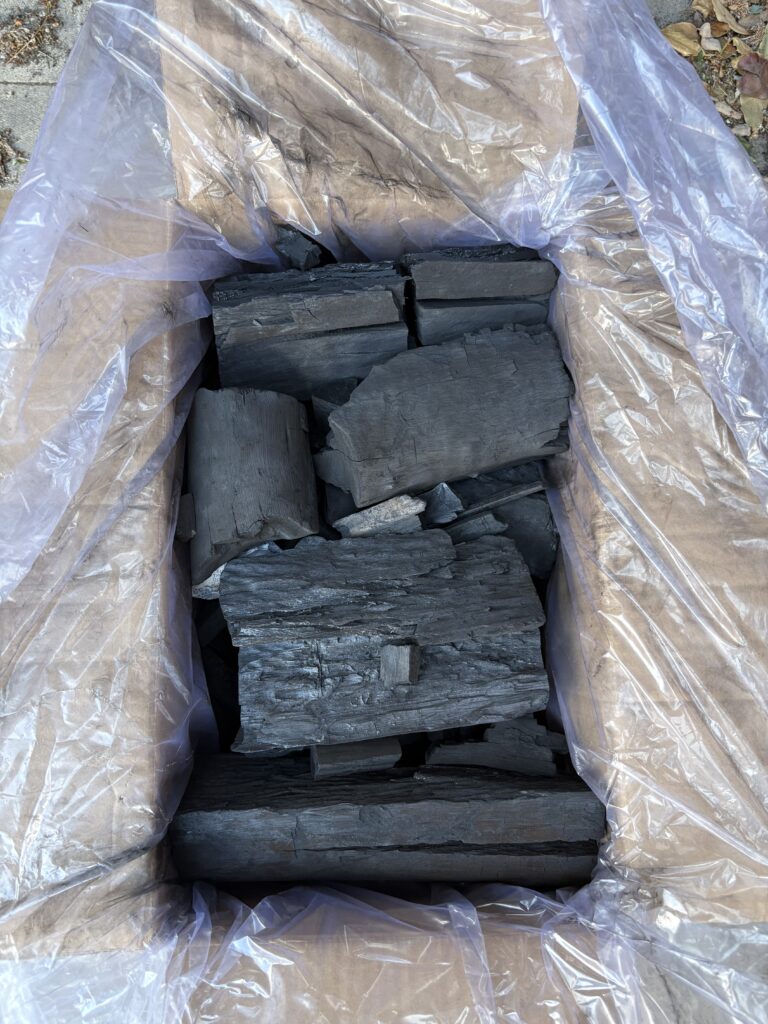
FAQ: Why does Big Ed’s Charcoal have a mix of big and small lumps?
Big Ed’s is all about top-quality, long-burning charcoal, made from a mix of Eucalyptus and Mangrove wood. Each 10kg box is packed with...