
Hibachi vs Konro Grill: The Connoisseur’s Guide to Japanese Grilling
Most backyard chefs are unknowingly using the wrong name for their favorite fire-breather, and this linguistic slip-up often leads to a far more costly mistake: buying the wrong tool for their culinary ambitions. You’ve likely felt the magnetic pull toward the ritual of Japanese charcoal cooking, yet the market’s sea of interchangeable labels makes it nearly impossible to distinguish a true heirloom piece from a mass-produced imitation. It’s frustrating to seek professional-grade precision only to be met with conflicting terminology and vague quality claims that cloud your path to mastery.
This guide settles the hibachi vs konro grill debate once and for all, stripping away the marketing jargon to reveal the technical mastery behind these two distinct vessels. You’ll discover the secrets of thermal insulation found in genuine diatomaceous earth and the rugged, social versatility of cast iron. We’ll also dive into the science of heat distribution and show you why specific fuels like Binchotan charcoal are non-negotiable for the authentic flavor you crave. By the end, you’ll have the confidence to select a grill that doesn’t just sit on your patio, but transforms your outdoor space into a refined sanctuary of gastronomy.
Key Takeaways
- Master the linguistic nuances of Japanese grilling to distinguish between traditional heating vessels and the precision-engineered tools required for high-heat outdoor gastronomy.
- Understand the technical battle of hibachi vs konro grill by exploring how fossilized diatomaceous earth provides a level of thermal insulation that cast iron simply cannot match.
- Learn why the specific dimensions of a Konro are mathematically optimized for the art of Yakitori, ensuring your skewers achieve the perfect sear without burning the handles.
- Discover why Binchotan “White Charcoal” is the essential partner for your grill, offering a clean, intense heat that elevates the natural flavor profile of premium ingredients.
- Apply our selection framework to identify whether your cooking style demands the surgical precision of a chef’s instrument or the versatile, social atmosphere of a classic hibachi.
Defining the Japanese Charcoal Grill: Hibachi vs. Konro
The ritual of fire is evolving. In 2026, the UK outdoor gastronomy scene has shifted from generic, oversized barbecues toward the precision and intimacy of the Japanese charcoal grill. This evolution has brought a cloud of terminology that often confuses even the most seasoned home chefs. Understanding the hibachi vs konro grill distinction is the first step toward mastering this ancient yet modern art form. You aren’t just choosing a piece of hardware; you’re selecting the philosophy of heat that will define your cooking style.
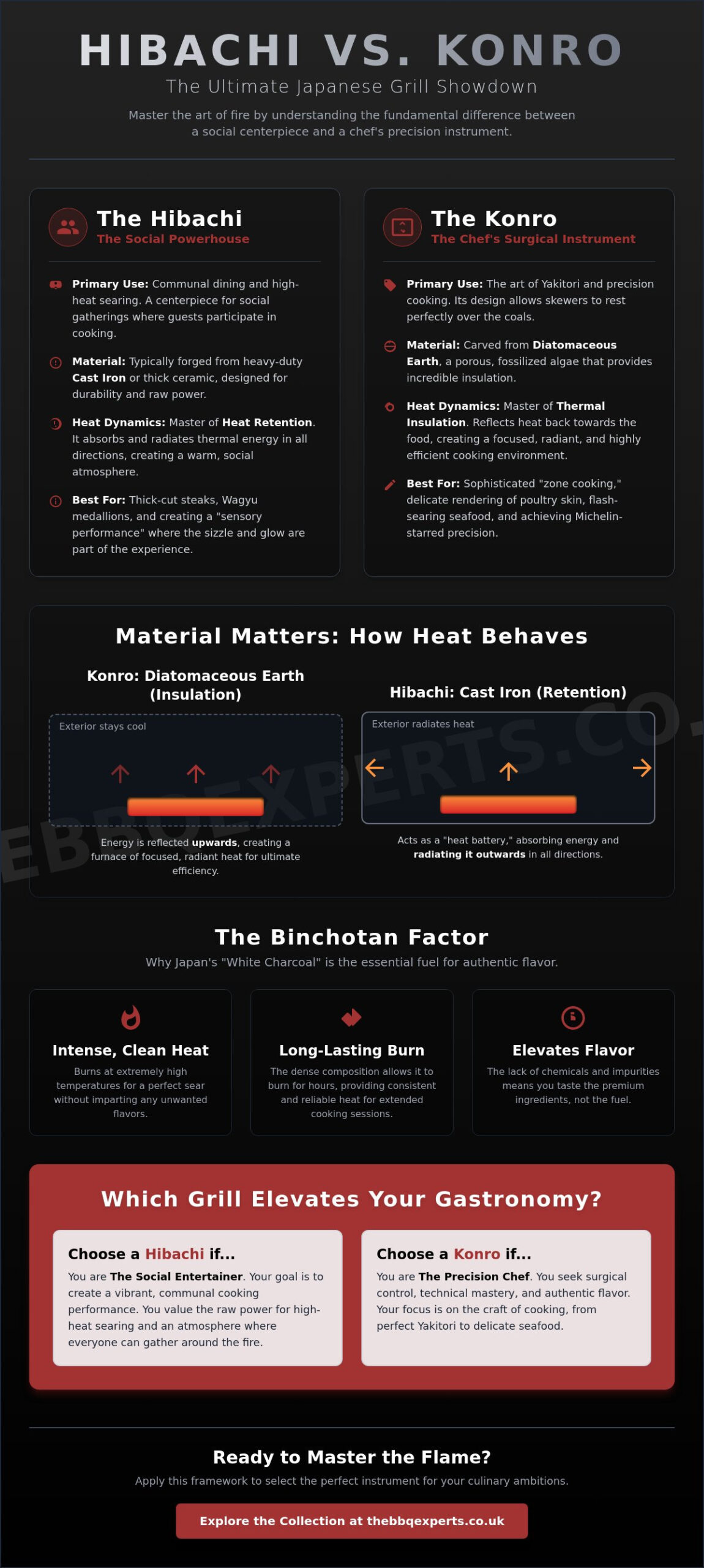
Historically, the word “hibachi” refers to a traditional Japanese heating device, a charcoal-filled brazier used to warm rooms rather than cook food. In Western culinary circles, the name was adopted to describe small, portable, open-top charcoal grills. The Konro, conversely, is a specialized tool designed specifically for the rigours of high-heat cooking. While both belong to the same family of fire, their roles in your outdoor kitchen are vastly different. One is built for the crowd, while the other is built for the craft.
The Western Hibachi: A Social Powerhouse
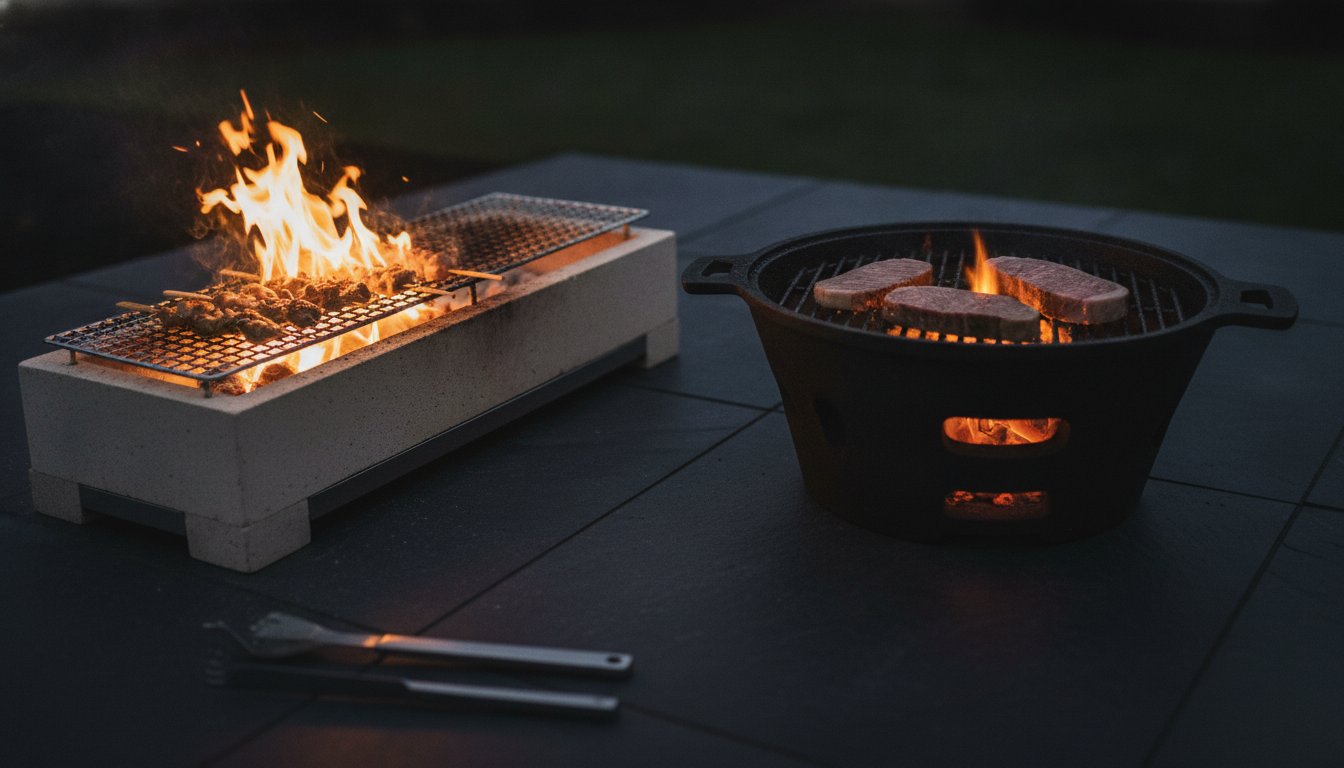
The modern Hibachi is defined by its accessibility and raw power. Usually crafted from heavy cast iron or thick ceramic, these grills feature an open-top design that invites everyone at the table to participate. It’s not just a cooking tool; it’s a centerpiece for communal dining. Because of its sturdy construction and direct airflow, the Hibachi excels at high-heat searing. It’s the perfect choice for thick-cut steaks or small medallions of Wagyu where a rapid, crust-forming char is essential. You aren’t just making dinner; you’re orchestrating a sensory performance where the sizzle of the fat and the glow of the coals become part of the conversation.
The Konro: The Chef’s Surgical Instrument
If the Hibachi is a social hub, the Konro is a surgical instrument. Its iconic long, narrow box shape isn’t an aesthetic choice; it is mathematically purpose-built for the art of Yakitori. The width is designed so that standard bamboo skewers can rest across the opening, allowing the meat to hover perfectly above the coals while the handles remain cool to the touch. This design allows for sophisticated “zone cooking.” By concentrating your charcoal on one side and thinning it out on the other, you create a gradient of heat that allows for the delicate rendering of poultry skin or the precise flash-searing of seafood. It’s why the world’s most renowned Michelin-starred kitchens prioritize the Konro for its uncompromising thermal efficiency and control.
Material Matters: Diatomaceous Earth vs. Cast Iron
The choice between these two icons isn’t just about shape; it’s about the elemental materials that dictate how fire behaves. At the heart of the hibachi vs konro grill comparison lies a fundamental difference in thermal physics. While a Hibachi Grill is typically forged from heavy-duty cast iron or dense ceramic, an authentic Japanese Charcoal Grill, or Konro, is carved from diatomaceous earth. This material choice transforms how heat reaches your ingredients. Cast iron is a master of heat retention, soaking up energy and holding it with stubborn intensity. Diatomaceous earth, however, is a master of insulation, reflecting heat back toward the charcoal to create a focused, radiant environment.
Insulation vs. Retention
Diatomaceous Earth is a prehistoric thermal barrier used in high-end Konros, formed from the fossilised remains of ancient marine algae. This material is so efficient that you can often touch the exterior of a Konro while the interior is a raging furnace of over 500 degrees Celsius. This insulation ensures that every bit of energy from your premium charcoal is directed upward rather than escaping through the walls. In contrast, a cast-iron Hibachi acts like a heat battery. It absorbs the thermal energy and radiates it in all directions, making it ideal for social gatherings where the warmth of the grill is part of the experience. Both designs utilize adjustable air vents to manage oxygen flow, but the Konro’s insulation allows for a more surgical control over the combustion rate.
Maintenance and Care for Premium Materials
Owning these specialized tools requires a commitment to their unique physical properties. For the Konro, moisture is the ultimate adversary. Because it’s made from porous earth, water can cause the material to soften or crack during the next heating cycle. Always store your Konro in a dry, interior space, particularly in the damp UK climate. Cast iron Hibachis are far more robust but demand a different ritual: seasoning. Much like a fine skillet, the iron must be kept dry and lightly oiled to prevent oxidation. If you’re unsure which material suits your lifestyle or need advice on specific storage solutions, our team can help you refine your outdoor setup for long-term success.
Heat distribution also varies significantly between these materials. The Konro relies heavily on radiant heat, which penetrates food deeply without drying it out, a hallmark of professional-grade Yakitori. The Hibachi, with its metal or ceramic body, provides a mix of radiant and conductive heat. This makes it exceptionally versatile for searing steaks or charring vegetables where direct contact with a hot grate is desired. Understanding these thermal signatures allows you to match your grill to your menu with total confidence.
Practical Performance: Yakitori Precision vs. Social Versatility
The choice in the hibachi vs konro grill debate often comes down to your intended role during the evening: are you the focused artisan or the life of the party? While the internal materials define the quality of the heat, the physical dimensions of these tools define your menu. The Konro is a masterclass in ergonomics for the dedicated chef. Its width is specifically calibrated to accommodate standard bamboo skewers, allowing the ingredients to hover at the optimal distance from the coals. This isn’t just a matter of convenience; it’s a structural requirement for the precision required in high-end Japanese gastronomy.
Mastering the Yakitori Technique
The Konro’s narrow edges serve a dual purpose. They act as a rest for skewers, ensuring that only the protein is exposed to the intense radiant heat while the delicate wooden handles remain outside the fire zone. This prevents the frustrating snap of charred bamboo mid-turn. To achieve that signature crispy skin and succulent interior, you must balance the distance of the skewer from the coal bed. As you brush on your tare, a traditional glaze of soy, mirin, and sake, the Konro’s heat profile causes the sugars to caramelize almost instantly. This creates a deep, umami-rich crust that is the hallmark of professional yakitori.
The Hibachi for Modern Entertaining
Where the Konro demands focus, the Hibachi invites participation. Its open surface area makes it the ultimate tool for serving thin-sliced Wagyu or Brazilian picanha to a hungry group. You can place the Hibachi directly on a heat-safe table, allowing guests to sear their own appetizers to their preferred level of doneness. This interactive element transforms a meal into an event. For those building a more comprehensive outdoor sanctuary, the Hibachi integrates beautifully alongside a Fire Cage, providing a dedicated station for quick-sear delicacies while larger cuts roast nearby.
The Binchotan Factor: Why Fuel is the Secret Ingredient
The most exquisite hardware in the world is rendered impotent if fed with inferior fuel. While the insulation of the Konro and the ruggedness of the Hibachi provide the stage, the charcoal you choose is the lead performer in this culinary theatre. The true magic of the hibachi vs konro grill experience isn’t found in the ceramic or the iron, but in the elemental power of Binchotan. Known as “White Charcoal,” this high-carbon fuel is the result of a centuries-old carbonization process that removes all impurities, leaving behind a material that rings like a bell when struck and burns with a visceral, steady heat.
Standard supermarket charcoal is the enemy of precision. It’s often packed with chemical binders and volatile organic compounds that produce acrid smoke and unpredictable flare-ups. In contrast, Binchotan burns with an intense infrared heat that penetrates proteins deeply without the need for aggressive flames. This lack of smoke ensures that the natural flavour of your ingredients remains pristine. Whether you’re leaning toward the hibachi vs konro grill, your choice of fuel dictates the ceiling of your culinary potential.
Selecting Your Charcoal Grade
For the connoisseur, not all Binchotan is created equal. Professional-grade Binchotan offers a burn time that can exceed five hours, making it the king of fuels for long, social evenings. If you’re seeking a specific aromatic profile, Eucalyptus Binchotan provides a slightly different thermal signature, while Coffee Charcoal is prized for its extreme density and longevity. A well-kept secret of the trade is reusability. Once your session is over, you can extinguish Binchotan in a dedicated ceramic pot or a bucket of water, dry it out, and ignite it again for your next cook, a feat impossible with standard lumpwood.
Flavour Synergy: Rubs and Radiant Heat
Because Binchotan burns so cleanly, it provides the perfect canvas for sophisticated seasoning profiles. This is where Western innovation meets Eastern hardware. The intense radiant heat allows the nuances of premium Angus & Oink Rubs to shine without being masked by soot or chemical taints. Imagine a picanha steak, dusted with a bold, smoky rub, seared over Binchotan; the infrared heat caramelises the surface while preserving the integrity of the spices. To ensure your ritual begins with total purity, always use Natural Firelighters to ignite your coals, avoiding the petroleum-based starters that can ruin a high-end experience before it even begins.
If you’re ready to curate a bespoke fuel strategy for your next gathering, get in touch with our specialists to discuss the perfect charcoal pairing for your specific grill.
The Selection Framework: Which Grill Elevates Your Gastronomy?
Choosing between these two icons is an exercise in self-discovery. You aren’t merely buying a cooker; you are defining how you wish to interact with your guests and your ingredients. The hibachi vs konro grill decision rests on whether you see yourself as the focused artisan or the orchestrator of a social event. At The BBQ Experts, we curate only professional-grade Japanese hardware because we believe the provenance of your tools should match the ambition of your craft. This is an investment in heritage materials that don’t just last; they improve with age and use.
To move beyond basic grilling into the sphere of true outdoor gastronomy, you must consider the complete ecosystem. A premium grill is the heart, but the extremities matter just as much. High-quality stainless steel tongs, heavy-duty bamboo skewers, and a consistent supply of Binchotan are the silent partners in your success. When you align these elements, you create a workflow that feels effortless and precise. Your outdoor space ceases to be a simple patio and transforms into a private retreat where culinary excellence is the primary focus.
Is the Konro Right for You?
The Konro is the ultimate prize for the perfectionist. If your heart is set on mastering the intricate layers of yakitori or exploring the delicate textures of flash-seared seafood, this is your instrument. It demands a level of respect and care, specifically a dry and secure storage environment to protect its diatomaceous earth body from the UK’s damp climate. Our verdict is clear: for those who view cooking as a meditative, technical art form, the Konro is an essential acquisition that offers unparalleled thermal control.
Is the Hibachi Your Perfect Match?
The Hibachi remains the champion of social versatility. It’s the perfect match for the host who loves the raw, high-heat sear of a Wagyu steak and the tactile joy of table-side participation. Its cast iron or ceramic durability makes it a “grab-and-go” powerhouse, equally at home in a sophisticated outdoor kitchen or on a refined coastal excursion. In the 2026 UK BBQ scene, the Hibachi stands as a symbol of approachable luxury, proving that you don’t need a stationary monument to achieve world-class flavour.
Master the Art of the Japanese Flame
Your journey into Japanese grilling is more than a purchase; it’s an entry into a world of surgical precision and sensory delight. Whether you’re drawn to the intense insulation of a diatomaceous earth Konro or the rugged, social versatility of a cast iron Hibachi, you now have the framework to choose with confidence. The hibachi vs konro grill debate isn’t about which is better, but which tool aligns with your culinary persona. By pairing your hardware with the clean, infrared heat of Binchotan, you ensure every sear is a testament to quality.
At The BBQ Experts, we provide the professional-grade hardware and premium Binchotan fuels you need to transform your garden into a private gastronomic retreat. From expert advice on pairing Angus & Oink rubs to national delivery of the finest charcoals, we bridge the gap between enthusiast and master. Explore our curated range of professional Japanese Grills and Binchotan to begin your transformation. The coals are waiting. It’s time to light the fire.
Expert Insights: Frequently Asked Questions
Can I use a Konro grill indoors?
You should never use a Konro grill in an enclosed domestic space due to the high risk of carbon monoxide poisoning. These specialist tools require professional-grade extraction systems if used inside a commercial kitchen. For the home enthusiast, they are strictly outdoor instruments. Using them on a well-ventilated patio allows you to enjoy the ritual safely while ensuring the intense heat doesn’t compromise your indoor air quality.
What is the best charcoal for a Hibachi grill?
Binchotan, or “White Charcoal,” is the undisputed gold standard for any Japanese Charcoal Grill. It provides a clean, infrared heat that lasts for hours without the acrid smoke of cheaper alternatives. If you’re using a cast iron Hibachi, high-quality lumpwood like Big Eds is also an excellent choice. It offers the high-temperature sear required for steaks while maintaining a consistent burn that respects the integrity of your ingredients.
How do I clean a Japanese diatomaceous earth grill?
You must never use water to clean a diatomaceous earth grill as the porous material will absorb moisture and crack during its next use. Once the unit is completely cold, simply use a dry, stiff brush to sweep away any remaining ash. For the metal grates, a standard wire brush is sufficient. Keeping the body dry is the single most important factor in maintaining its structural integrity for years.
Is a Konro grill worth the money compared to a standard BBQ?
A Konro grill is a significant investment that pays dividends in thermal efficiency and flavour precision that a standard BBQ cannot replicate. The fossilised algae construction reflects heat inward, creating a cooking surface that reaches the extreme temperatures required for authentic yakitori. While a standard grill is a generalist tool, the Konro is a specialist instrument designed for those who value the nuance of high-heat, radiant cooking.
How long does Binchotan charcoal last in a Konro?
High-grade Binchotan charcoal typically lasts between three and five hours in a Konro, depending on your vent settings and charcoal density. This longevity is one of its most celebrated features, allowing for long, leisurely dining sessions. Because it’s so dense, you can even extinguish the coals in water or a ceramic pot and relight them for your next session, making it surprisingly economical for the discerning chef.
Do I need special skewers for a Konro grill?
While you can use standard bamboo skewers, flat metal skewers are often preferred to prevent the spinning of ingredients during the turn. The narrow width of the Konro is designed so that the food sits over the coals while the handles rest on the cool edges. Using flat skewers ensures that delicate proteins stay exactly where you place them, allowing for that perfectly even, golden-brown char across the entire surface.
What is the difference between a Hibachi and a Robata grill?
The primary difference lies in scale and technique, as a Robata is a large, multi-tiered professional hearth used for fireside cooking. A Hibachi is a compact, portable vessel designed for tabletop or social use. While both rely on charcoal, the Robata allows chefs to move ingredients between different heat zones vertically. The hibachi vs konro grill comparison is more relevant for home enthusiasts looking for precision in a smaller footprint.
Can I use wood instead of charcoal in these grills?
You should avoid using wood in these grills as it produces excessive smoke, soot, and unpredictable flames that defeat the purpose of precision cooking. These vessels are engineered specifically for the steady, smokeless, and intense radiant heat of charcoal. Using wood can also lead to rapid temperature spikes that might damage the delicate diatomaceous earth of a Konro or cause thermal shock in ceramic Hibachi models.
Disclaimer
This article was produced with AI assistance. We use AI and Third Parties to help deliver more content to our BBQ website and community, but we always aim to ensure accuracy and quality as much as we can. If you spot anything that doesn't seem right, we'd love to hear from you

Recent News & Updates

Our Story, Values and Beliefs
Here at the BBQ experts we have a passion for BBQ food, outdoor living and spending time with family and friends. We offer you; A...
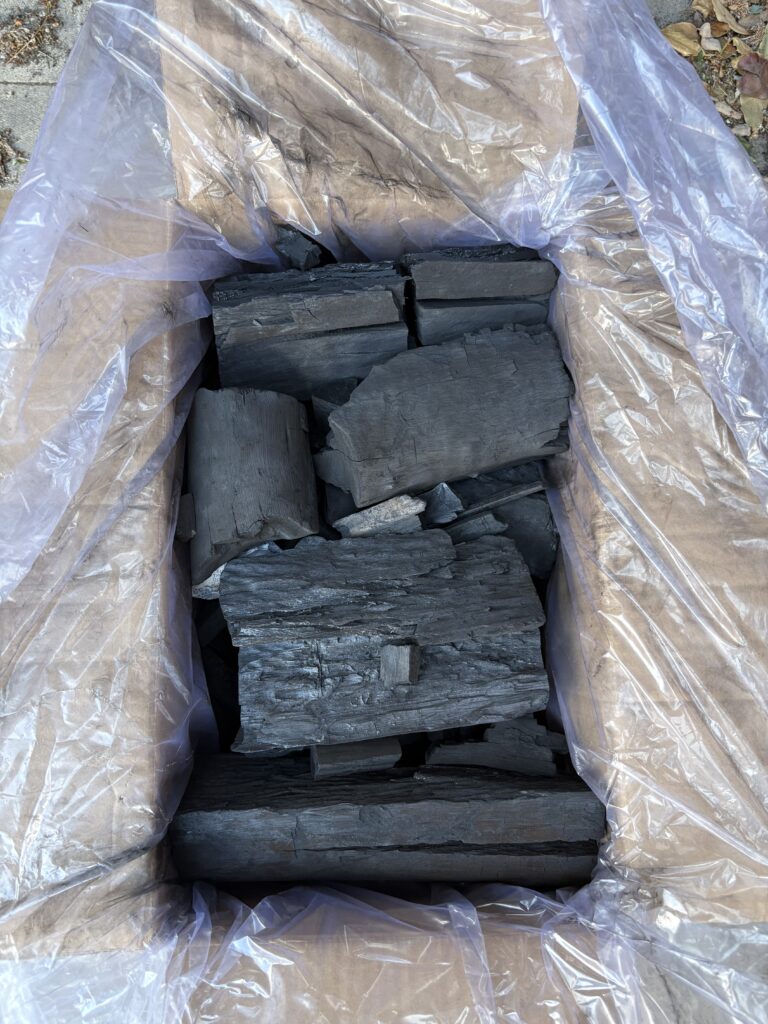
FAQ: Why does Big Ed’s Charcoal have a mix of big and small lumps?
Big Ed’s is all about top-quality, long-burning charcoal, made from a mix of Eucalyptus and Mangrove wood. Each 10kg box is packed with...