
The Ultimate Guide to Charcoal: Elevating Your Outdoor Gastronomy in 2026
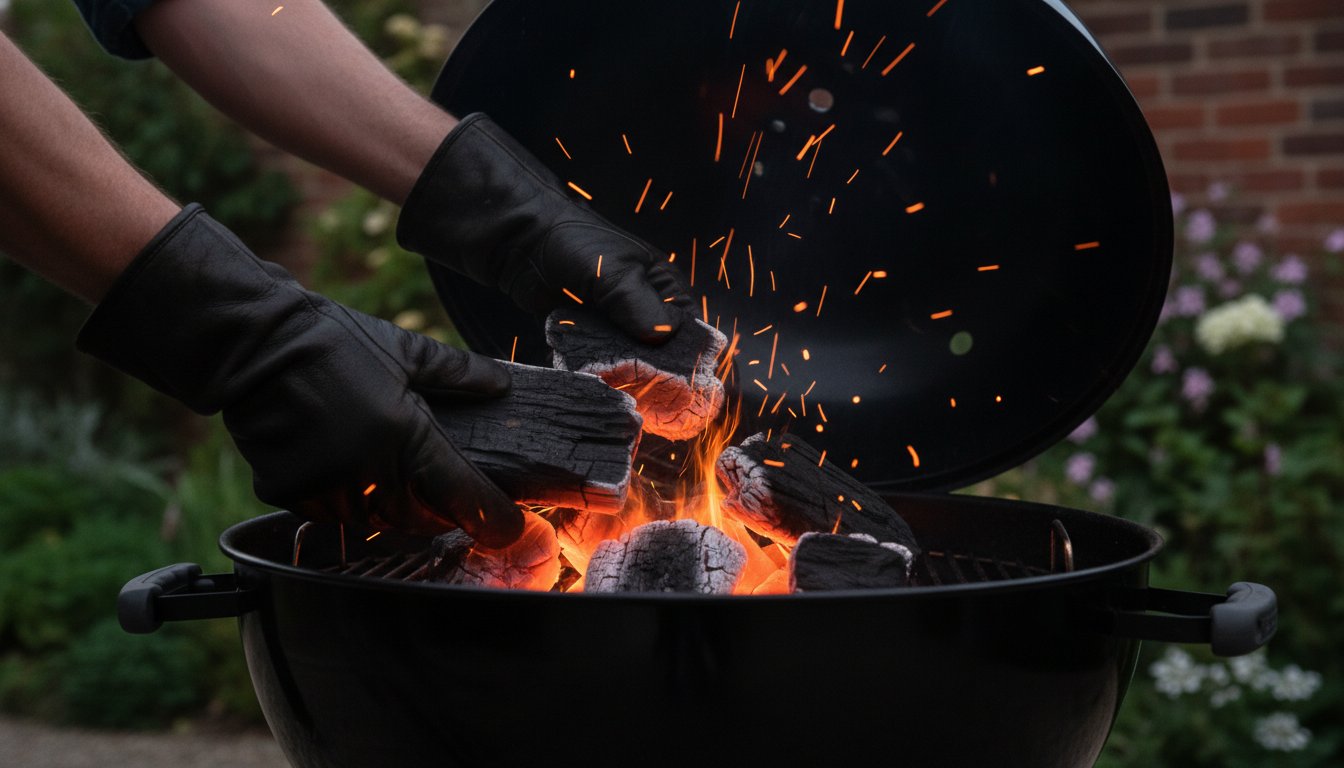
Why are you still letting a cheap bag of supermarket briquettes sabotage a premium, dry-aged ribeye? It’s a hard truth that many home cooks overlook; your fuel is the most critical ingredient in your outdoor kitchen. You’ve likely felt the sting of inconsistent heat during a long cook or the disappointment of acrid smoke masking the natural juices of a prime cut. These frustrations stem from a lack of precision in your charcoal selection, a hurdle that led 68% of UK outdoor cooks to report temperature management as their biggest struggle in 2024.
You deserve a fire that behaves with the same reliability as your indoor oven but with the unrivaled, smoky soul only a live flame can provide. We’ll help you master the science of fuel and flavour by teaching you how to select and manage premium lumpwood for professional results. This guide explores the technical details of carbonisation, heat distribution, and fire management, ensuring your next gathering moves from a simple meal to a bespoke gastronomic event in your own garden sanctuary.
Key Takeaways
- Transform your garden into a culinary sanctuary by mastering the science of fuel, the most vital ingredient in any high-end outdoor kitchen.
- Navigate the connoisseur’s choice between the high-heat searing power of natural lumpwood and the enduring, steady temperature of premium briquettes.
- Unlock the sensory secrets of wood origin, learning how specific species like British Oak provide a robust, professional finish to your game and beef.
- Achieve a pristine, chemical-free fire every time by adopting the chimney starter method, ensuring your charcoal delivers only the purest, most natural aromas.
- Preserve the excellence of your investment with professional storage techniques that protect your premium fuel from moisture to ensure a flawless, clean-burning performance.
What is Charcoal? Understanding the Heart of the Barbecue
To master the art of the outdoor kitchen, you must first respect the flame. While many novices view fuel as a mere utility, the seasoned connoisseur understands that it’s the most vital ingredient in any recipe. Choosing the right fuel is the difference between a standard Sunday roast and a succulent, restaurant-grade masterpiece. At its essence, What is Charcoal? It’s the lightweight black carbon residue produced by the pyrolysis of wood, a process that transforms raw timber into a concentrated source of pure energy. By heating the wood in a controlled, oxygen-free environment, we strip away moisture and volatile compounds, leaving behind a fuel that burns hotter and cleaner than raw logs ever could.
In your pursuit of unrivaled flavour, gas grills often fall short because they provide heat without character. Premium lumpwood charcoal offers a sensory depth that gas cannot replicate, reaching searing temperatures of over 700°C to create that iconic crust on a dry-aged ribeye. This transition from wood to carbon creates a stable, high-performance fuel that allows for precision control in your Kamado Joe or Napoleon grill. It’s the foundation of a lifestyle where the garden becomes your primary social hub, inviting guests into a sanctuary of smoke and fire.
The Science of Carbonisation
The magic happens during pyrolysis, where wood is baked at temperatures ranging from 400°C to 700°C without catching fire. This intense heat drives off water, sap, and resins, which would otherwise create acrid, bitter smoke in your cook. The quality of the final burn depends heavily on the production temperature; lower temperatures leave more volatile matter for a quicker start, while higher temperatures produce a purer, more enduring heat. Fixed carbon content is the key metric for fuel longevity, representing the solid combustible material that remains after all moisture and volatile gases are removed.
Fuel as a Culinary Foundation
Your choice of charcoal acts as a bespoke flavour enhancer, much like a fine seasoning or a complex marinade. High-quality fuels produce “clean smoke,” visible as a faint blue shimmer, which imparts a delicate sweetness to the meat rather than the heavy, soot-laden “dirty smoke” found in cheap briquettes. For a delicate sea bass, you might choose a lighter fruitwood charcoal, whereas a robust beef brisket demands the deep, earthy profile of English Oak. Matching your fuel to your protein ensures every meal is a curated experience, elevating your outdoor cooking to a professional standard that your guests will notice with every bite.
Lumpwood vs. Briquettes: Navigating the Connoisseur’s Choice
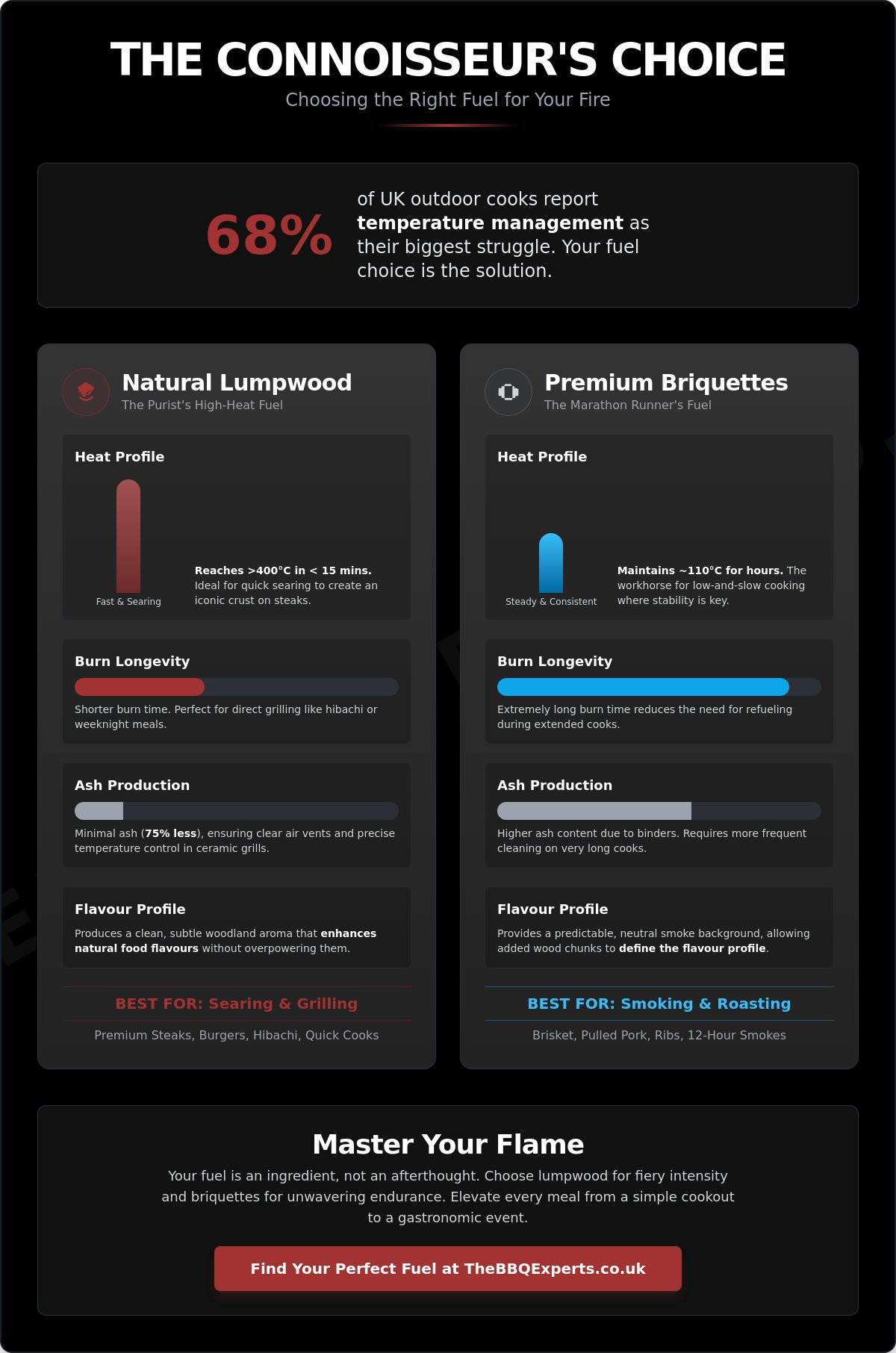
Choosing your fuel is the first step toward a culinary masterpiece. It dictates the texture of your crust and the depth of your smoke profile. To truly understand the debate of Lumpwood vs. Briquettes, you must first define your objective. Are you chasing the violent, searing heat of a 400°C grill, or the gentle, unwavering warmth of a 110°C slow roast? The charcoal you select acts as the heartbeat of your outdoor kitchen, and each variety offers a distinct rhythm.
The Case for Natural Lumpwood
Lumpwood is carbonized hardwood in its most honest form. Because the pieces vary in size, they create a complex topography in your fuel bed. These irregular shapes allow for superior airflow, which is why premium lumpwood can reach searing temperatures in under 15 minutes. It’s the essential choice for a Japanese Hibachi or a quick Tuesday night steak. You’ll enjoy a clean, woodland aroma that enhances the natural sweetness of the meat without overwhelming it. For those using ceramic grills, lumpwood is often the primary recommendation because it leaves behind 75% less ash than standard alternatives, keeping your air vents clear for precision temperature control.
The Consistency of Premium Briquettes
Briquettes are the workhorse of the competition circuit. Unlike their irregular cousins, these uniform pillows provide a predictable heat output that stays steady for hours. If you’re planning a 12-hour brisket smoke, briquettes offer the longevity you need. They reduce the frequency of refueling, keeping your grill lid closed and your internal temperatures stable. For a deeper dive into this fuel type, explore our Charcoal Briquettes: The Connoisseur’s Guide to Consistent BBQ Heat in 2026. These engineered fuels are perfect for kettle grills and smokers where a constant, 250°F (121°C) environment is the goal.
Your hardware often dictates your fuel. While a Kamado Joe thrives on high-quality lumpwood, a Napoleon kettle grill can handle the higher ash volume of briquettes with ease. To achieve the ultimate ‘low and slow’ environment, try layering your fuel. Placing a base of briquettes for endurance and topping them with a 30% ratio of lumpwood for that initial aromatic punch creates a bespoke heat profile. This hybrid approach ensures you have the 10-hour stamina required for pork shoulder while benefiting from the intense initial heat pockets that only natural wood provides.
Elevate your outdoor cooking by selecting a bespoke charcoal blend that matches the specifications of your luxury grill.
The Sensory Experience: How Wood Origin Dictates Flavour
To truly elevate your outdoor gastronomy, you must look beyond the heat. You’re selecting a flavour profile. The tree species determines the “terroir” of your cook; the soil, climate, and density of the wood infuse every sear with distinct aromatic notes. Understanding what is charcoal at a molecular level reveals how carbonisation preserves these essential oils, waiting to be released into your ribeye or venison. Your choice of fuel isn’t just about temperature. It’s about the invisible ingredients that define your signature style.
In the UK, oak reigns supreme. It’s the versatile powerhouse for those who demand a robust, traditional smoke. It pairs perfectly with beef and game, offering a punchy profile that stands up to heavy seasoning. For the discerning chef, the sensory experience begins long before the first bite; it starts with the rich, earthy scent of the fire itself. Selecting a premium charcoal source ensures that these natural aromas remain pure and untainted by chemical additives.
Marabu: The King of Low and Slow
Derived from the invasive Cuban thorn bush, Marabu is a dense, heavy fuel that has become a staple for professional pitmasters. It’s an incredibly sustainable choice, as the plant’s removal helps restore local ecosystems. You’ll find it burns exceptionally long and hot, maintaining a neutral flavour that allows the quality of your meat to shine. It doesn’t spark and leaves almost no ash, making it ideal for ceramic grills like the Kamado Joe. If you’re planning a 12-hour brisket, Big K Marabu Charcoal: The Professional Secret to Perfect Low and Slow BBQ is your essential partner.
The Authority of Oak and Fruitwoods
Oak briquettes provide a consistent, heavy smoke profile that defines the classic British barbecue experience. However, for a more nuanced finish, you should explore the delicate sweetness of fruitwoods. Apple and cherry wood offer a lighter touch, imparting a subtle fruitiness that elevates pork belly or spatchcock poultry to gourmet levels. These woods burn faster than dense hardwoods but leave a lasting impression on the palate.
To achieve a multi-dimensional flavour, don’t rely on the charcoal alone. Layer wood chunks directly onto your glowing coals. This technique allows you to build a bespoke smoke profile tailored to your specific menu:
- Oak: Provides the foundational, earthy bass note for red meats.
- Cherry: Adds a beautiful mahogany hue and sweet aroma to ribs.
- Apple: Delivers a mild, mellow finish for white meats and fish.
This layering creates a sophisticated sensory journey that transforms a simple garden gathering into a curated culinary event. By mastering the origin of your wood, you transition from a casual cook to a true connoisseur of the flame.
Mastering the Fire: Practical Techniques for the Modern Grill
True mastery of the flame begins with a fundamental rejection of chemical accelerants. Pouring lighter fluid over premium charcoal is a cardinal sin in outdoor gastronomy. These petroleum-based liquids don’t just ignite the fuel; they penetrate it, infusing your bespoke cuts of meat with an acrid, chemical aftertaste that no amount of seasoning can mask. You’ve invested in quality hardware and artisanal ingredients; don’t compromise them at the first hurdle.
The chimney starter remains the most efficient tool for the modern pitmaster. It utilizes a natural chimney effect to draw oxygen through the fuel, ensuring a rapid, even light every time. By placing two or three natural wood-wool firelighters in the base, you achieve a clean ignition without any synthetic odours. It’s a precise, professional approach that yields consistent results.
Lighting Like a Professional
To begin, fill your chimney starter with high-performance lumpwood. Place your wood-wool lighters on the grill grate and ignite them before positioning the chimney directly over the flames. Within 15 to 20 minutes, the top layer of fuel will exhibit a distinct coating of grey ash. This is your visual cue that the core temperature is optimal and the fuel is ready for the cook box. Always handle your chimney with high-grade leather gauntlets to prevent burns in your garden sanctuary.
Managing heat zones is the secret to total control. By piling your fuel on one side of the grill, you create a dual-environment setup. The direct zone provides the intense infrared heat required for a searing crust, while the indirect zone allows larger joints to reach the perfect internal temperature without scorching the exterior. This spatial awareness separates the casual griller from the true connoisseur.
Advanced Heat Management
Controlling your environment requires an understanding of airflow. Your intake vent at the bottom acts as the accelerator, while the exhaust vent at the top functions as the precision dial. For a 15-hour low and slow session, employ the ‘Snake Method’. Arrange your charcoal in a semi-circle around the perimeter of the grill, lighting only one end to create a slow-burning fuse. This technique maintains a steady 110°C for extended periods without constant intervention.
If you’re using a ceramic grill like a Kamado Joe, ‘burping’ the lid is essential. When cooking at high temperatures, opening the lid too quickly introduces a sudden rush of oxygen that can cause a dangerous flashback. Open the lid just a few centimetres for five seconds to allow the pressure to equalise before fully exposing the grate. This simple habit protects both your eyebrows and your investment.
Ready to transform your garden into a culinary sanctuary? Explore our range of professional-grade tools and elevate your outdoor cooking today.
Elevating the Sanctuary: Curation and Quality Control
Your outdoor kitchen is more than a patio; it’s a culinary sanctuary where memories are seared into reality. Choosing Big Eds Charcoal isn’t just a purchase; it’s a commitment to British craftsmanship. This UK-sourced fuel offers a purity that imported alternatives often lack. It burns hotter and stays stable for longer, ensuring your focus remains on the guest experience rather than constant firebox management. When you source fuel that hasn’t spent months in a damp shipping container, you notice the difference in the first ten minutes of the burn.
Professional results require professional care. Charcoal is hygroscopic, which means it greedily absorbs moisture from the British air. A damp bag of fuel results in acrid smoke and frustrating temperature spikes. Store your supply in a cool, dry environment, ideally raised off the concrete floor in a sealed, airtight container. This simple step guarantees the clean, blue smoke necessary for high-end gastronomy. You’ve invested in professional-grade hardware like a Kamado Joe or a Napoleon; don’t compromise that investment with degraded fuel.
The BBQ Experts Selection
We don’t just sell fuel; we curate it through a lens of culinary excellence. Every batch undergoes our rigorous ‘sear test’ to ensure it reaches the 350°C+ temperatures required for a perfect Maillard reaction. Pairing Big Eds with a precision Hibachi Grill creates an authentic Japanese experience where the heat is intense and the flavour remains untainted. We insist on ‘Restaurant Grade’ certification for home use because it signifies larger lump sizes. These larger pieces provide superior airflow and a more consistent thermal output than the small, dusty fragments found in supermarket bags.
Final Touches for the Masterpiece
Data drives better cooking. Premium lumpwood typically offers a burn rate of approximately 3 hours per kg during low and slow sessions at 110°C. This predictable stability is vital for the complex process of bark development. When you apply Angus & Oink rubs, the clean heat from high-quality charcoal allows the bespoke spice blends to caramelise into a rich crust without being overpowered by bitter soot. The relationship between fuel and seasoning is symbiotic; one provides the canvas, the other the art.
Ready to transform your garden into a professional-grade kitchen? Elevate your next cook with our curated charcoal collection and experience the difference that expert curation makes to every bite.
Ignite Your Culinary Mastery
Transforming your garden into a culinary sanctuary requires more than just high-end hardware; it demands an intimate understanding of the fuels that power your passion. You’ve explored the distinct profiles of lumpwood versus briquettes, and you’ve learned how specific wood origins create unrivaled flavour profiles. Since 2020, we’ve served as a specialist UK retailer dedicated to the craft of outdoor gastronomy. We provide the technical precision and sensory excellence needed to turn every meal into a masterpiece. Our curated selection includes professional-grade Big Eds and Big K Marabu fuels, ensuring your searing temperatures and smoke infusions are always consistent. Whether you’re a seasoned pitmaster or an aspiring enthusiast, our expert-led guidance bridges the gap between professional standards and home cooking. Choosing the right charcoal is the final piece of the puzzle for your outdoor kitchen. It’s time to move beyond the ordinary and embrace a lifestyle of refined outdoor living.
Elevate your outdoor cooking with our professional charcoal range
Your journey toward the perfect sear starts today.
Frequently Asked Questions
Is lumpwood charcoal better than briquettes for a long cook?
Briquettes are generally superior for sustained low and slow sessions because their uniform shape and density provide a consistent burn rate for up to 12 hours. While lumpwood charcoal offers an unrivaled, searing heat perfect for steaks, it often burns faster due to its irregular size. If you prefer lumpwood for a long cook, choose a dense hardwood variety like White Quebracho, which can maintain heat for over 5 hours without requiring a top-up.
How much charcoal do I need for a standard family barbecue?
You typically need 1.5kg to 2kg of fuel for a standard family gathering using a 57cm kettle grill. This specific amount generates enough heat to cook for approximately 90 minutes, which is plenty of time to prepare a succulent spread of burgers, skewers, and sides. Using a chimney starter ensures you don’t waste any charcoal, as it allows every piece to reach the ideal temperature simultaneously before you begin searing.
Can I reuse charcoal that didn’t fully burn during my last session?
You can certainly reuse any charcoal that remains in the grate by closing your grill’s vents immediately after cooking to starve the fire of oxygen. Once the embers are completely cold, shake the basket to remove fine ash and combine the remaining lumps with fresh fuel for your next session. Industry data suggests this practice can reduce your total fuel consumption by 20 percent, making it a smart habit for the frequent outdoor chef.
What makes ‘Restaurant Grade’ charcoal different from supermarket brands?
Restaurant grade charcoal consists of significantly larger pieces, often exceeding 80mm in size, which ensures superior airflow and a more consistent temperature profile. Supermarket bags frequently contain up to 30 percent dust and small fragments that choke the fire and create uneven heat. By choosing premium, ethically sourced hardwood, you ensure a cleaner burn that elevates your outdoor cooking with a refined, smoky essence rather than acrid smoke.
How do I stop my charcoal from sparking when I light it?
To prevent sparking, you should only use high-quality charcoal with a moisture content below 5 percent and avoid cheap products that contain chemical fillers or softwoods. Excessive sparking is usually a sign of trapped gases or uncarbonised wood pockets within lower-quality fuels. Using a natural firelighter or an electric starter instead of liquid accelerants allows the embers to catch fire calmly, maintaining the serene atmosphere of your garden sanctuary.
Why does my food taste like lighter fluid, and how can I fix it?
That unpleasant chemical aftertaste occurs because petroleum-based starters don’t always fully combust, allowing acrid fumes to settle on your succulent meats. You can fix this permanently by switching to natural wood-shaving lighters or a chimney starter, which eliminates the need for chemicals entirely. Professional pitmasters always wait until the charcoal is covered in a delicate grey ash, ensuring the fuel is burning cleanly before any food touches the grill.
Is charcoal more environmentally friendly than gas for cooking?
Charcoal is a renewable biomass fuel that can be very sustainable if you select FSC-certified products sourced from managed British woodlands. While a 2011 study by Eric Johnson indicated that gas has a lower carbon footprint per session, charcoal doesn’t rely on fossil fuel extraction. By choosing high-density British lumpwood, you support local biodiversity and reduce the carbon costs associated with shipping heavy bags from overseas locations.
How should I store my charcoal to keep it fresh for the next season?
Store your fuel in a dedicated, airtight container kept in a dry shed or garage to protect it from damp British weather. Even a 3 percent rise in moisture content can make the charcoal difficult to light and cause it to produce excessive smoke during your cook. Keeping your fuel pristine ensures it’s always ready to perform, allowing you to elevate your outdoor cooking whenever the inspiration for a garden masterpiece strikes. For a comprehensive overview of selecting and using the right fuel for every occasion, our guide to mastering BBQ coal and choosing premium fuel is an essential resource for any serious outdoor cook.
Disclaimer
This article was produced with AI assistance. We use AI and Third Parties to help deliver more content to our BBQ website and community, but we always aim to ensure accuracy and quality as much as we can. If you spot anything that doesn't seem right, we'd love to hear from you

Recent News & Updates

Our Story, Values and Beliefs
Here at the BBQ experts we have a passion for BBQ food, outdoor living and spending time with family and friends. We offer you; A...
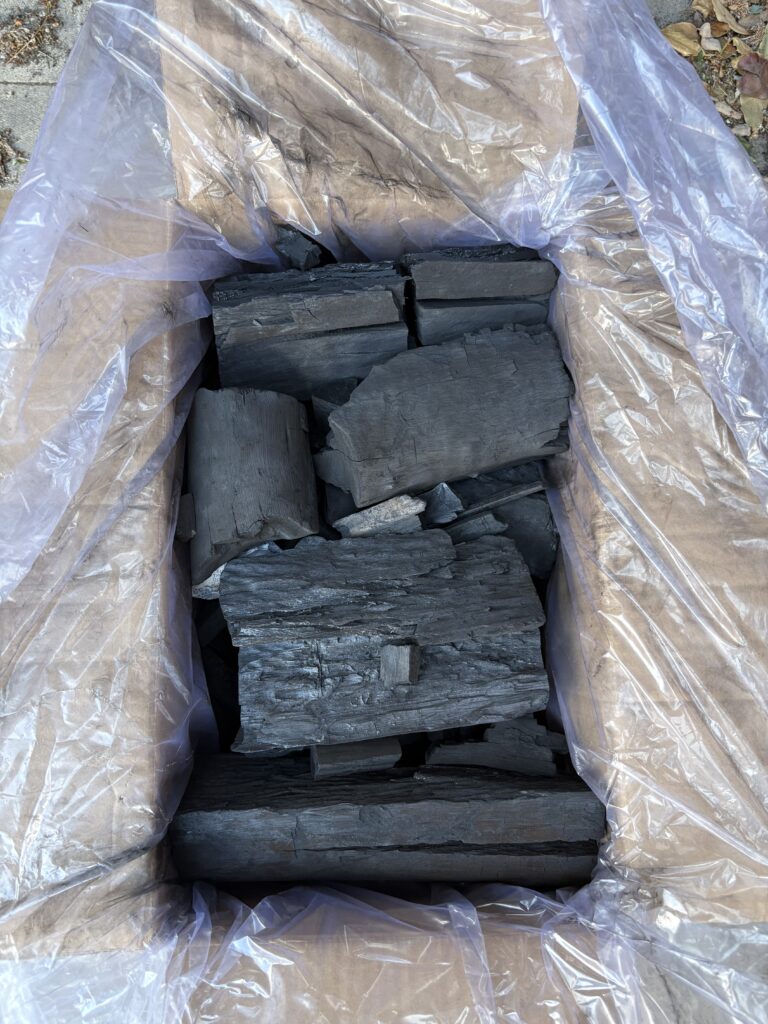
FAQ: Why does Big Ed’s Charcoal have a mix of big and small lumps?
Big Ed’s is all about top-quality, long-burning charcoal, made from a mix of Eucalyptus and Mangrove wood. Each 10kg box is packed with...